What Are Yardangs? How Wind Carves Landscapes on Mars and Earth
Learn what yardangs are, how wind abrasion and deflation carve them, how they differ from dunes, and what Curiosity's 2026 Mars observations reveal about long-term erosion.
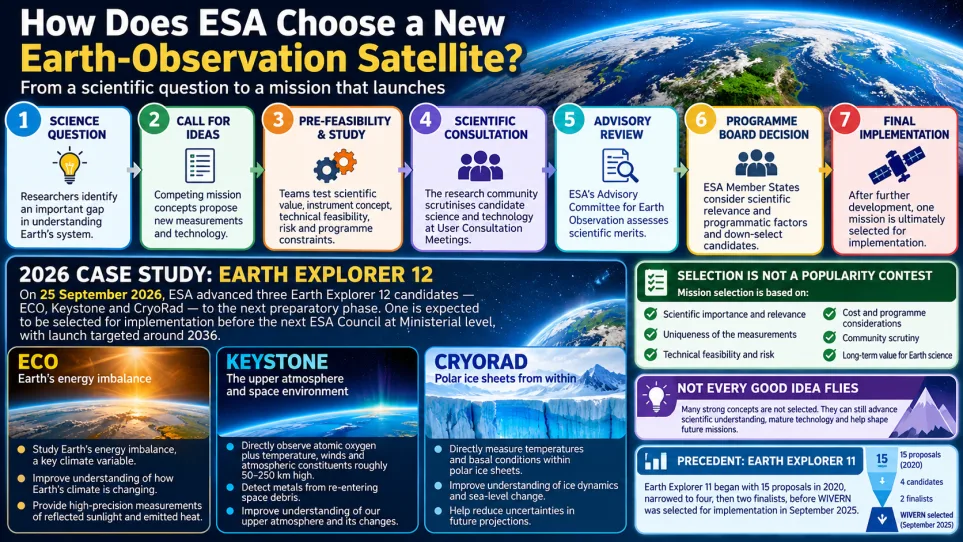
Learn how ESA’s Earth Explorer programme turns research questions into satellite missions, using ECO, Keystone and CryoRad as a 2026 case study.
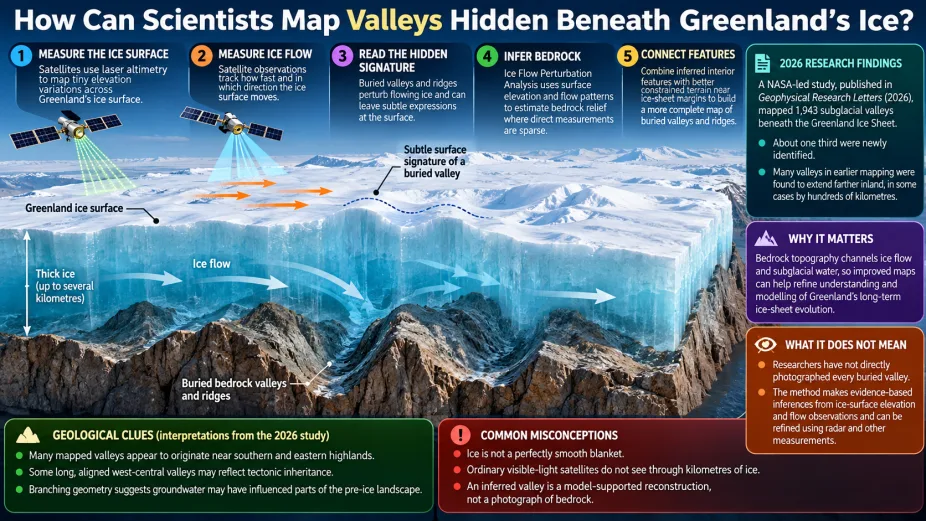
Learn how Ice Flow Perturbation Analysis reveals valleys hidden beneath Greenland’s ice, why bedrock topography matters and where the method’s uncertainties lie.
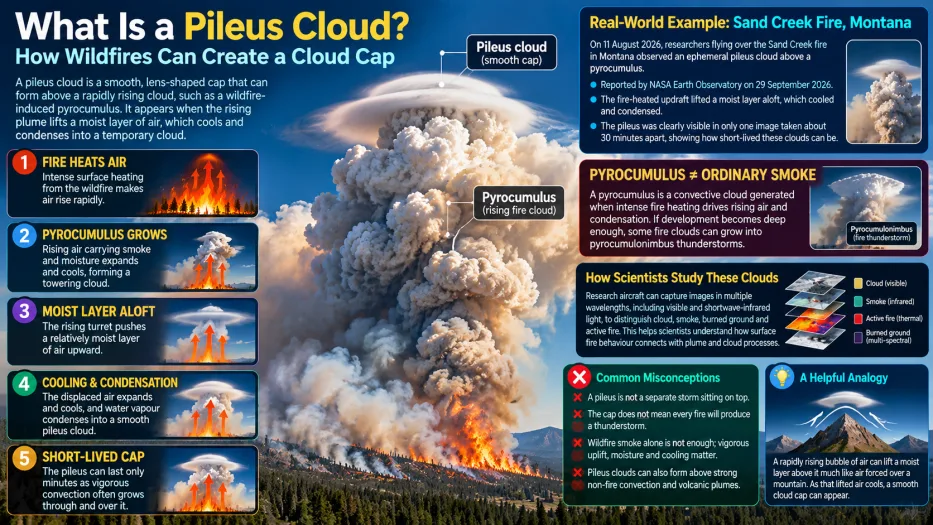
Learn how pileus clouds form above vigorous wildfire convection, how they differ from smoke and pyrocumulus, why they are short-lived and what they reveal about atmospheric motion.
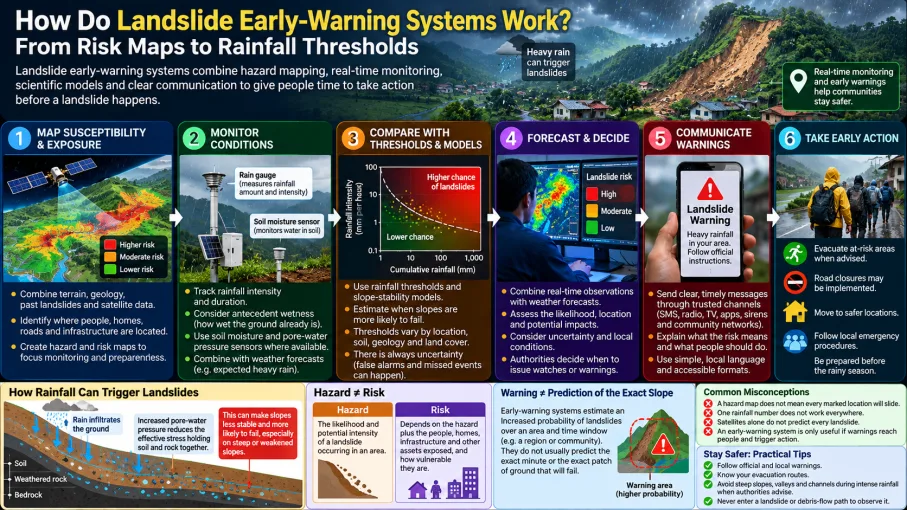
Learn how landslide early-warning systems turn terrain maps, rainfall, soil conditions and forecasts into practical warnings, and why uncertainty matters.
Arctic sea ice reached a likely 2026 minimum of 4.60 million km². Learn why the minimum occurs in September, what sea-ice extent means, how albedo works and how to read the long-term trend.
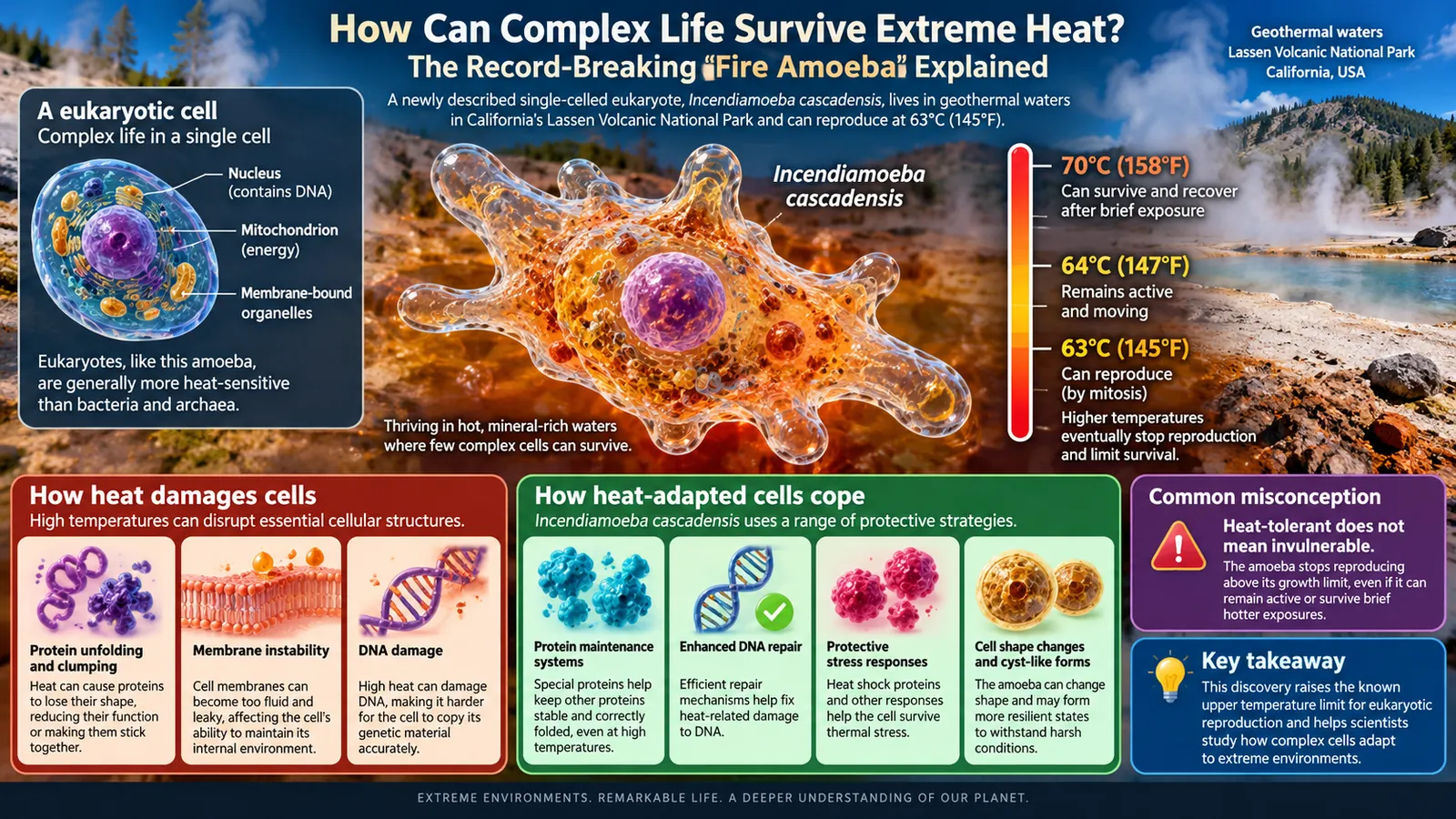
A newly described ‘fire amoeba’ can reproduce at 63°C and recover after brief exposure to 70°C. Learn what this record reveals about heat damage, cellular protection and the limits of complex life.
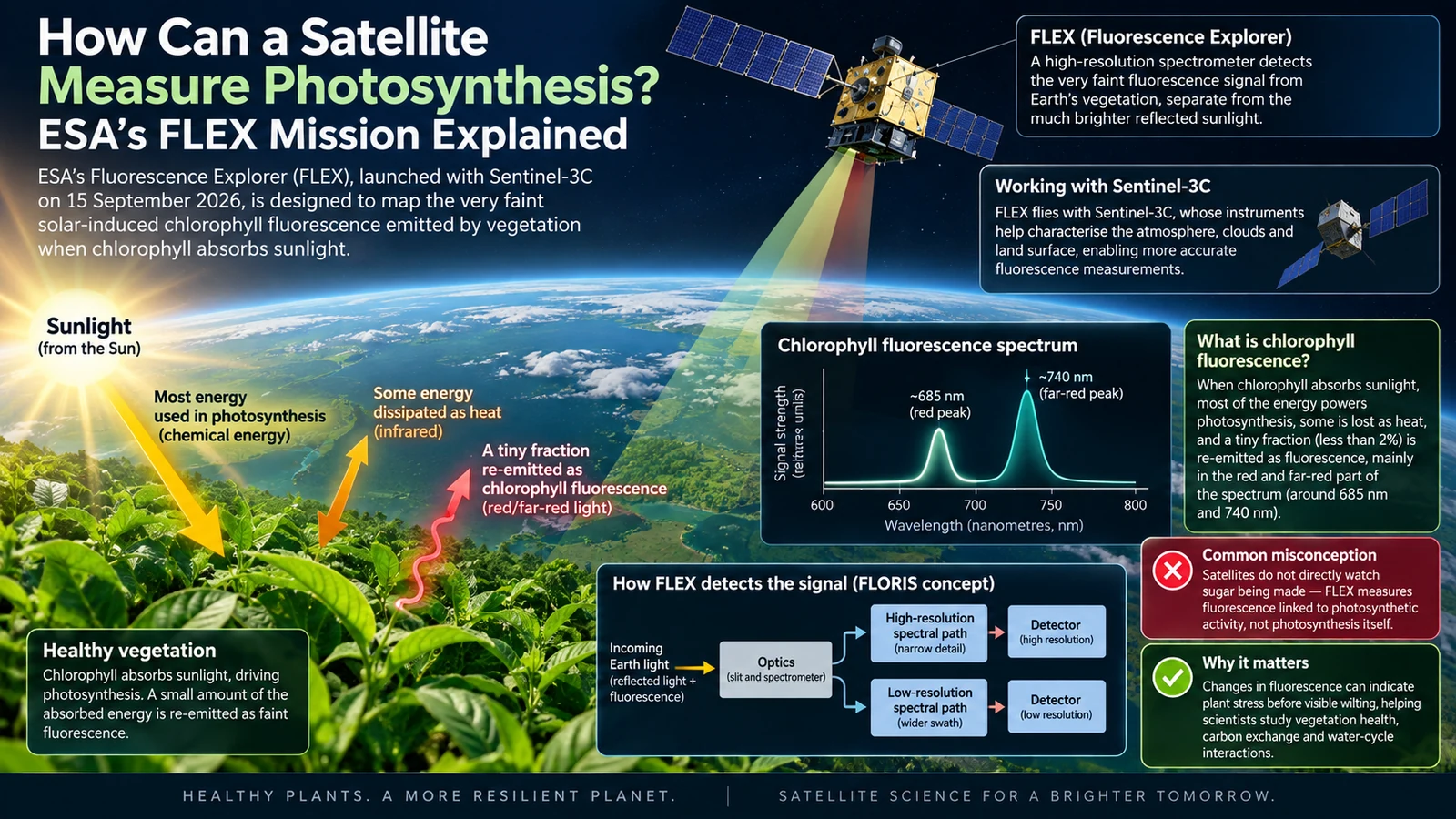
ESA’s FLEX mission maps faint chlorophyll fluorescence from vegetation. Learn how that glow relates to photosynthetic activity, plant stress and Earth’s carbon and water cycles.
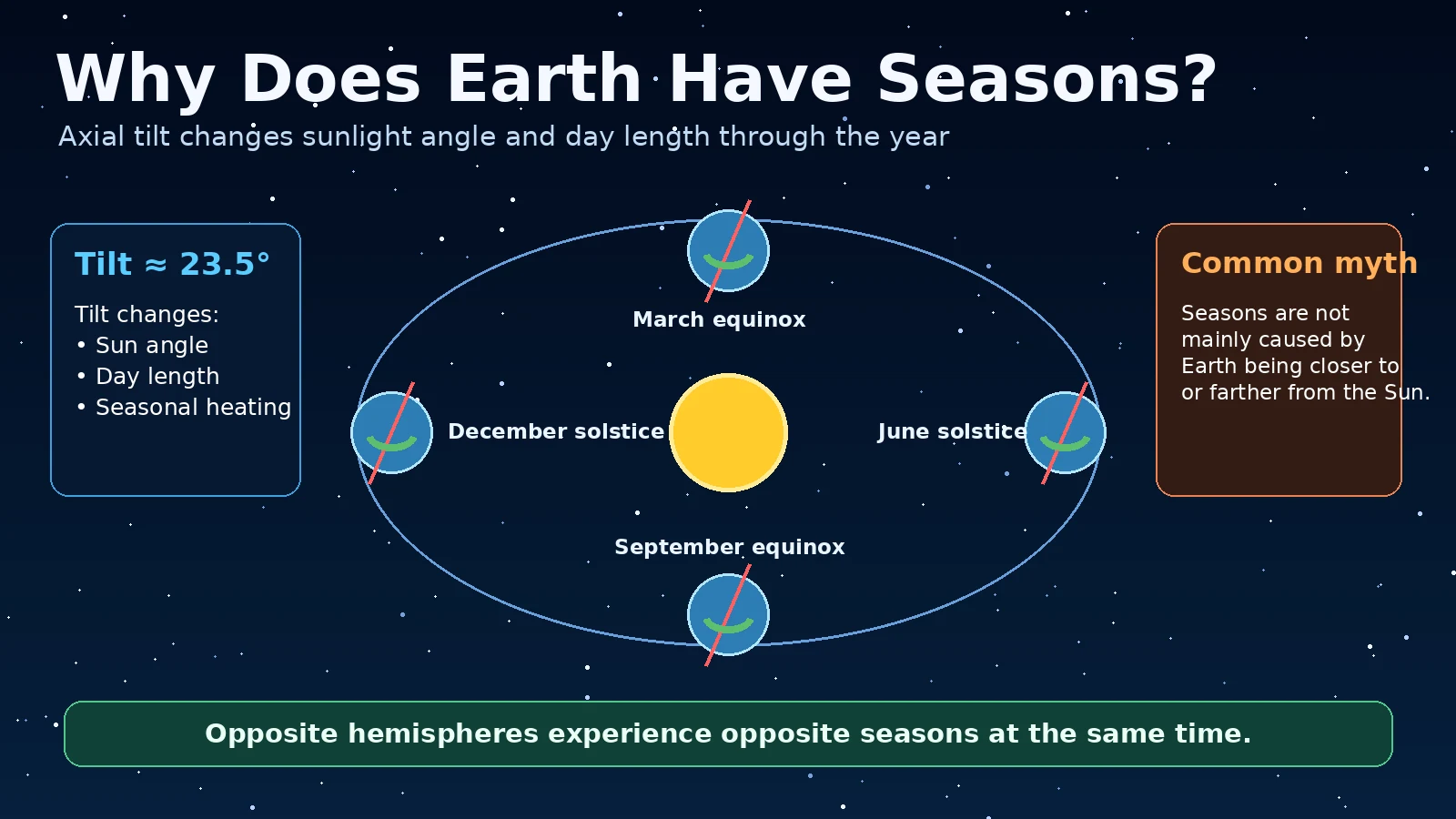
Earth’s seasons are caused mainly by its tilted axis, not its changing distance from the Sun. Learn how solar angle and day length change through solstices and equinoxes.
Earth’s centre of mass shifts slightly as water, ice and atmosphere redistribute. Learn what the geocentre is and why millimetre-scale changes matter for satellites.
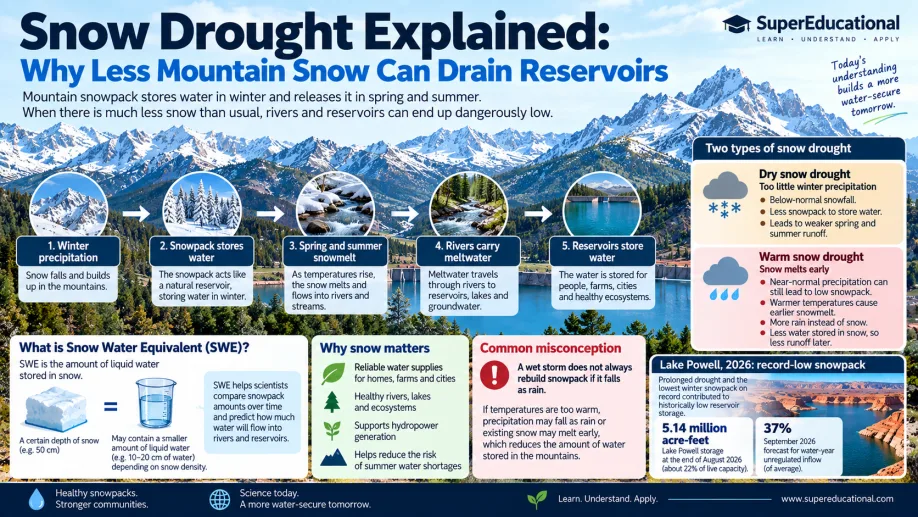
Learn what snow drought means, the difference between dry and warm snow drought, how snow water equivalent works, and why low mountain snowpack can reduce reservoir inflows.
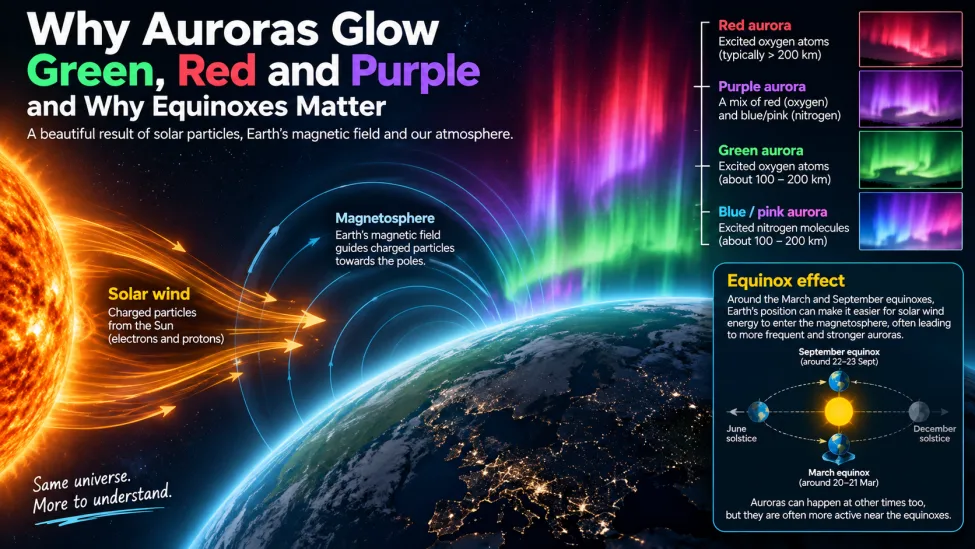
Learn why auroras glow green, red, blue, pink and purple, how oxygen and nitrogen create the colours, and why auroras can be more active near equinoxes.