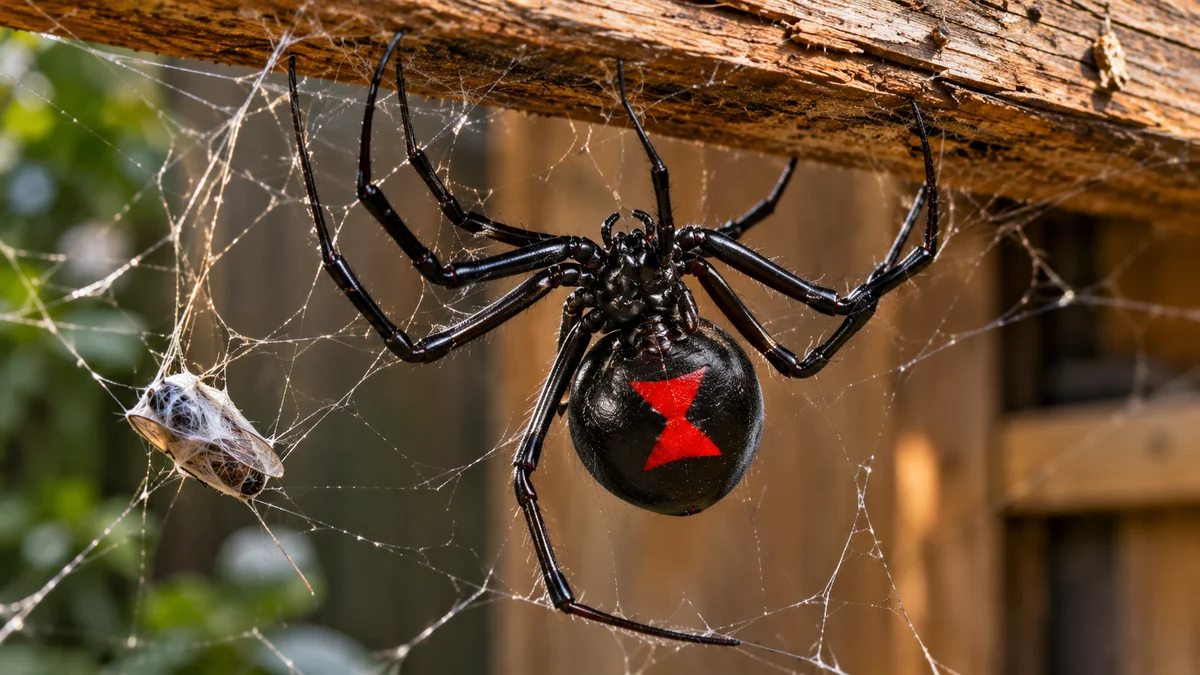
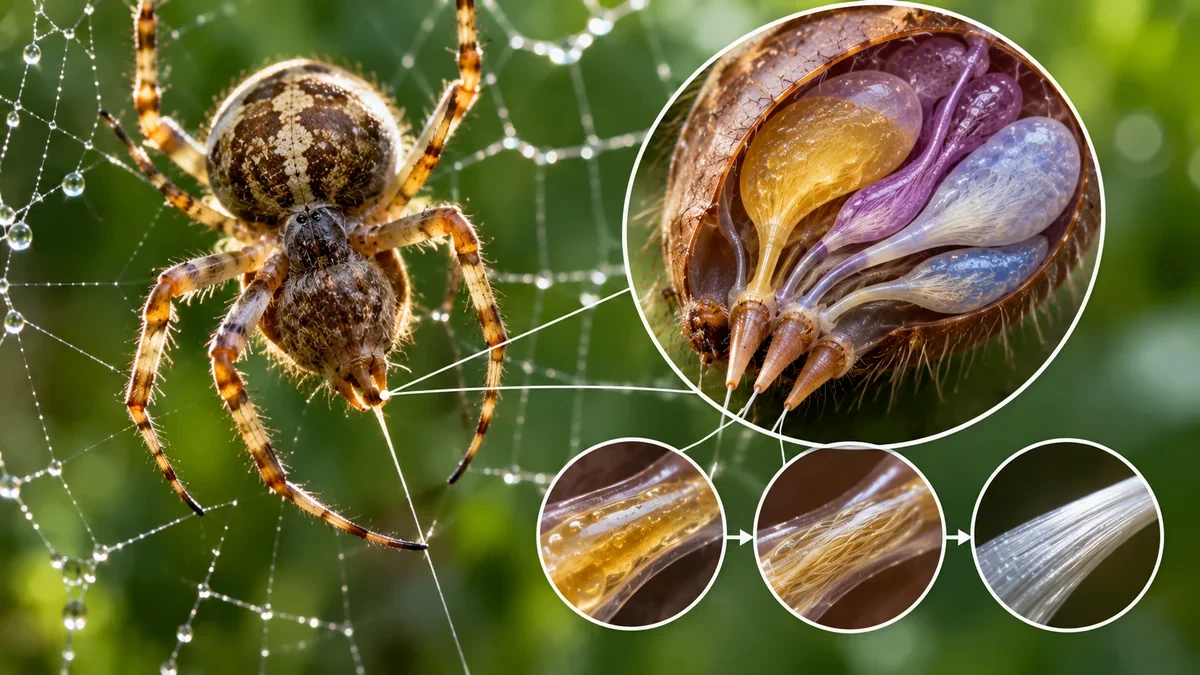
How do spiders make silk? Spiders manufacture concentrated solutions of specialised proteins called spidroins inside glands in their abdomen. The fluid travels through narrow spinning ducts, where changes in acidity (pH), salts, water content and mechanical forces help the proteins assemble into a solid fibre. Tiny outlets, or spigots, on movable spinnerets guide the emerging threads. The spider often draws silk out by pulling with its legs or moving away from an attachment point, rather than squirting a finished thread like a jet.
Spider silk is not one uniform material. Some threads are strong enough to support the spider, others stretch to slow flying insects, and still others attach silk to surfaces, wrap prey or protect eggs. Understanding how these fibres are made reveals a remarkable connection between protein structure and biological function—and why scientists are trying to imitate spider silk for future materials.
This guide draws on the Natural History Museum's explanation of web silk , the Australian Museum's spider-silk guide , and published research on how spidroins are organised and spun.
Spider silk facts at a glance
| Question | Short answer |
|---|---|
| What is spider silk made of? | Mostly specialised structural proteins known as spidroins |
| Where is it produced? | Silk glands inside the abdomen |
| What are spinnerets? | Movable external structures carrying tiny silk outlets called spigots |
| How does liquid become thread? | Protein assembly during changes in pH, ions, water and physical stretching or shear |
| Do all spiders make silk? | Yes, but not all build prey-catching webs |
| Is all silk sticky? | No; draglines and web framework lines are generally non-sticky |
| Why use different silks? | Different strength, stretch, adhesion and protective functions |
| Can scientists manufacture it? | Researchers can make recombinant silk-like proteins and experimental fibres, but faithfully matching natural silk at scale is difficult |
1. Inside the spider: glands, ducts, spigots and spinnerets
A spider's silk-making system has several parts, each doing a different job. The glands synthesise and store protein-rich silk material. The ducts conduct that material towards the outside and help transform it. The spinnerets, usually located at the rear of the abdomen, position the outlets and help the spider direct and combine threads. Each spinneret can carry multiple microscopic spigots; not every spigot delivers the same type of silk.
Descriptions sometimes say spiders “make silk in their spinnerets”. That is convenient shorthand but misses the internal process: protein production occurs in glands, while external spinnerets help deliver and manipulate the resulting fibres. The Denver Museum of Nature & Science's spider survey explains how a thread is drawn from these outlets, and research on spinneret musculature shows how precisely the small structures can move.
Different spider groups have evolved different numbers and arrangements of spinnerets. Most familiar spiders have several at the rear of the abdomen, but anatomical details vary. Some possess an extra specialised spinning surface called a cribellum, which helps them make fine woolly capture threads rather than glue-coated ones.
2. What are spidroins, the proteins that make spider silk?
The main building blocks of many spider silks are large proteins called spidroins (a name combining spider and fibroin). Like other proteins, they consist of chains of amino acids. Their sequences contain repeated regions along with specialised terminal domains that help regulate storage and assembly. Different spidroins make fibres with different properties.
In the silk gland, spidroins are present in a concentrated, water-containing mixture often called silk dope. The spider must keep these proteins from solidifying too soon; otherwise, fibres would form inside the gland instead of where they are needed. Reviews of natural silk processing show that protein concentration, molecular interactions and the environment of the gland all contribute to this controlled state.
The 2024 study of the origin and composition of major ampullate silk used genomic, protein and single-cell approaches to investigate how cells in a spider's silk gland participate in fibre production. Its findings show why silk is best understood as a biological manufacturing process, not simply a liquid that dries in the air.
3. Step by step: how a spider spins silk from liquid protein
- Gland cells produce spidroins. Cells synthesise specialised proteins and release them into the gland, where they become part of a concentrated silk mixture.
- The material is stored in a soluble form. The gland environment keeps proteins available for spinning while limiting premature solidification.
- The mixture enters a narrowing duct. As it moves, the conditions change: pH falls, the balance of certain ions shifts, water is removed or redistributed, and the protein solution experiences flow and shear.
- Protein molecules reorganise and assemble. Changes in their interactions, folding and orientation promote formation of the fibre's internal structure, including ordered regions in many silk types.
- Silk emerges from a spigot. The spider guides and often pulls the forming filament with a leg or by moving away from a silk attachment, creating a continuous strand.
- The strand is put to use. It may become a dragline, web framework, sticky capture thread, attachment disc, prey wrapping or part of an egg case.
These steps describe the well-studied major ampullate dragline-silk process particularly well; other silk glands and silk types may use related but not identical mechanisms. For the molecular explanation, see research on shear-mediated spider-silk self-assembly and the 2024 review of protein phase separation .
4. Why pH, salts, water and stretching matter
Acidity helps switch protein behaviour
Protein molecules can change shape and interaction patterns when the surrounding pH changes. In studied major ampullate glands, the spinning duct becomes more acidic along its length. This helps terminal regions of spidroins associate and supports the transition from a stored protein solution towards an organised fibre. The transition is carefully controlled; it is not equivalent to adding a strong acid to silk in a laboratory.
Ions and water affect how molecules assemble
Changing concentrations of dissolved ions also influence protein interactions. Water movement and concentration changes contribute to the transition into a dense filament. Researchers are still studying how these chemical changes cooperate with phase separation and other molecular events.
Flow and drawing align the material
As material travels through the duct, mechanical forces—especially shear and drawing—can help align proteins and their assembling structures. The silk strand develops its properties through the combined effect of chemistry and physical processing. This is why simply making a spidroin protein in a laboratory does not automatically yield a fibre identical to one spun by a living spider.
Recent research provides a more detailed picture than the common statement “silk hardens when it meets air”. Contact with the outside environment can affect a finished thread, but the critical molecular transformation begins inside the spinning system. Nature Communications reports laboratory attempts to reproduce parts of that process.
5. Seven major silk types and what they do
Many orb-weaving spiders have a diversified set of silk-producing glands. Researchers often describe seven major functional categories in a typical advanced orb-weaving system. This does not mean every spider has all seven gland types, or that every spider makes every silk. Different lineages have different equipment and behaviours.
| Silk or secretion | Gland type | Typical function |
|---|---|---|
| Major ampullate (dragline) | Major ampullate | Safety line, web frame and radial threads |
| Minor ampullate | Minor ampullate | Temporary spiral and auxiliary web support in some orb weavers |
| Flagelliform | Flagelliform | Highly stretchable core of a capture spiral |
| Aggregate glue | Aggregate | Sticky coating or droplets on capture threads |
| Pyriform | Pyriform | Attachment discs that fasten threads to surfaces |
| Aciniform | Aciniform | Prey wrapping and some egg-sac components |
| Tubuliform/cylindriform | Tubuliform/cylindriform | Protective egg-case fibres |
Aggregate material is often a glue-like secretion rather than a structural fibre by itself; it is included because its role is essential to the sticky capture spiral. Reviews in Nature Genetics and biomaterials research describe how these specialised products serve different jobs.
6. Why spider silk is both strong and flexible
The best-known silk is dragline silk, used as a safety line and for important web supports. Its exceptional performance comes not from a mysterious ingredient but from the arrangement of protein molecules across different length scales.
In well-studied dragline silks, short protein segments form ordered beta-sheet nanocrystalline regions that contribute strength, while other, less-ordered regions allow extension and help absorb mechanical energy. The fibre's overall architecture balances resistance to pulling with the ability to deform before breaking. Individual silk types vary considerably: a very stretchy capture thread and a relatively strong framework line are designed for different tasks.
Scientists distinguish three properties that headlines often mix up: tensile strength (how much pulling stress a material withstands), extensibility (how far it stretches), and toughness (how much energy it absorbs before breaking). A material can perform well in one measure without being the best in all three.
That is why “spider silk is stronger than steel” needs qualification. Some dragline silk comparisons are impressive by weight or in toughness, but steels and engineered fibres vary widely and can exceed silk in stiffness or tensile strength. The research review The Elaborate Structure of Spider Silk provides measured material-property comparisons. A blanket claim that all silk outperforms all steel would be misleading.
7. How does a spider build an orb web?
An orb web is a familiar circular trap, but not all webs are orb-shaped. A typical orb-weaver combines several silk types in a carefully sequenced process:
- Establish a bridge line. A silk filament reaches and anchors to another support, often carried by air movement and then adjusted by the spider.
- Build the outer frame. The spider reinforces the structure with relatively strong, non-sticky silk.
- Add radial spokes. Threads run from the centre towards the supporting frame to distribute loads.
- Make a temporary spiral. In many species, a non-sticky spiral helps organise spacing as the spider moves through the structure.
- Add the capture spiral. A more extensible thread, often carrying adhesive droplets, is laid in a functional catching pattern as the temporary spiral is removed or superseded.
- Maintain or replace sections. The spider may repair damage, adjust tension or rebuild the web depending on species and conditions.
Different species do this in different ways; the steps are not a universal recipe for every spider. The Smithsonian's web-building explainer describes frame, radial and spiral construction. Web architecture is a form of behaviour as well as material engineering: a strong thread is useful only when placed appropriately.
8. Why do some strands stick while others do not?
Imagine a fly striking an orb web. The web must absorb the impact without snapping and also stop the insect from immediately escaping. Different silk components share those jobs. Frame and radial threads are largely non-sticky supports, while an extensible capture-spiral core can be coated in adhesive droplets. These droplets are created by specialised silk-related secretions, not by a spider painting ordinary glue onto every strand by hand.
Not all spiders use the same adhesive system. Cribellate spiders produce extremely fine, woolly silk fibres that can adhere through physical interactions without the characteristic wet glue droplets of many orb-weavers. These tiny fibres may be combed with specialised leg bristles called a calamistrum. The Australian Museum explains both gluey and cribellate capture threads.
So if someone asks, “Is spider web silk sticky?”, the scientifically correct answer is sometimes. A spider may walk on non-sticky supports and position its feet carefully to limit contact with adhesive strands. The US Library of Congress describes these adaptations.
9. Do all spiders make webs to catch prey?
All spiders can make silk, but not all spin prey-catching webs. Jumping spiders often hunt actively and use draglines for safety. Some ground-dwelling hunters use silk to line shelters or protect eggs. Trapdoor spiders reinforce their burrows with silk. Orb-weavers make geometric traps, while many cobweb spiders produce irregular tangles near protected retreats.
Silk is therefore broader than web-making. For spiders, it can help with movement, anchoring, prey capture, protection, reproduction and communication. Young spiders of some species release silk during aerial dispersal, known as ballooning. The Natural History Museum makes the distinction between silk production and building a catching web.
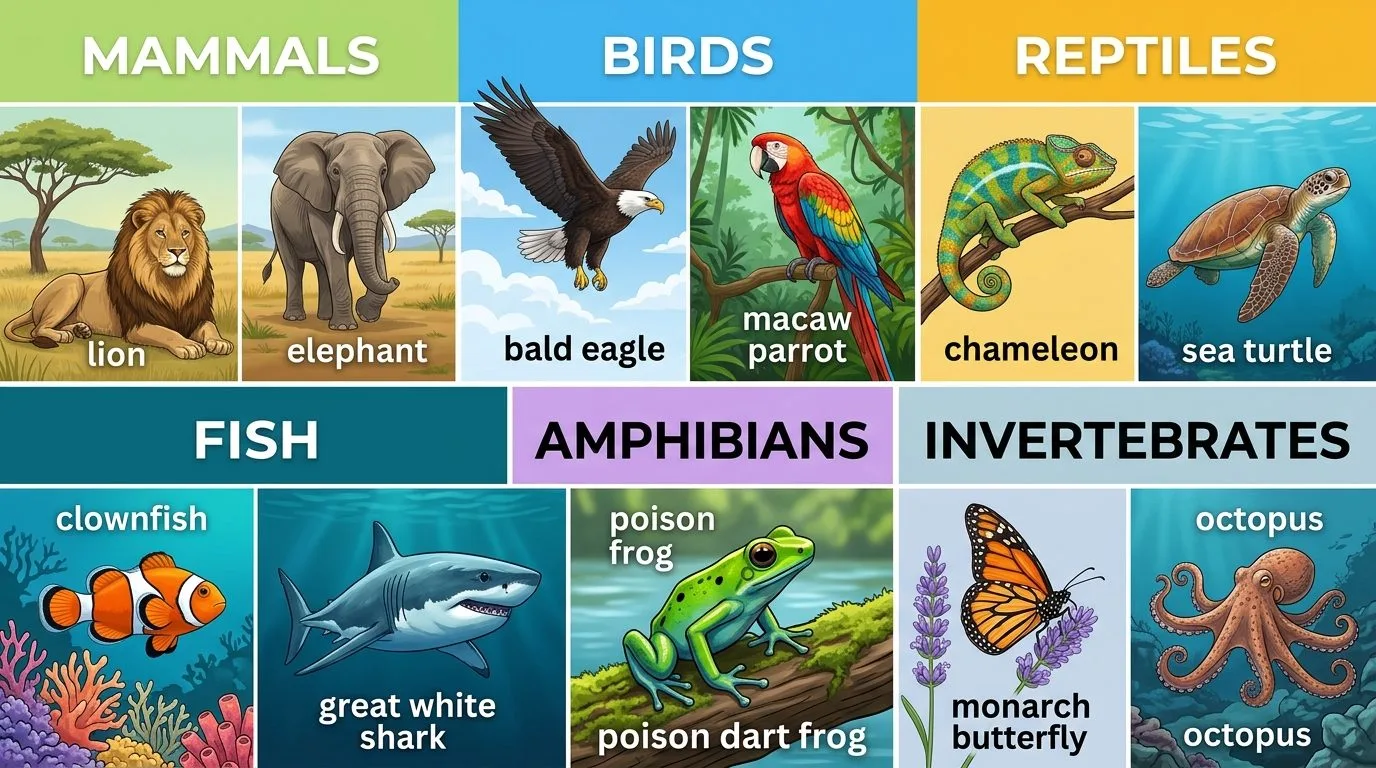
For students learning where spiders fit into animal biology, SuperEducational's animal-classification guide explains the larger difference between vertebrates and invertebrates. Spiders are arachnids, not six-legged insects.
10. What other jobs does silk perform?
Safety lines and movement
Dragline silk helps some spiders descend and recover after a slip, and serves as a temporary anchor as they move. Not all use it in exactly the same way, but it can function like a lightweight biological safety tether.
Egg sacs and nurseries
Silk can form protective coverings that hold eggs together and help shield them from some environmental hazards. Egg-case construction uses silk types suited to their protective function and can differ greatly across species.
Prey wrapping
Some spiders rapidly wrap captured insects in silk to reduce movement and make feeding safer. Recent material-science reviews are exploring the different mechanical properties of aciniform prey-wrapping silk, which should not be assumed to behave like ordinary dragline.
Courtship and sensing vibrations
Silk strands can transmit vibrations, allowing spiders to detect potential prey or signals from other spiders. Some male spiders prepare silk structures involved in reproduction. The silk's use depends on spider behaviour, not only on the chemistry of the fibre.
Silk and venom are separate biological tools: silk is mostly a structural protein material, while venom is a mixture of substances delivered by specialised biting apparatus. SuperEducational's published feature How Venom Kills—and Can Lead to Cures explores venom science in a different context.
11. Can a spider run out of silk?
Silk production has an energetic and nutritional cost because the spider must synthesise proteins. A spider can have limited available material at a given moment and needs biological resources to replenish it. Producing and maintaining elaborate webs is therefore not free, even though silk is an efficient natural material.
Some orb-weavers dismantle and eat parts of older webs, recovering material before rebuilding. However, not every spider follows this behaviour, and it would be inaccurate to assume all webs are eaten or replaced daily. Web repair, rebuilding and recycling vary with species, weather, prey availability and circumstances.
The essential point is that spiders do not manufacture unlimited silk at no cost; web-building reflects a balance between energy expenditure and potential feeding benefit.
12. Can scientists make artificial spider silk?
Researchers are interested in spider silk because its structure can combine light weight, mechanical resilience and protein-based processing. The obvious question is whether humans can produce something similar without farming enormous numbers of spiders.
Natural silk is difficult to harvest at industrial scale because spiders are predatory, often territorial and do not behave like domesticated silkworms. Scientists therefore investigate recombinant spidroins—proteins made with engineered biological production systems—and experimental ways of spinning them into fibres.
That work faces at least two connected challenges. First, natural spidroins are very large and repetitive, making some versions hard to produce and purify efficiently. Second, reproducing the gland's pH gradients, ion conditions, molecular assembly and drawing process is difficult. Researchers have produced promising experimental fibres, but the properties, repeatability, cost and scalability of finished products still matter.
Studies published in Nature Communications (2024) and reviews of recombinant spider-silk bottlenecks explain these challenges. A 2025 review of spider-silk production and applications discusses possible uses in tissue-engineering scaffolds, delivery systems, sutures and other biomaterials. These are research and development directions, not a claim that spider silk has already become a standard clinical replacement for conventional materials.
13. Classroom activity: model the jobs of different silk types
A useful school activity can demonstrate structure versus function without capturing or disturbing spiders. Students can construct a simple model from string and removable tape; the model illustrates roles, not the molecular properties of real spider silk.
Materials
Use cardboard, cotton string or yarn, a ruler, coloured pencils and short lengths of removable tape. An adult should supervise scissors when children participate.
Method
- Draw a large circle on a sheet of cardboard as a web frame.
- Add strong straight threads from the centre to the edge to represent non-sticky structural lines.
- Place thinner spiral pieces across the spokes to represent a capture spiral.
- Add very small removable tape tabs to selected spiral sections as an analogy for sticky capture material.
- Compare which parts hold the structure and which parts could retain a lightweight paper “insect”.
- Discuss how using a different material for the spiral changes the model's function.
Scientific limitation: Tape does not reproduce aggregate glue, and cotton yarn does not reproduce spidroin molecular structure. The purpose is to visualise why a useful web needs different functional components. Do not add live insects, spiders or sharp tools.
Common misconceptions about spider silk
| Claim | What the evidence supports |
|---|---|
| “Spider silk is just dried spit.” | False. It is a protein-based material made in specialised abdominal glands. |
| “The spinnerets create all the proteins.” | False. Silk proteins are produced internally; spinnerets position the external outlets. |
| “All spider silk is sticky.” | False. Many important framework and safety threads are non-sticky. |
| “Every spider spins an orb web.” | False. Hunting and shelter-building behaviours differ widely. |
| “Every spider has seven silk glands.” | False. Seven functional types are often described for specialised orb weavers, not every spider. |
| “Every silk fibre is stronger than steel.” | Misleading. Properties depend on the silk, steel type and measurement used. |
| “Scientists have perfectly copied natural silk.” | False. Experimental and engineered products exist, but matching native performance and scale remains challenging. |
Frequently asked questions
Where does silk come out of a spider?
Typically from tiny spigots carried on movable spinnerets near the rear of the abdomen. The silk-making proteins originate in glands inside the spider.
Is spider silk a liquid or a solid?
It starts as a concentrated, water-containing protein mixture inside the gland and becomes a solid fibre through a controlled spinning process involving chemistry and mechanical forces.
Why does spider silk not break easily?
Some types, especially dragline silk, have molecular structures that combine ordered regions contributing strength with more flexible regions that allow stretching. Performance also depends on fibre size, moisture and loading conditions.
Can all spiders make silk?
Yes. All spiders produce silk, but species differ in how much they make, which types they produce and how they use them.
Is spider silk the same as silkworm silk?
No. Both are protein-based natural fibres, but spiders and silkworms use different proteins, spinning anatomy and biological behaviours. Their fibre structures and properties are not identical.
Do spiders shoot webs like superheroes?
Not in the fictional sense. Spiders typically draw silk from spinnerets and place it using body movement and legs. Some silk can travel on air currents, allowing bridge lines or ballooning, but this is not a high-pressure web-launching device.
Do spiders get stuck to their own silk?
Not all lines are sticky. Many spiders position themselves on non-sticky supports and use leg anatomy and movement to reduce contact with adhesive capture silk.
Could spider silk be used for medical devices?
Researchers are investigating silk-based materials for several biomedical applications, but safety, manufacturing quality, regulation and clinical performance must be established for specific products.
Conclusion: silk is biological materials engineering
Spiders make silk by combining protein synthesis inside specialised glands with the controlled conversion of spidroins into threads as they travel through ducts and spinnerets. The process depends on protein chemistry, acidity, ions, water and mechanical drawing. Different silks are designed for different jobs: strong supports, stretching capture spirals, attachment points, protective egg sacs and prey wrapping.
The deeper lesson is that structure enables function. A spider does not need one perfect all-purpose thread; it makes and deploys several materials whose properties suit the task. Scientists studying these systems hope to develop better protein-based fibres, but there is still much to learn from the spider's remarkably precise, small-scale manufacturing process.
References and further reading
- Natural History Museum — What Are Spider Webs Made Of? And How?
- Australian Museum — Silk: The Spider's Success Story
- Denver Museum of Nature & Science — Colorado Spider Survey
- Sonavane et al. (2024) — Origin, Structure, and Composition of Major Ampullate Silk
- Communications Chemistry (2024) — Liquid-Liquid Crystalline Phase Separation of Spider Silk Proteins
- Nature Communications (2024) — Replicating Shear-Mediated Self-Assembly of Spider Silk
- Nature Genetics — Diversity of Spider Silk Genes and Their Expression
- The Elaborate Structure of Spider Silk — Structure and Function of a Natural Fibre
- Recombinant Spider Silk: Promises and Bottlenecks
- Structure, Production and Application of Spider Silks (2025 review)