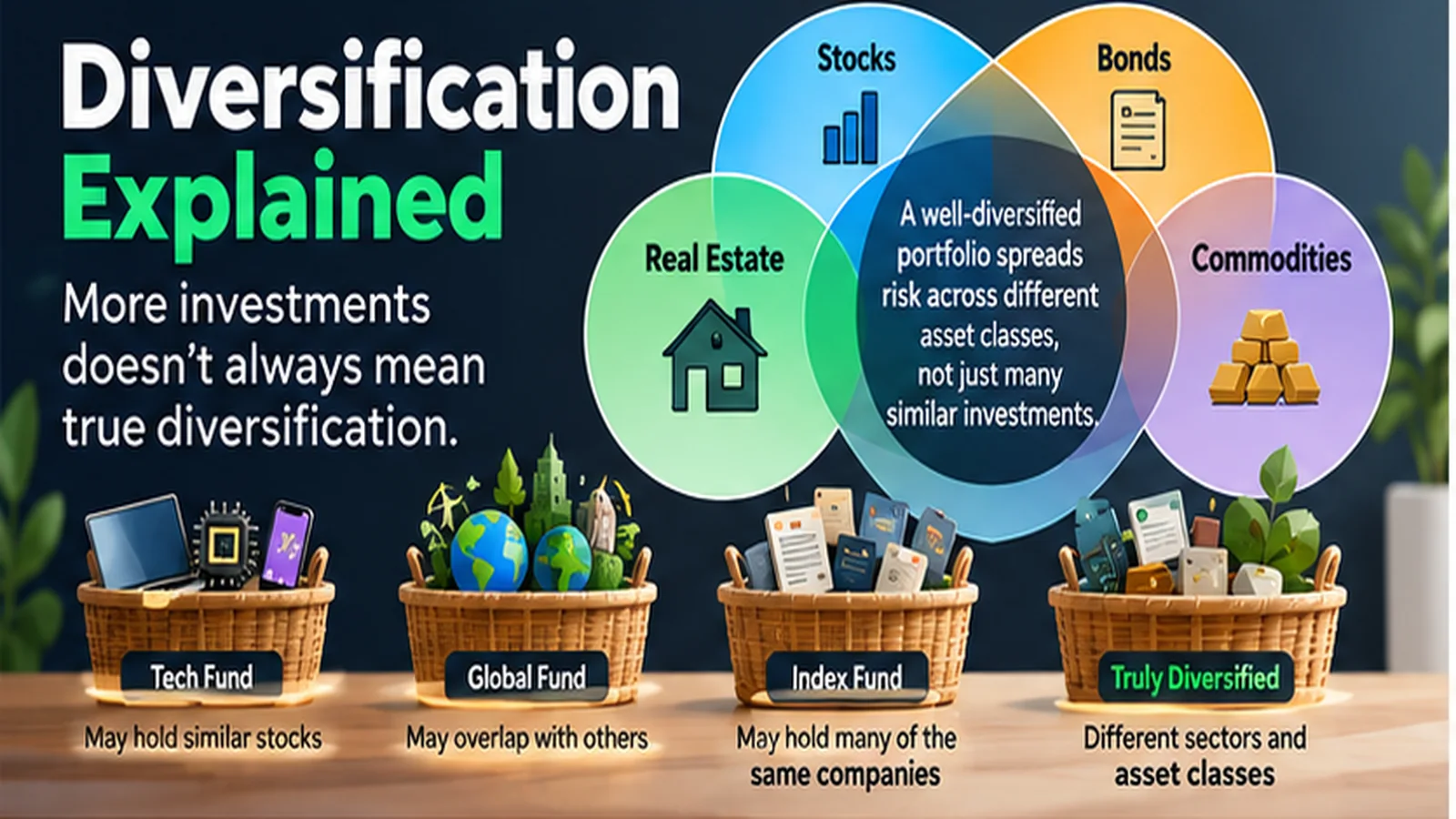
Diversification is about spreading risk, not simply collecting more investments. A portfolio can contain several funds and still be heavily concentrated if those funds own many of the same companies, sectors or asset types.
This guide explains diversification, concentration risk, asset classes, overlapping fund holdings and practical ways to check whether a portfolio is genuinely diversified. It is general education, not personalised investment advice.
What diversification means
Diversification means spreading money across different investments so that the portfolio is not dependent on a single company, sector, market or asset class. Investor.gov describes diversification as spreading investments to reduce overall portfolio risk, while FINRA explains that diversification can take place both among asset classes and within them.
Diversification is different from asset allocation
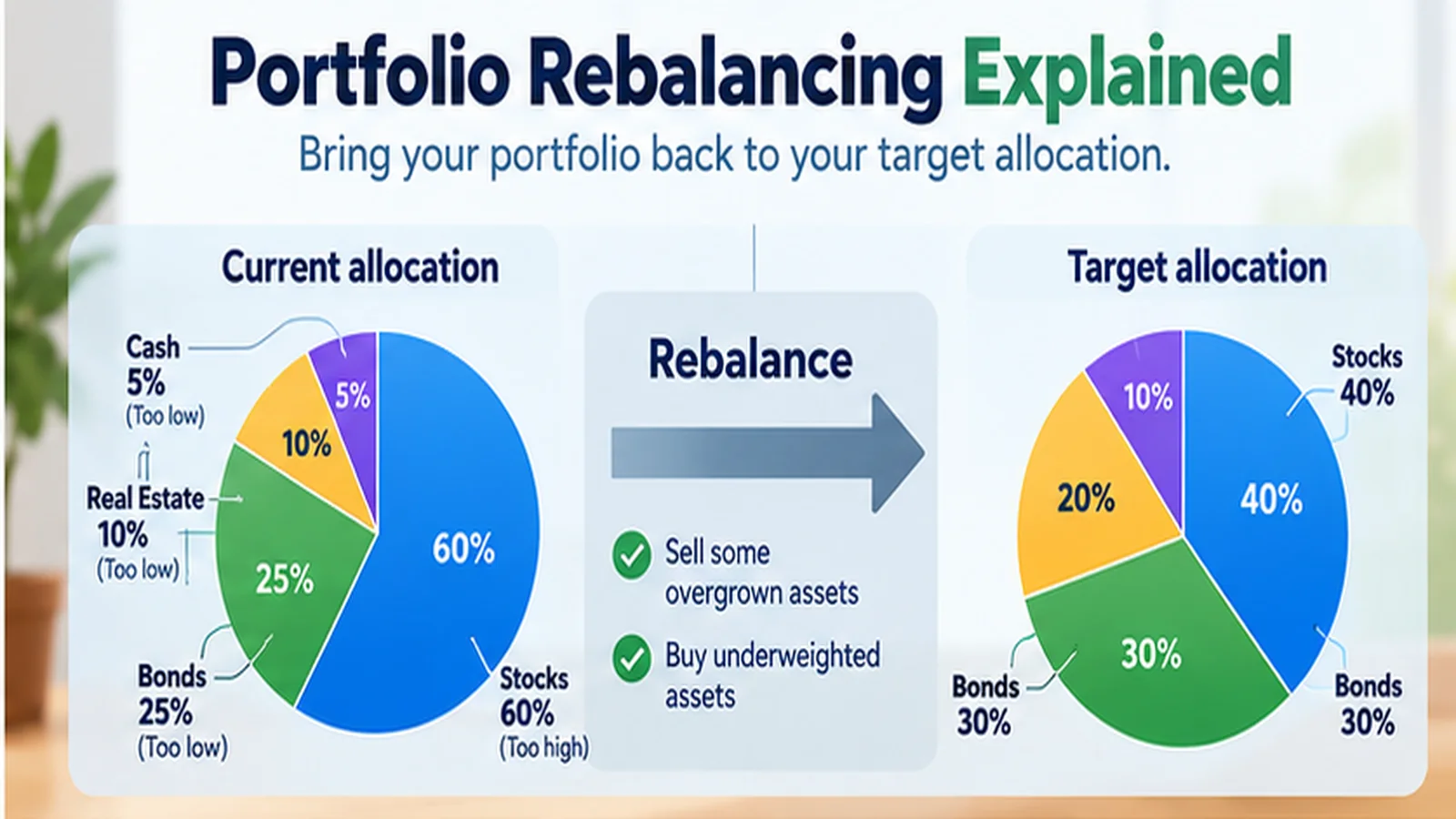
Asset allocation is the decision about how much of a portfolio is assigned to broad asset classes such as shares, bonds and cash. Diversification is the process of spreading exposure within and across those categories.
A portfolio could have 70% in shares and 30% in bonds and still be poorly diversified if the share allocation is concentrated in one industry or country.
Why owning more funds may not mean more diversification
Two funds with different names can hold many of the same underlying investments. A broad-market fund, a technology fund and a growth fund may all have large positions in the same major companies. Adding all three can increase the number of fund names without reducing concentration very much.
Investor.gov specifically notes that investors who hold several mutual funds or ETFs should check their top holdings because narrowly focused funds can overlap.
Concentration risk in simple terms
Concentration risk is the risk created when too much of a portfolio depends on one investment, industry, geography, theme or source of return.
Examples include:
- holding most of a portfolio in one company's shares;
- owning several funds dominated by the same sector;
- investing almost entirely in one country;
- having most fixed-income exposure from one issuer or credit category;
- using multiple products that follow very similar indexes.
How diversification can reduce risk
Different assets do not always move in the same direction or by the same amount. If one holding performs poorly, other holdings may perform differently. That can reduce the effect of a single weak investment on the total portfolio.
However, diversification cannot guarantee against losses. During broad market declines, many assets can fall at the same time.
Diversification within an asset class
Shares
Share diversification may involve spreading exposure across companies, industries, sizes and regions rather than depending on a narrow group.
Bonds
Bond diversification can include different issuers, maturities, credit qualities and bond types. Credit risk and interest-rate sensitivity can vary substantially across fixed-income securities.
Funds and ETFs
A fund can make diversification easier by holding many securities, but a narrowly focused fund may still create concentrated exposure. The fund's objective, benchmark and top holdings matter.
A simple overlap check
Suppose Fund A and Fund B each own 100 companies. It may appear that you own 200 different positions. But if 70 companies appear in both funds, your real diversification is much lower than the fund count suggests.
Useful questions include:
- What are the top 10 holdings in each fund?
- How much of each fund is in the same sector?
- Do several funds track similar indexes?
- Are the same large companies repeated across multiple products?
- How much exposure comes from one country or currency?
Diversification and correlation
Correlation describes how closely two investments tend to move together. Holdings that behave almost identically may provide less diversification benefit than holdings driven by different economic factors.
Correlation is not fixed. Relationships between assets can change, especially during periods of market stress, so diversification should not be treated as a guarantee.
Common diversification mistakes
Counting products instead of exposures
Ten funds can still represent a concentrated portfolio if they own similar securities.
Over-diversifying without a purpose
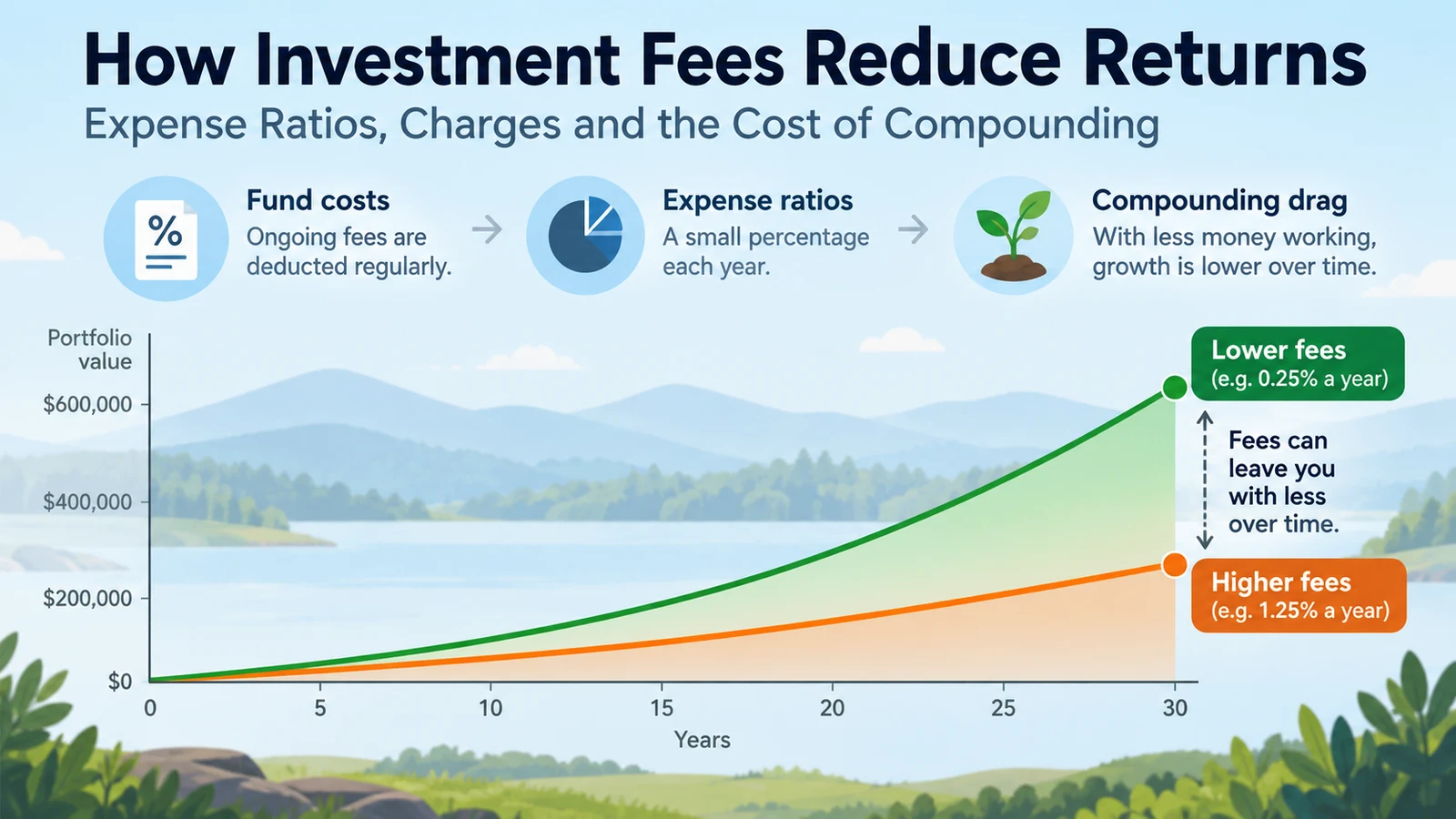
Adding more products can increase complexity and fees without materially changing risk.
Ignoring geographic concentration
Investors may unintentionally hold most assets in one country because familiar local investments feel safer.
Ignoring employer exposure
An employee who owns significant employer shares may already depend on the same company for both income and investment wealth.
Assuming diversification removes market risk
Diversification can reduce specific risks, but it cannot eliminate broad market losses.
A practical diversification checklist
- List each holding and its percentage of the portfolio.
- Group holdings by asset class.
- Review the largest companies or issuers inside each fund.
- Check sector and geographic concentration.
- Look for duplicate or overlapping indexes.
- Compare the result with your investment objective and time horizon.
- Consider fees, taxes and trading costs before making changes.
Key takeaway
True diversification comes from owning exposures that are meaningfully different, not from accumulating the largest possible number of products. The aim is to avoid having one investment or one source of risk dominate the portfolio while still keeping the structure understandable and consistent with the investor's objectives.
Sources
- Investor.gov — Asset Allocation and Diversification
- Investor.gov — Diversify Your Investments
- FINRA — Asset Allocation and Diversification
Educational notice: Investments can fall as well as rise. Diversification does not guarantee a profit or protect against all losses. This article is general education and not personalised financial, tax or legal advice.