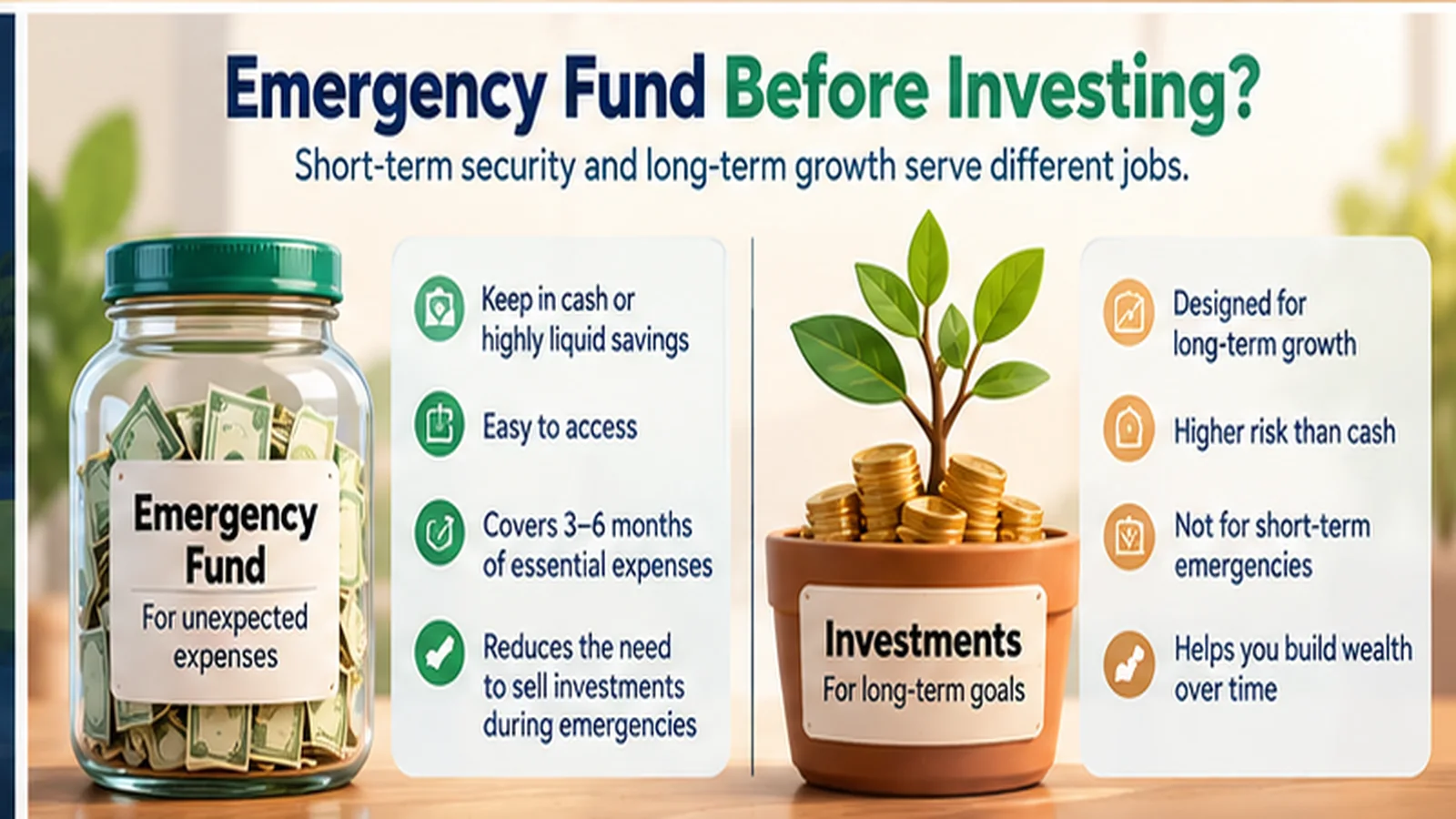
An emergency fund and a long-term investment portfolio serve different jobs. Emergency savings are designed primarily for liquidity and financial shocks. Investments are generally used for longer-term goals where the investor can accept market risk in exchange for the possibility of growth.
What an emergency fund is
The Consumer Financial Protection Bureau describes an emergency fund as a cash reserve set aside for unplanned expenses or financial emergencies, such as repairs, medical bills or loss of income.
Investor.gov similarly explains that savings for emergencies are typically kept in places that are accessible when needed.
Why liquidity matters
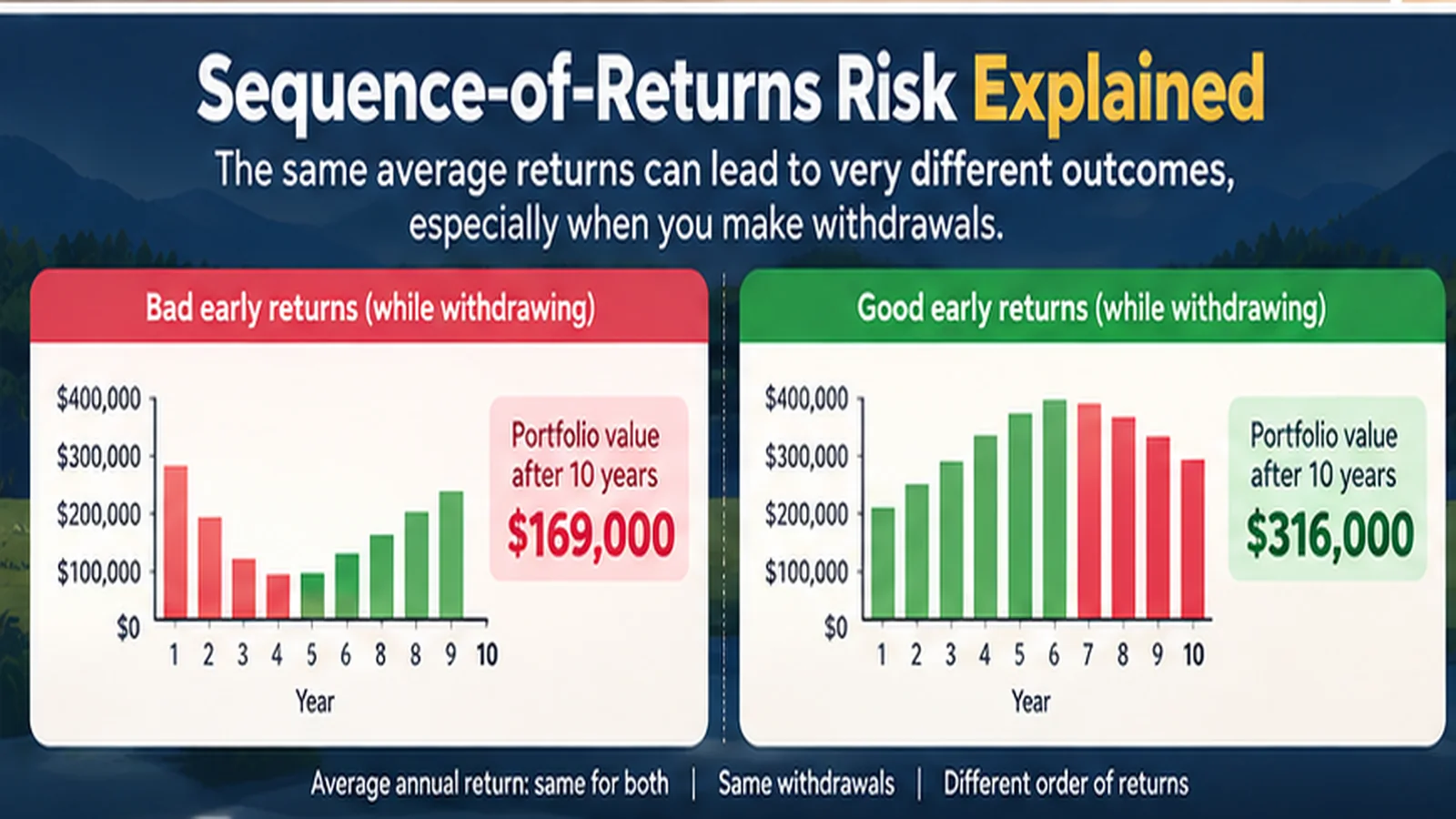
An emergency can require money quickly. If the money is invested in volatile assets, the investor may be forced to sell during a market decline. That turns a temporary market loss into a realised loss and can disrupt long-term plans.
For that reason, emergency savings are usually discussed separately from long-term investment capital.
Saving and investing solve different problems
Saving prioritises accessibility and capital stability. Investing usually accepts more uncertainty in pursuit of higher long-term growth.
Investor.gov explicitly distinguishes between money for short-term goals or emergencies and money intended for long-term investing.
How much emergency savings is enough?
There is no universal number that fits everyone. The CFPB notes that the appropriate amount depends on personal circumstances and the types of unexpected expenses a household is likely to face.
Investor.gov notes that some investors aim for several months of income or expenses, but this should not be treated as a mandatory rule for every household.
Factors that can change the target
- stability and predictability of income;
- number of earners in the household;
- insurance coverage and deductibles;
- dependants and fixed obligations;
- access to reliable credit;
- health, transport and housing risks;
- job-loss risk and time needed to find replacement income.
What about high-interest debt?
Investor.gov warns that high-interest credit-card debt can be difficult for investment returns to overcome because investment returns are not guaranteed. That is why emergency savings, debt management and investing are often considered together rather than as completely separate decisions.
Can emergency money be invested?
The central issue is whether the money can be available when needed without a meaningful risk of loss or delay. A volatile investment may be unsuitable for an expense that could arise tomorrow.
This does not mean all cash must remain idle indefinitely. It means money intended for near-term emergencies should be matched with an appropriate level of liquidity and risk.
The cost of holding cash
Cash has trade-offs. Inflation can reduce purchasing power, and cash may earn less than long-term investments over long periods. That is why households often separate emergency reserves from money intended for long-term growth.
A practical framework
- Identify what counts as a genuine emergency.
- Estimate the likely size of near-term financial shocks.
- Choose an accessible place for emergency savings.
- Review high-interest debt and essential insurance.
- Separate short-term reserves from long-term investment goals.
- Rebuild the reserve after it is used.
Common mistakes
- treating a credit card limit as an emergency fund;
- investing all available cash and leaving no liquid reserve;
- keeping long-term retirement money entirely in cash because emergencies feel possible;
- using emergency savings for predictable annual expenses;
- setting a target once and never revisiting it after income or family circumstances change.
Key takeaway
Emergency savings are primarily about resilience and access. Long-term investing is primarily about future growth and accepting market risk. Treating them as separate layers can help prevent short-term shocks from forcing unwanted long-term investment decisions.
Sources
- Consumer Financial Protection Bureau — Building an Emergency Fund
- Investor.gov — Save for a Rainy Day
- Investor.gov — Build Wealth Over Time Through Saving and Investing
Educational notice: This article provides general financial education only and does not recommend a specific savings amount or investment. Products, protections, tax treatment and risks vary by jurisdiction.