
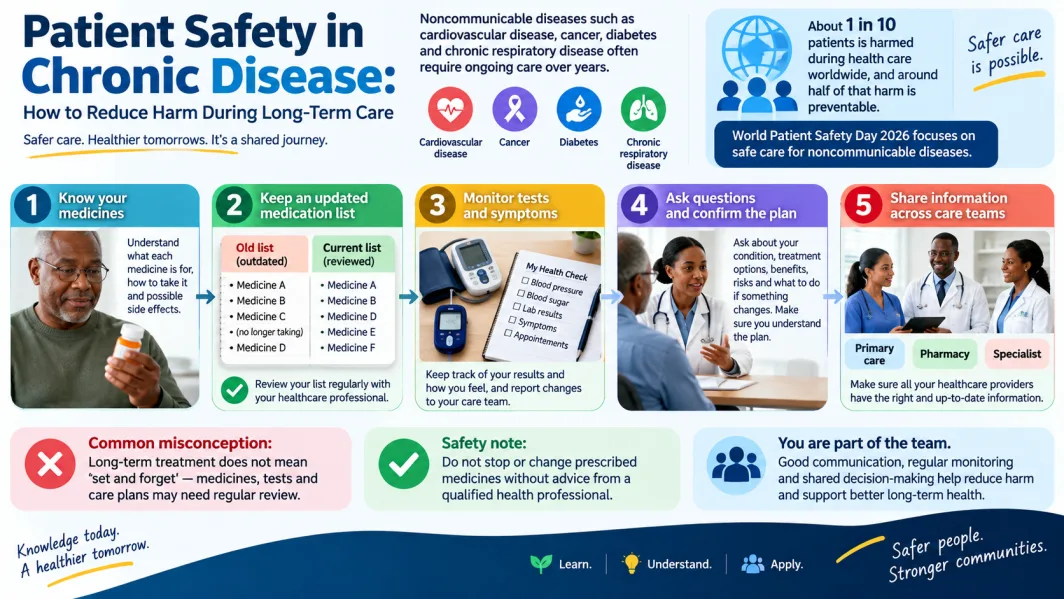
Chronic diseases such as cardiovascular disease, diabetes, cancer and chronic respiratory disease often require care over months or years. That means patient safety is not a one-time event. It depends on repeated decisions about medicines, tests, symptoms, referrals, follow-up and communication between different care teams.
WHO’s World Patient Safety Day 2026 focuses on safe care for noncommunicable diseases. WHO reports that about one in ten patients is harmed during health care worldwide and that around half of this harm is considered preventable.
This article explains general safety principles. It does not replace advice from a qualified health professional.
Why long-term care creates repeated safety risks
In short-term care, treatment may involve a small number of decisions over a limited period. Chronic disease care can involve many appointments, several professionals and medicines that change over time. Each transition creates an opportunity for information to become outdated or misunderstood.
Know what each medicine is for
Patients should understand, as far as practical, why each medicine has been prescribed, how it should be taken and what important side effects or warning signs have been discussed with them.
Do not stop or change a prescribed medicine without advice from a qualified health professional.
Keep an updated medication list
An accurate medication list can reduce confusion when care is provided by several professionals. It should include prescription medicines and, where relevant, non-prescription medicines or supplements that the care team needs to know about.
Medication reconciliation means comparing existing medication information with the current treatment plan so that additions, removals and changes are intentional and understood.
Monitor tests, symptoms and appointments
Many chronic conditions require regular monitoring. The exact tests and targets depend on the individual condition and treatment plan.
Patients can help by keeping track of scheduled tests, reporting important symptom changes and asking what follow-up is expected after a result.
Ask questions and confirm the plan
Shared decision-making works best when patients understand the purpose of treatment, expected benefits, possible harms and alternatives.
Useful questions can include: What is this treatment for? What should I watch for? When is the next review? Who should I contact if something changes?
Share accurate information across care teams
Primary care, pharmacies, specialists, hospitals and other services may all contribute to long-term treatment. Safety improves when each part of the system has accurate, up-to-date information.
Transitions are particularly important after hospital discharge, a new diagnosis, a medicine change or a specialist consultation.
Why “set and forget” is a risky idea
Long-term treatment does not mean the care plan should never change. Medicines, monitoring schedules and goals may need review as the condition changes, new evidence becomes available or other health problems develop.
Practical safety habits
- Keep a current medication list.
- Bring relevant records to appointments when practical.
- Ask when test results will be reviewed.
- Report new or worsening symptoms promptly according to the care plan.
- Confirm major medication changes and why they were made.
- Know which service to contact for urgent and non-urgent concerns.
Common misconception
“If I have taken the same treatment for years, regular review is unnecessary.” Not necessarily. Long-term treatment can still require monitoring for effectiveness, side effects, interactions and changes in health.
Key takeaways
- Patient safety in chronic disease is an ongoing process.
- Medication reconciliation helps keep treatment information accurate.
- Monitoring and follow-up are part of safe long-term care.
- Clear communication between patients and different care teams reduces avoidable confusion.
- Do not stop or alter prescribed treatment without qualified medical advice.
Frequently asked questions
Should I keep my own medicine list?
It can be useful, especially when several professionals are involved. Ask your care team what information they recommend you keep.
What if two clinicians give different instructions?
Ask the relevant healthcare team to clarify the plan rather than deciding independently which instruction to follow.
Can I change a medicine if I think it is causing side effects?
Seek qualified medical advice. Some medicines should not be stopped suddenly, and symptoms may have other causes.
Authoritative references
- World Health Organization — World Patient Safety Day 2026.
- World Health Organization — Patient safety resources.