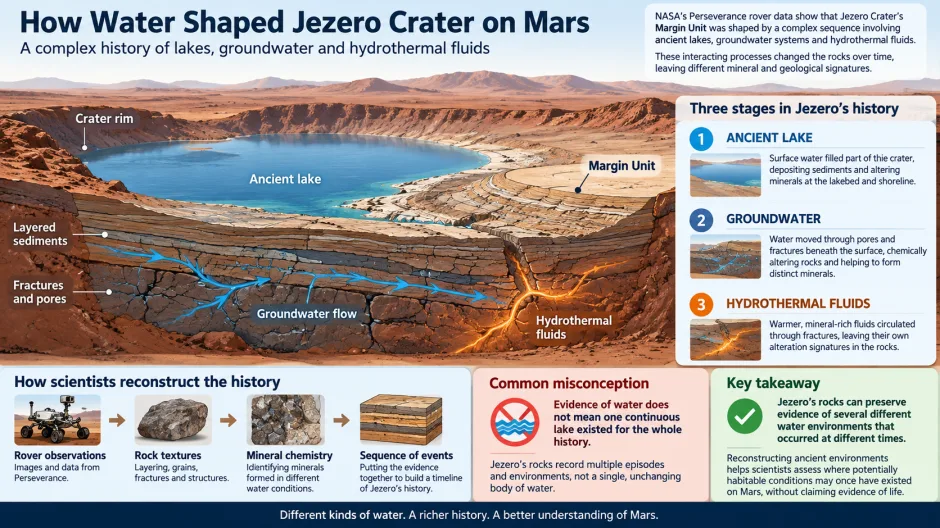
How Water Shaped Jezero Crater on Mars: Lakes, Groundwater and Hydrothermal Fluids
Explore how ancient lake water, groundwater and hydrothermal fluids left different geological clues in Jezero Crater—and how Perseverance reads that history.
Get the latest science news and learn about scientific breakthroughs and discoveries from around the world. See how science is making today's news.
Explore how ancient lake water, groundwater and hydrothermal fluids left different geological clues in Jezero Crater—and how Perseverance reads that history.
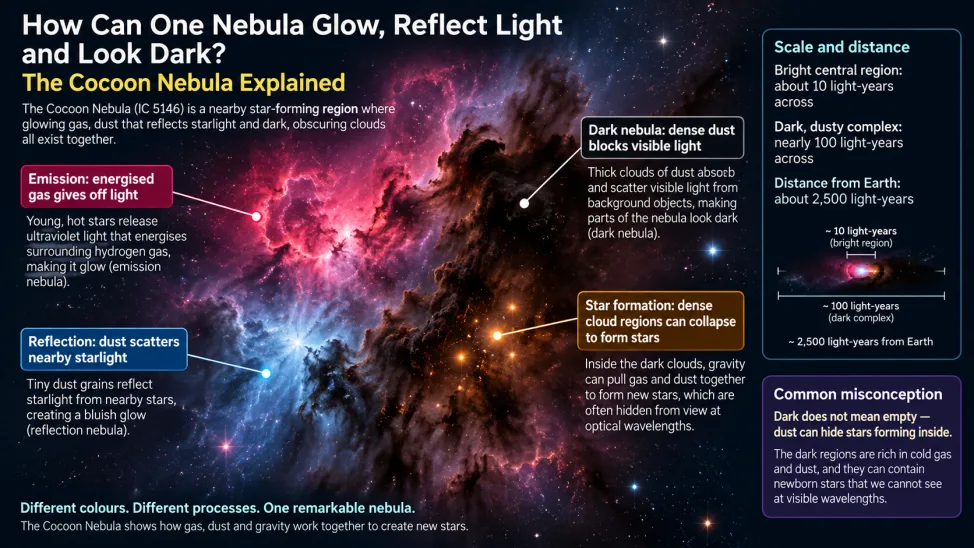
Learn how the Cocoon Nebula can be an emission, reflection and dark nebula at the same time, why dust hides stars, and how dense clouds form new stars.
Earth’s centre of mass shifts slightly as water, ice and atmosphere redistribute. Learn what the geocentre is and why millimetre-scale changes matter for satellites.
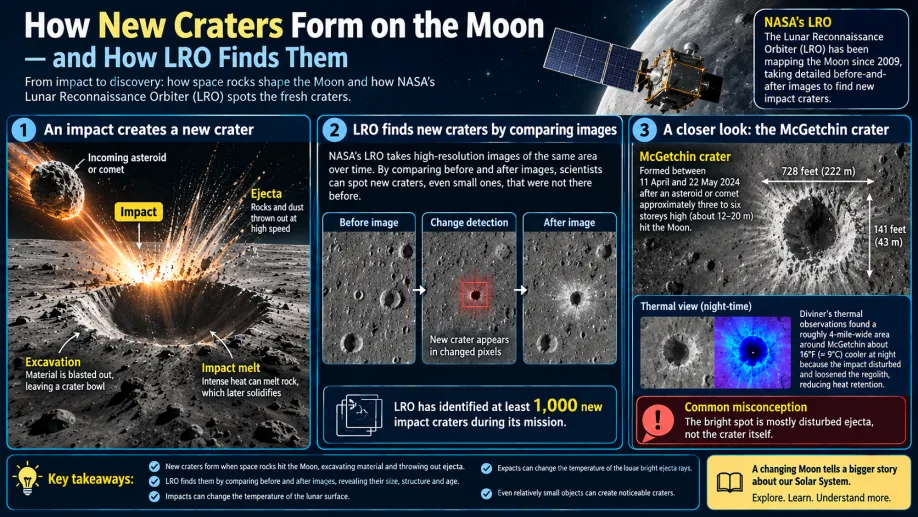
Learn how lunar impact craters form, why fresh ejecta looks bright, how secondary craters develop, and how NASA’s LRO finds new impacts by comparing before-and-after images.
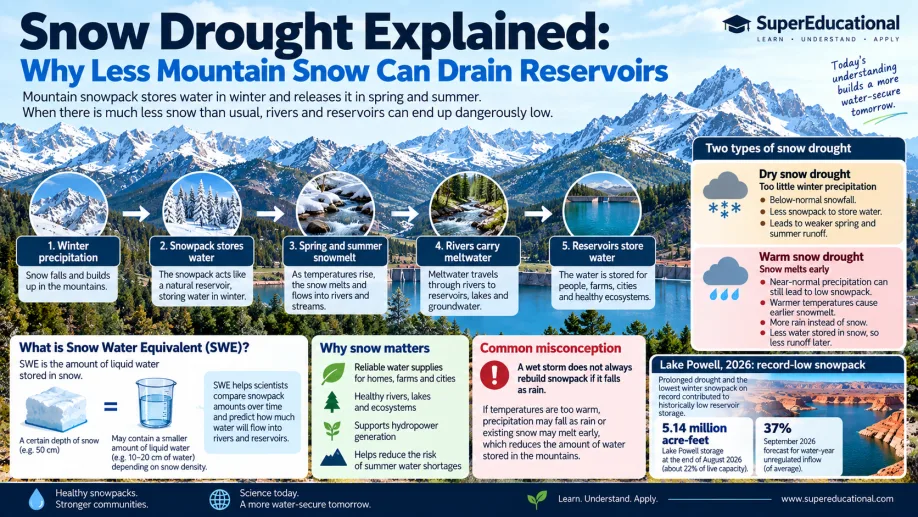
Learn what snow drought means, the difference between dry and warm snow drought, how snow water equivalent works, and why low mountain snowpack can reduce reservoir inflows.
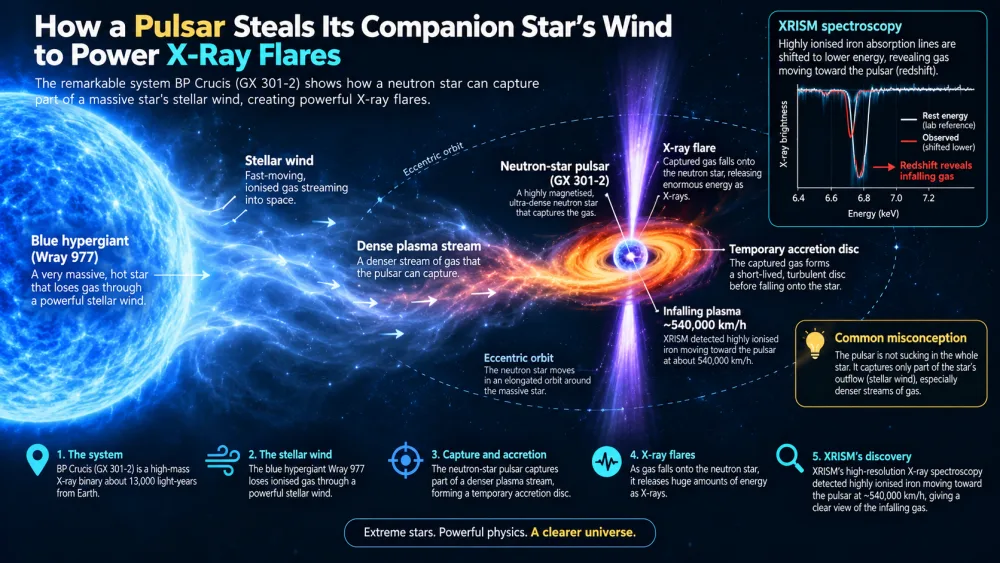
Learn how GX 301-2 captures part of Wray 977’s stellar wind, how temporary accretion forms, and how XRISM spectroscopy revealed plasma falling toward the pulsar.
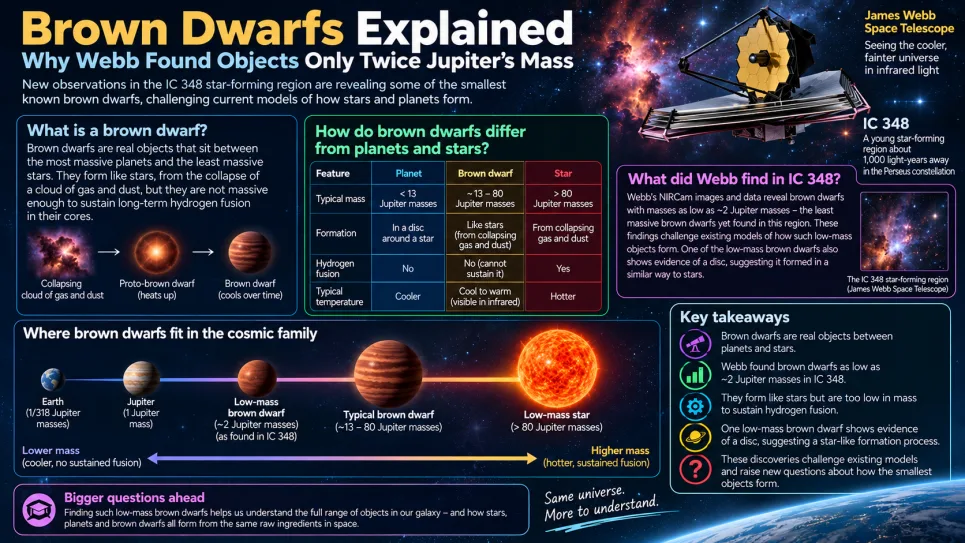
What is a brown dwarf? Webb has identified objects in IC 348 with masses around twice Jupiter's, helping astronomers test how the smallest star-like bodies form.
NASA has activated Roman's 300-megapixel Wide Field Instrument in space. Learn how its 18 detectors, wide field of view and infrared sensitivity enable enormous astronomical surveys.
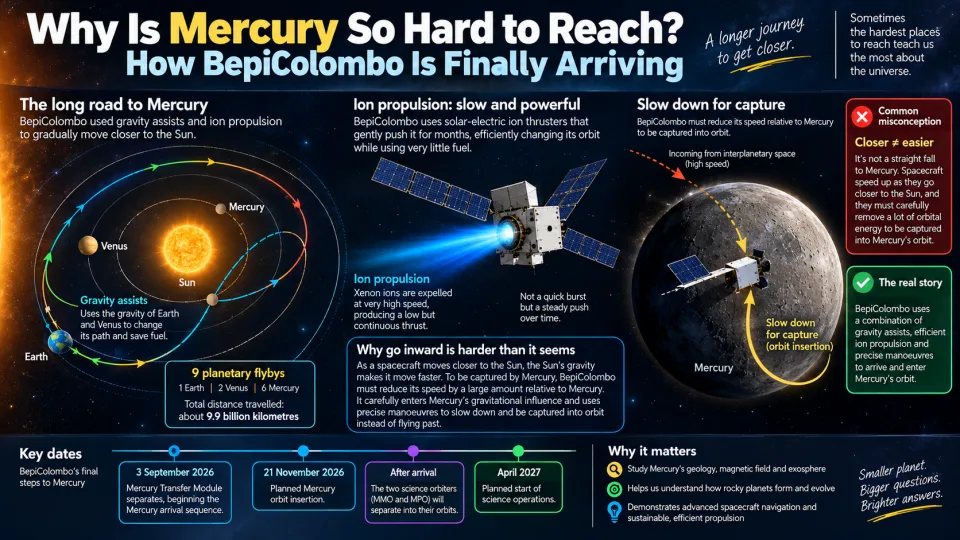
Mercury is relatively close to Earth, yet placing a spacecraft in orbit there is extraordinarily difficult. Here is how BepiColombo uses gravity assists, efficient propulsion and careful braking to arrive.
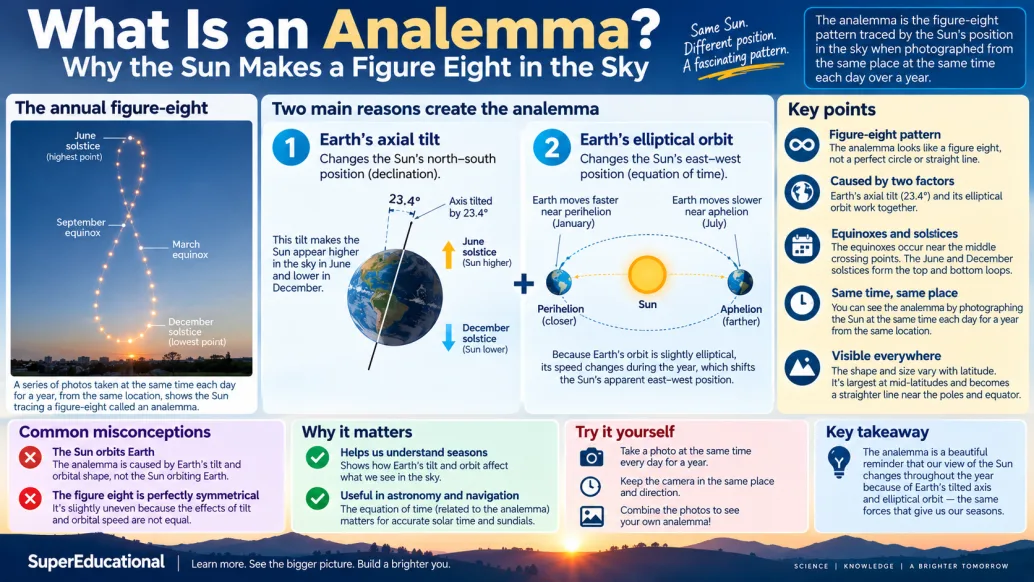
Learn what an analemma is, why the Sun traces a figure eight over a year, and how Earth’s axial tilt, elliptical orbit, solstices and equinoxes create the pattern.
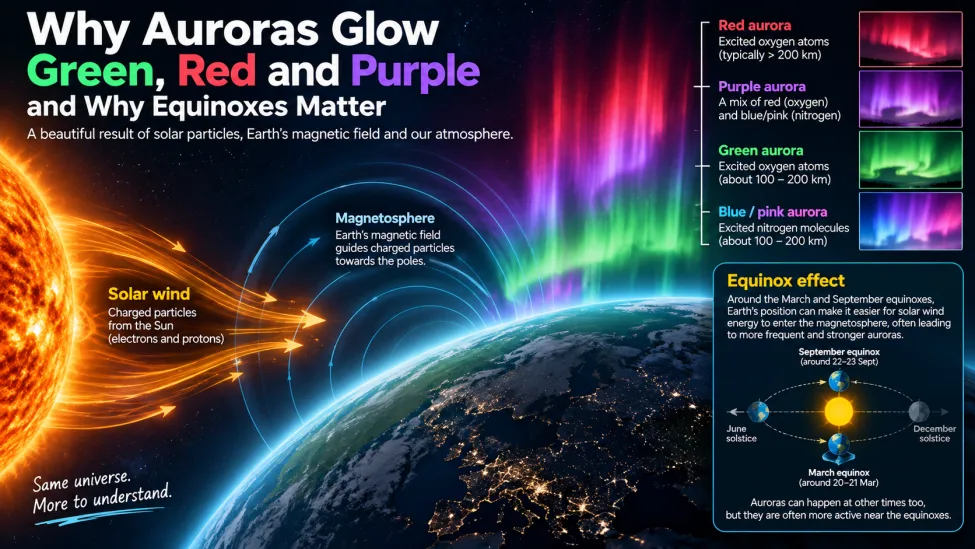
Learn why auroras glow green, red, blue, pink and purple, how oxygen and nitrogen create the colours, and why auroras can be more active near equinoxes.
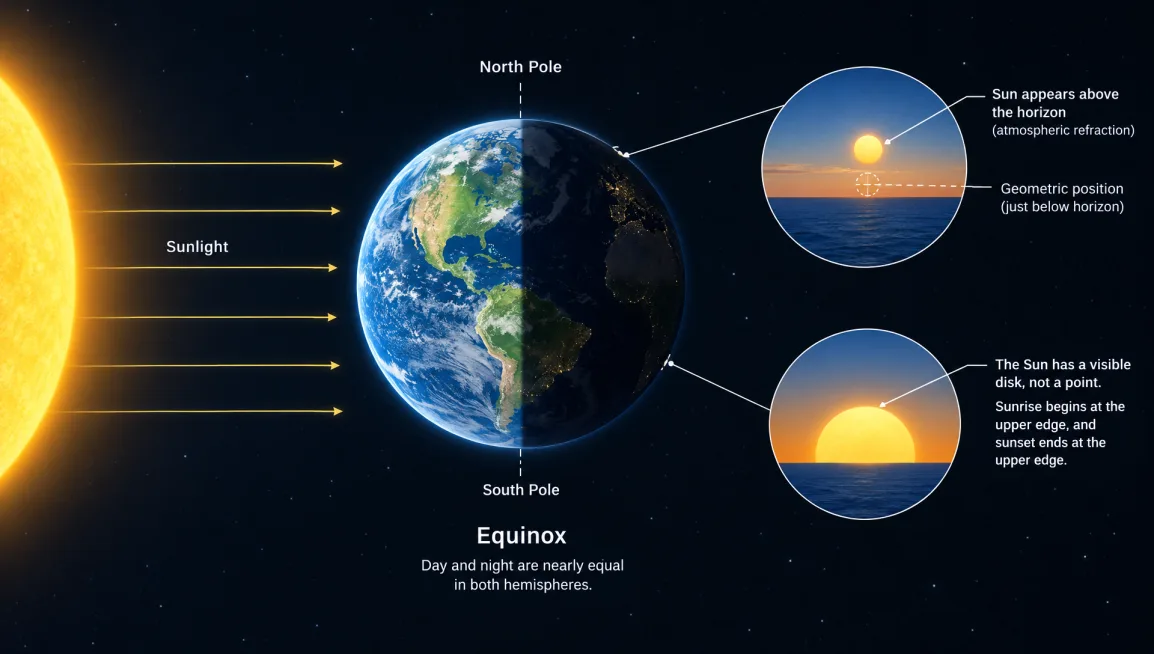
The equinox is often described as the day of 12 hours of daylight and 12 hours of darkness. In reality, the Sun’s visible disc, atmospheric refraction and latitude make the balance only approximate.