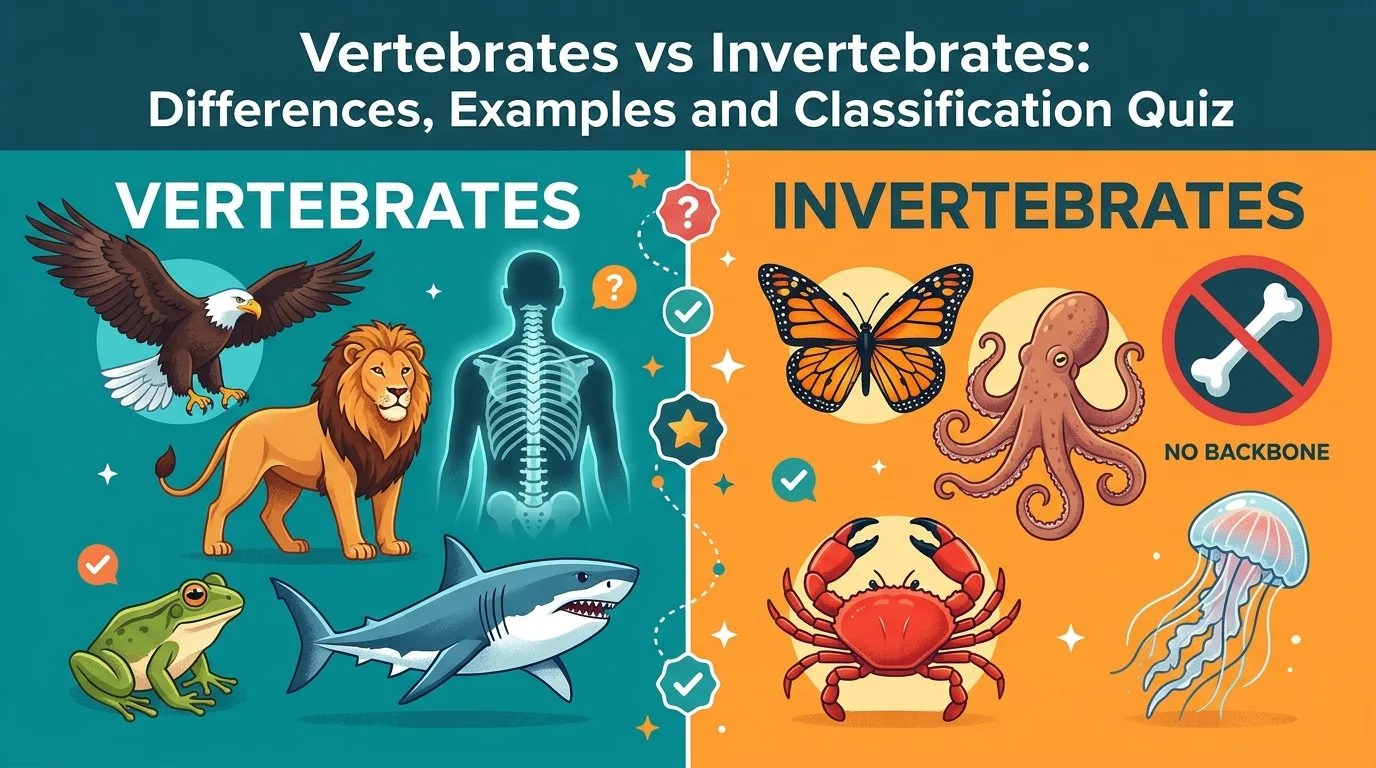
Vertebrates vs Invertebrates: Differences, Examples and Classification Quiz
Compare vertebrates vs invertebrates with simple definitions, examples, a skeleton comparison chart, tricky exceptions and a 15-question classification quiz.
Explore the natural world, remarkable places and the connections between people and environments.
Sign in to follow
Compare vertebrates vs invertebrates with simple definitions, examples, a skeleton comparison chart, tricky exceptions and a 15-question classification quiz.
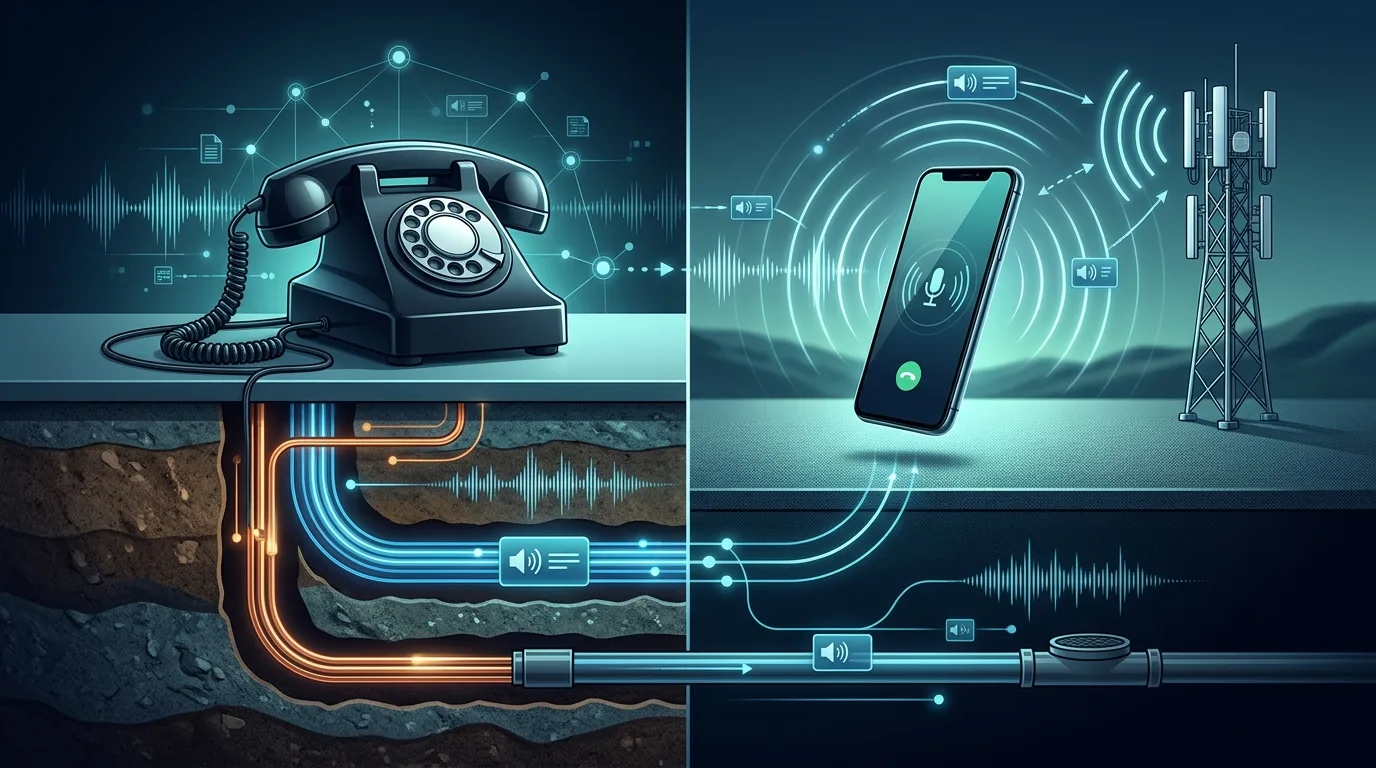
Landline vs mobile phones: see how calls travel through copper, fibre, cell towers and 4G/5G networks, plus differences in quality, reliability and power.
Learn what yardangs are, how wind abrasion and deflation carve them, how they differ from dunes, and what Curiosity's 2026 Mars observations reveal about long-term erosion.
Learn why the Shrimp Nebula Sh2-188 is strongly asymmetric, how stellar winds and motion through interstellar gas create a bow shock and what models can reveal.
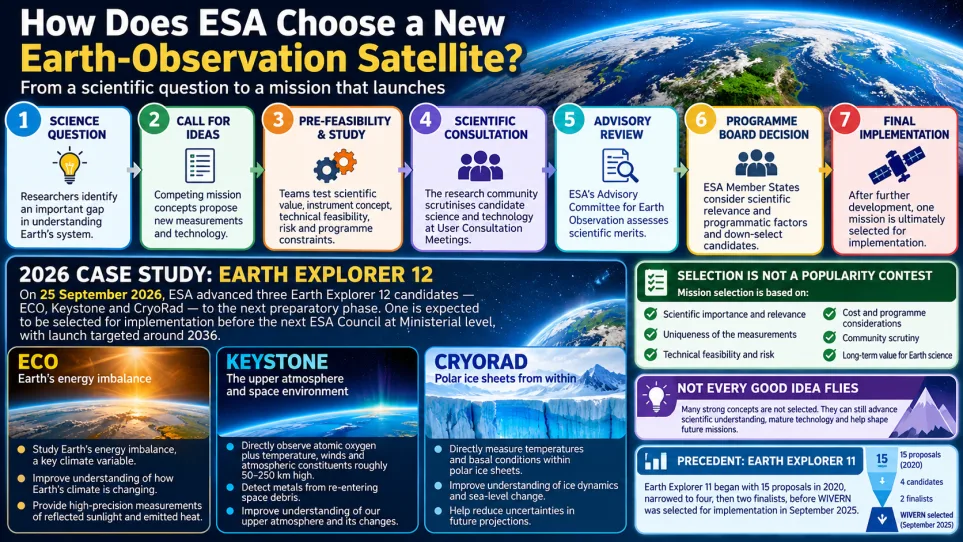
Learn how ESA’s Earth Explorer programme turns research questions into satellite missions, using ECO, Keystone and CryoRad as a 2026 case study.
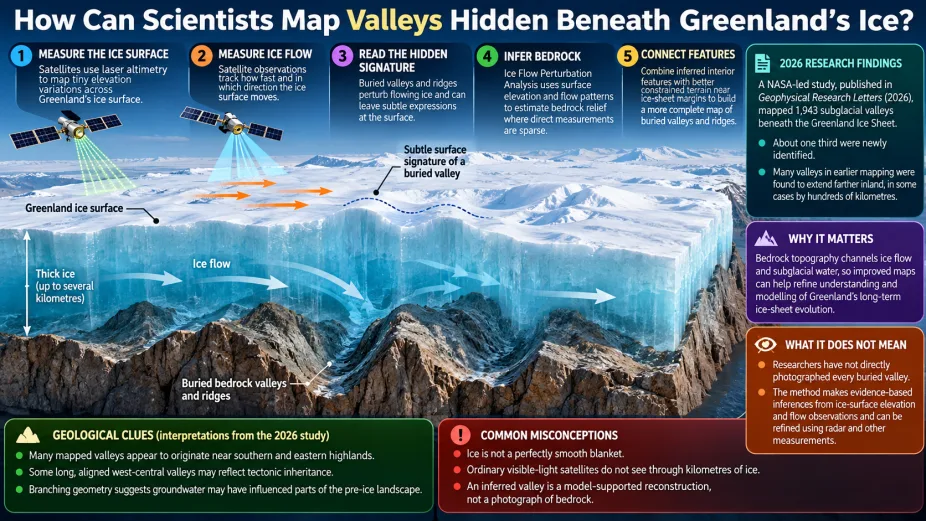
Learn how Ice Flow Perturbation Analysis reveals valleys hidden beneath Greenland’s ice, why bedrock topography matters and where the method’s uncertainties lie.
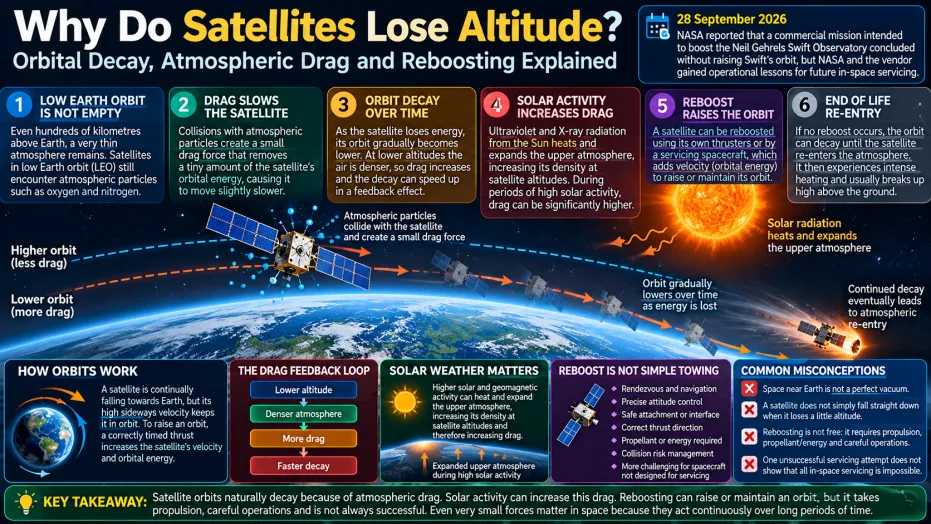
Learn why satellites in low Earth orbit can lose altitude, how solar activity changes atmospheric drag, how reboosting works and why orbital decay eventually leads to re-entry.
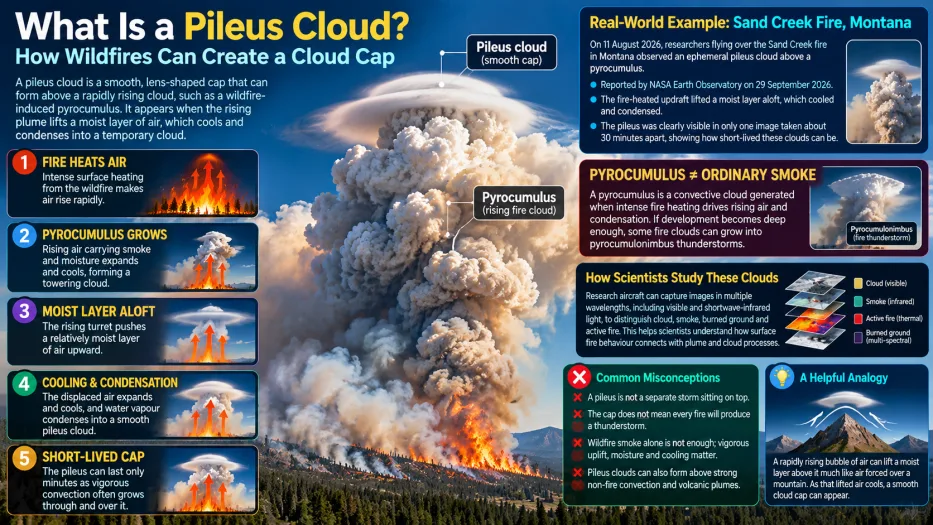
Learn how pileus clouds form above vigorous wildfire convection, how they differ from smoke and pyrocumulus, why they are short-lived and what they reveal about atmospheric motion.
Learn how fish otoliths reveal age, migration and past ocean conditions through growth increments, trace elements, stable isotopes and radiocarbon validation.
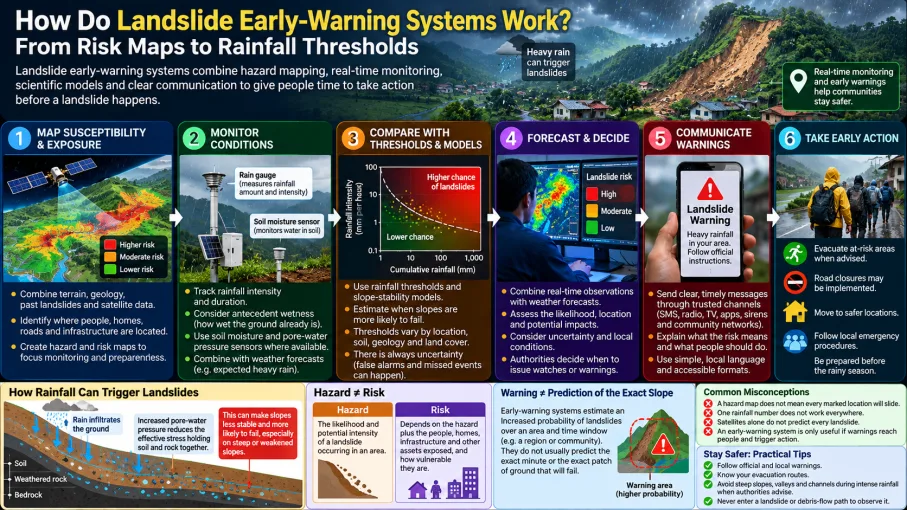
Learn how landslide early-warning systems turn terrain maps, rainfall, soil conditions and forecasts into practical warnings, and why uncertainty matters.
Learn how astronomers combined spectra from more than 200,000 galaxies to estimate the Universe’s average visible colour, why an early turquoise result was corrected and what Cosmic Latte really means.
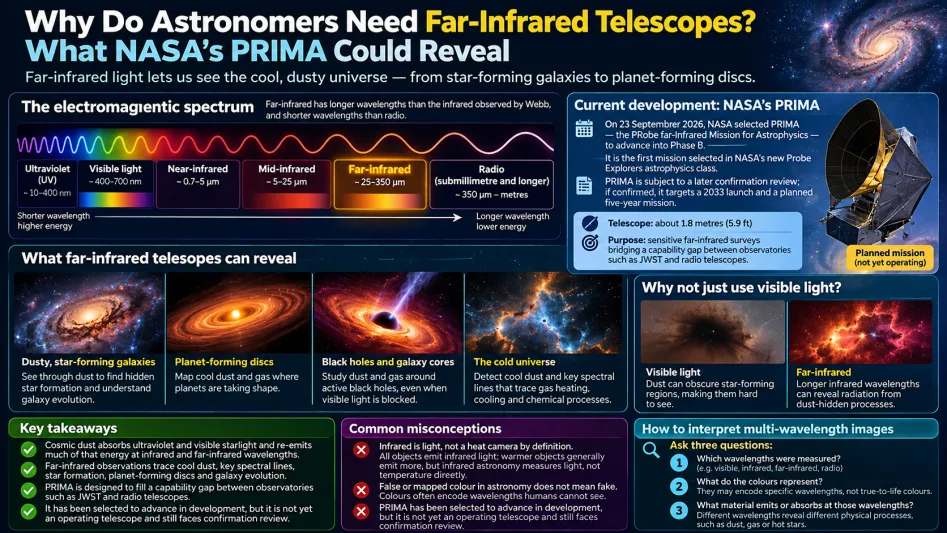
Discover why astronomers study the far-infrared universe, how cosmic dust changes what we see and what NASA’s proposed PRIMA mission is designed to investigate.