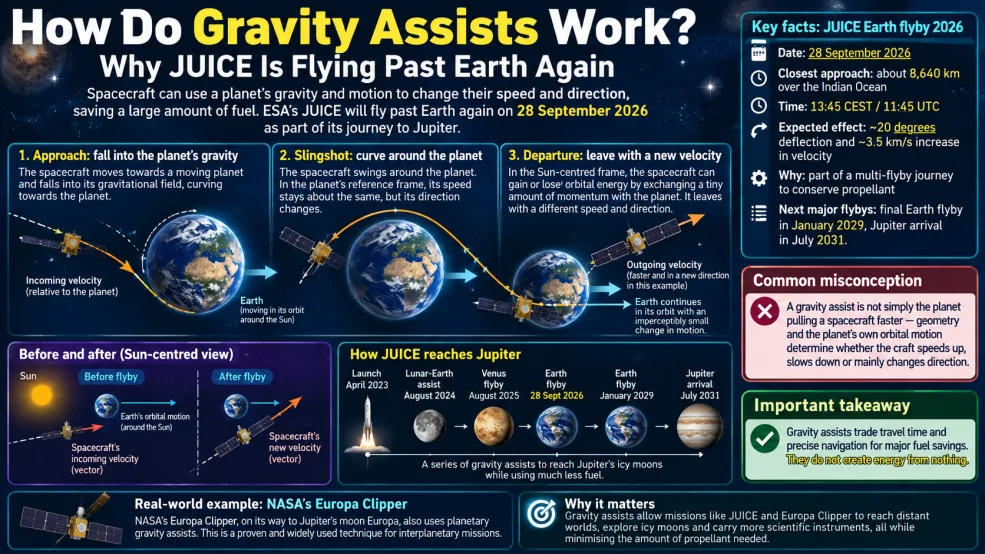
How Do Gravity Assists Work? Why Spacecraft Fly Past Planets to Change Course
Learn the physics of gravity assists, reference frames and planetary flybys, with ESA Juice’s September 2026 Earth encounter as a current example.
Explore the natural world, remarkable places and the connections between people and environments.
Sign in to follow
Learn the physics of gravity assists, reference frames and planetary flybys, with ESA Juice’s September 2026 Earth encounter as a current example.
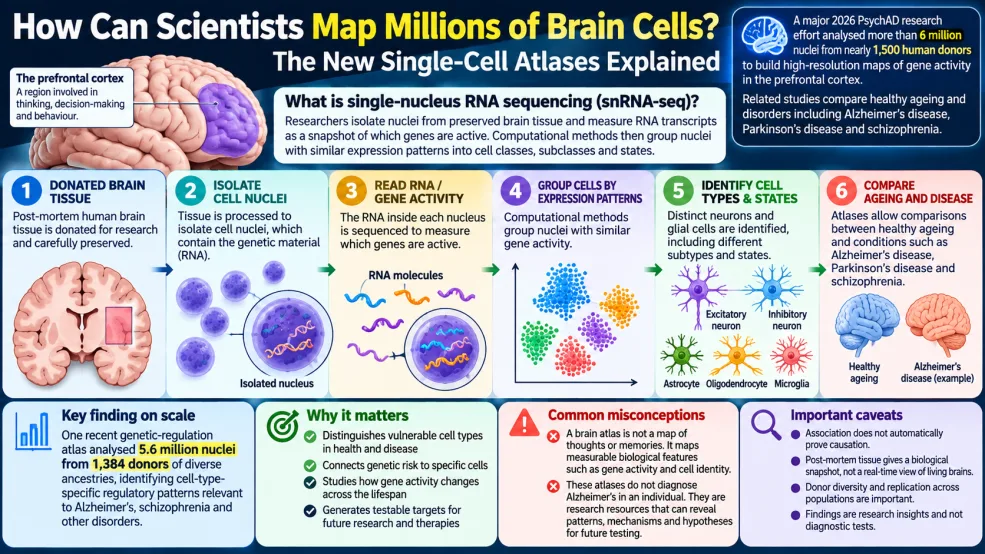
Learn how scientists use single-nucleus RNA sequencing and computational analysis to map millions of human brain cells—and what these new atlases can and cannot tell us about ageing and brain disorders.
Astronomy images often look dramatically different after processing. Learn what calibration, alignment, stacking, noise correction and stretching actually do—and where responsible processing ends and misleading manipulation begins.
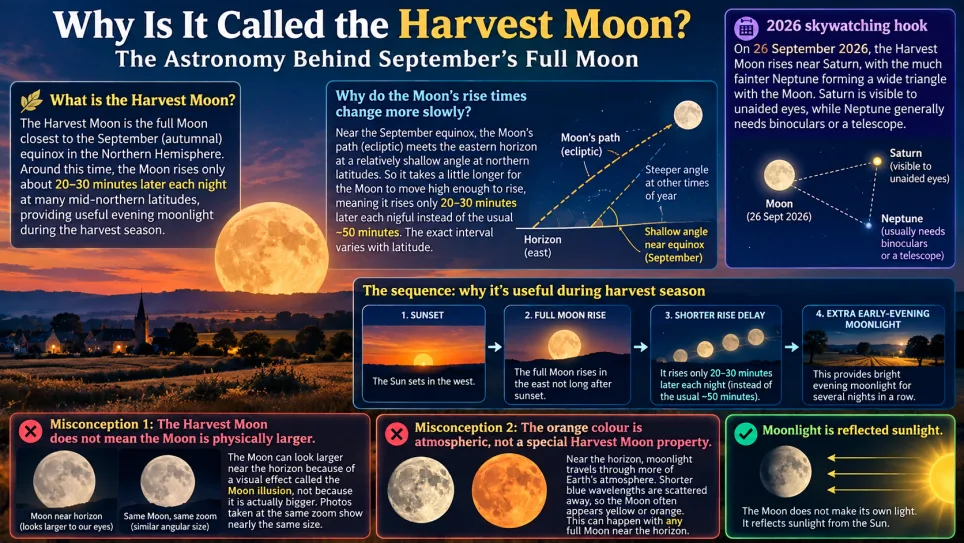
Learn why the full Moon nearest the September equinox is called the Harvest Moon, how the Moon’s shallow path changes moonrise times, and why it can appear unusually large and orange near the horizon.
Learn what hurricane rapid intensification means, why warm deep water and favourable atmospheric conditions matter, how Hurricane Polo intensified so quickly, and why forecasting these changes remains challenging.
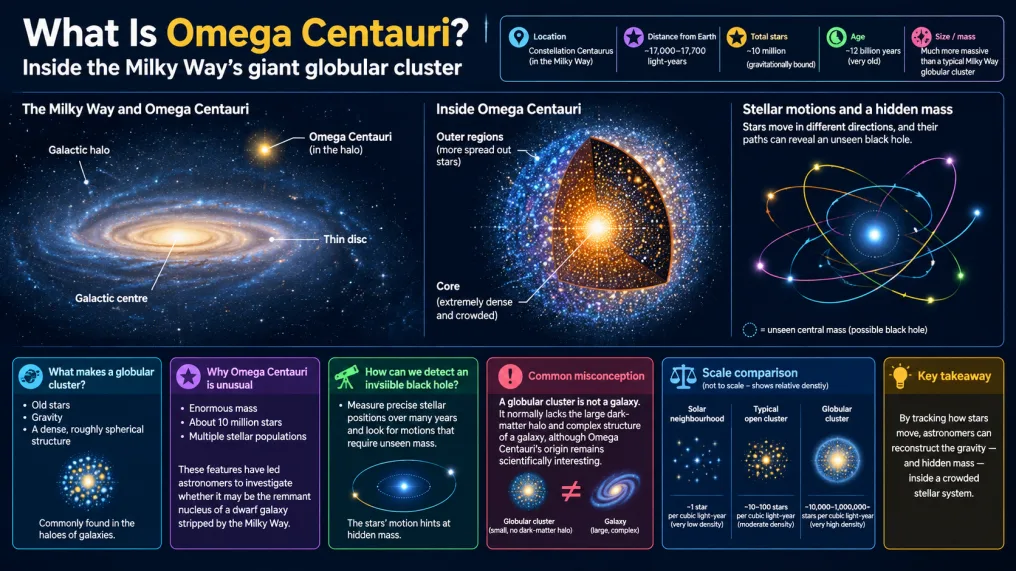
Learn what Omega Centauri is, how globular clusters differ from galaxies and open clusters, why its stellar populations are unusual, and how astronomers use stellar motions to search for hidden black holes.
ESA's JUICE spacecraft will fly past Earth again in September 2026. Learn how gravity assists change spacecraft speed and direction without creating energy from nothing.
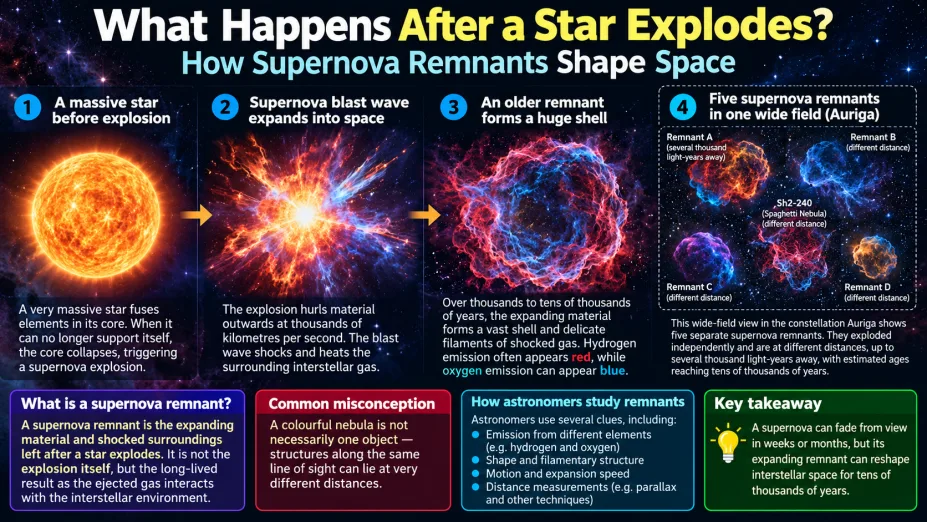
Learn what a supernova remnant is, how blast waves create shells and filaments, what glowing hydrogen and oxygen reveal, and why overlapping nebulae may be unrelated.
Elias 2-24 b is less than one million years old and still embedded in its birth disc. Learn how astronomers confirmed it and why the discovery challenges planet-formation models.
Arctic sea ice reached a likely 2026 minimum of 4.60 million km². Learn why the minimum occurs in September, what sea-ice extent means, how albedo works and how to read the long-term trend.
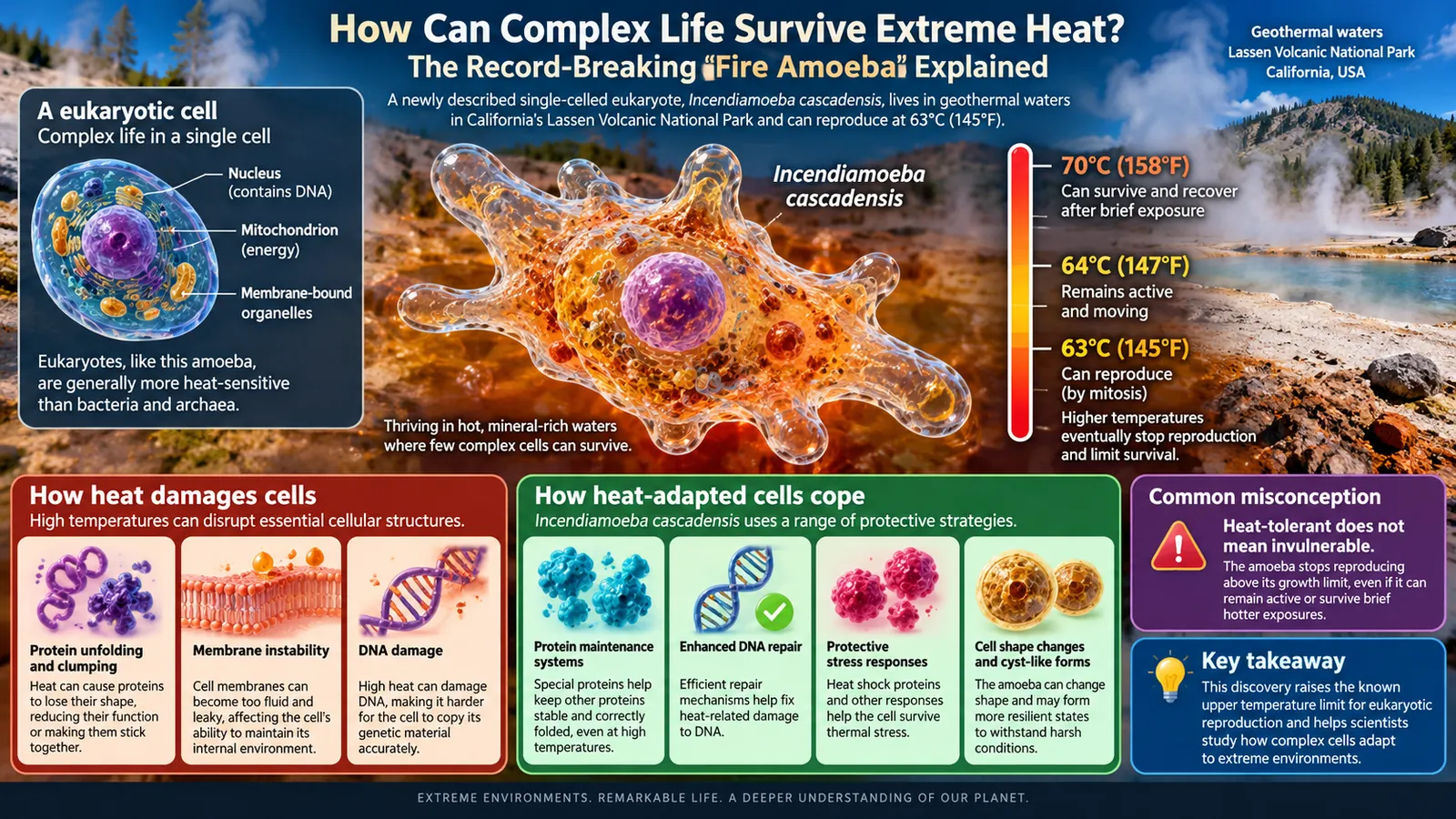
A newly described ‘fire amoeba’ can reproduce at 63°C and recover after brief exposure to 70°C. Learn what this record reveals about heat damage, cellular protection and the limits of complex life.
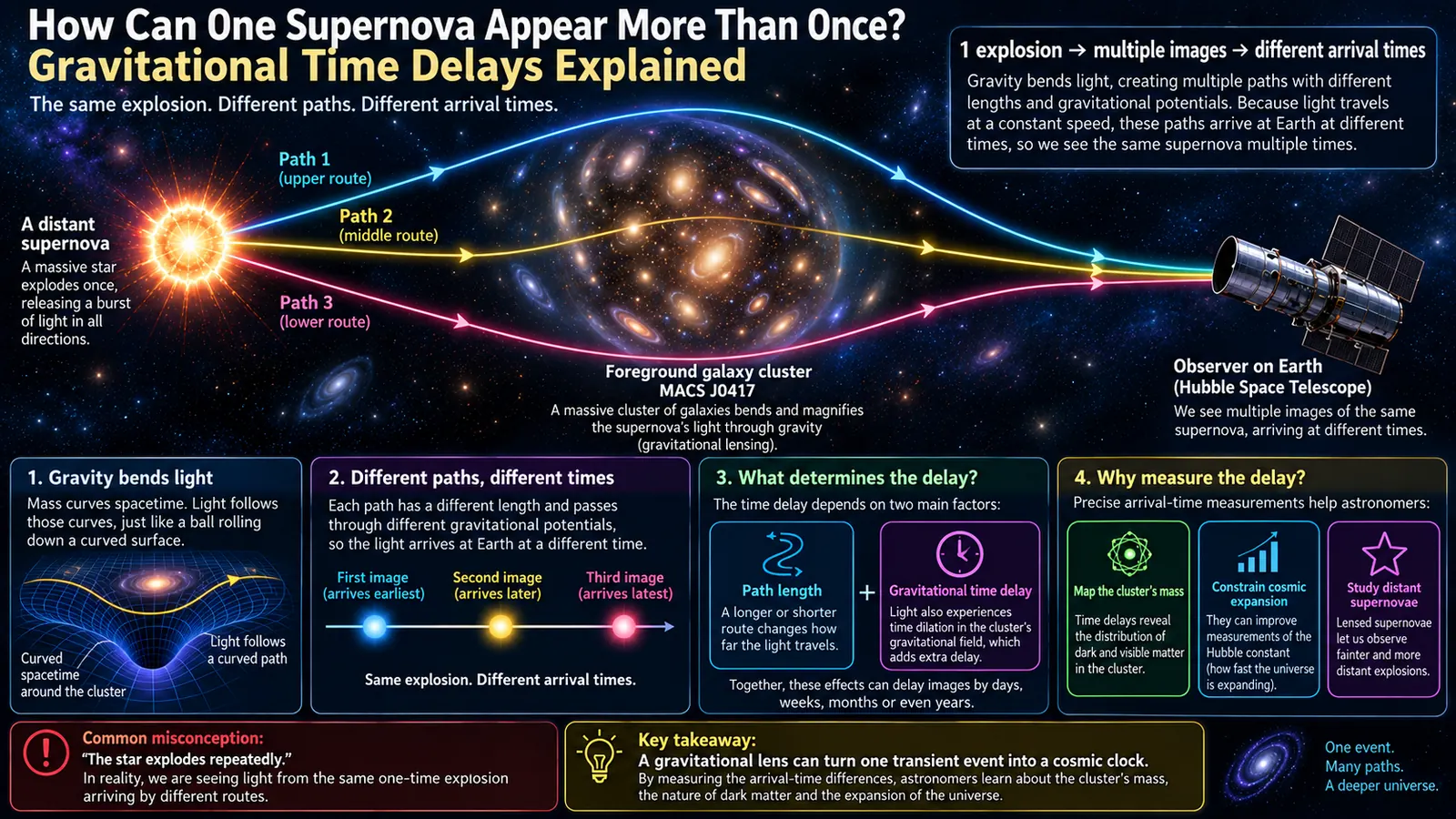
A gravitational lens can make one supernova appear at different times. Learn how multiple light paths create time delays and why Athena may help measure cluster mass and cosmic expansion.