How Do Fish Ear Stones Record Age, Migration and Ocean History?
Learn how fish otoliths reveal age, migration and past ocean conditions through growth increments, trace elements, stable isotopes and radiocarbon validation.
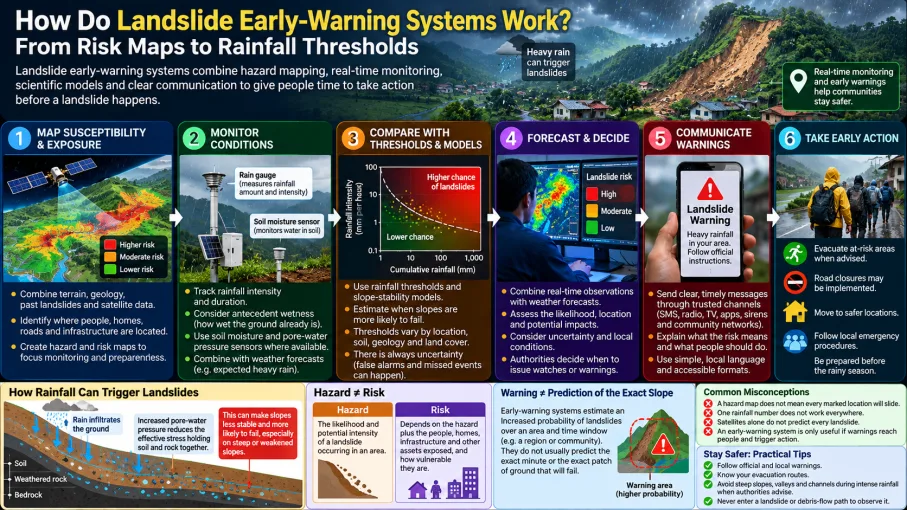
Learn how landslide early-warning systems turn terrain maps, rainfall, soil conditions and forecasts into practical warnings, and why uncertainty matters.
Learn how astronomers combined spectra from more than 200,000 galaxies to estimate the Universe’s average visible colour, why an early turquoise result was corrected and what Cosmic Latte really means.
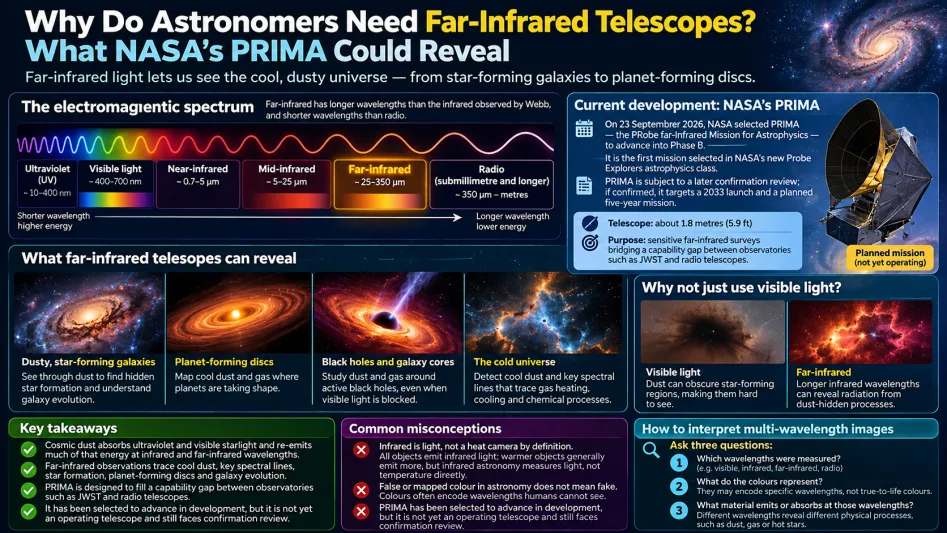
Discover why astronomers study the far-infrared universe, how cosmic dust changes what we see and what NASA’s proposed PRIMA mission is designed to investigate.
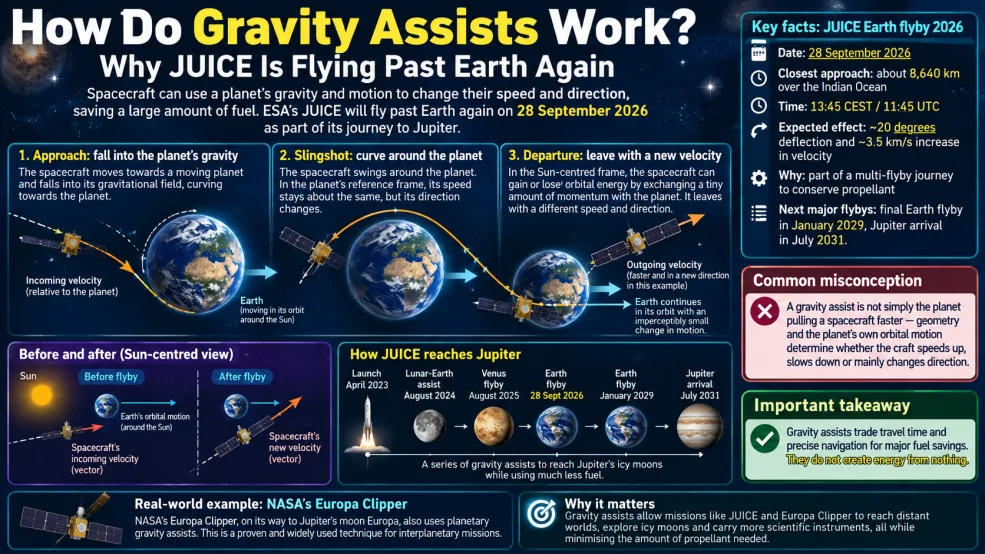
Learn the physics of gravity assists, reference frames and planetary flybys, with ESA Juice’s September 2026 Earth encounter as a current example.
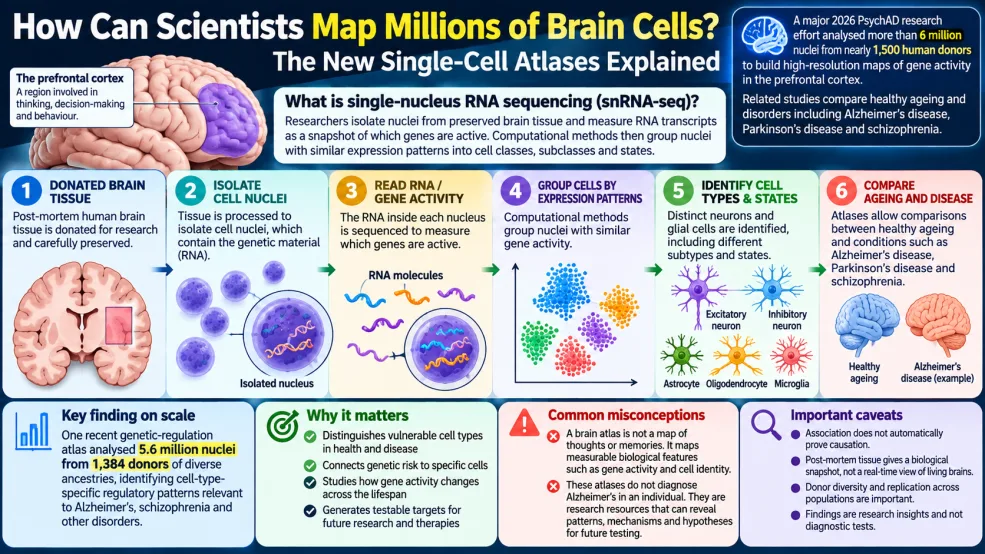
Learn how scientists use single-nucleus RNA sequencing and computational analysis to map millions of human brain cells—and what these new atlases can and cannot tell us about ageing and brain disorders.
Astronomy images often look dramatically different after processing. Learn what calibration, alignment, stacking, noise correction and stretching actually do—and where responsible processing ends and misleading manipulation begins.
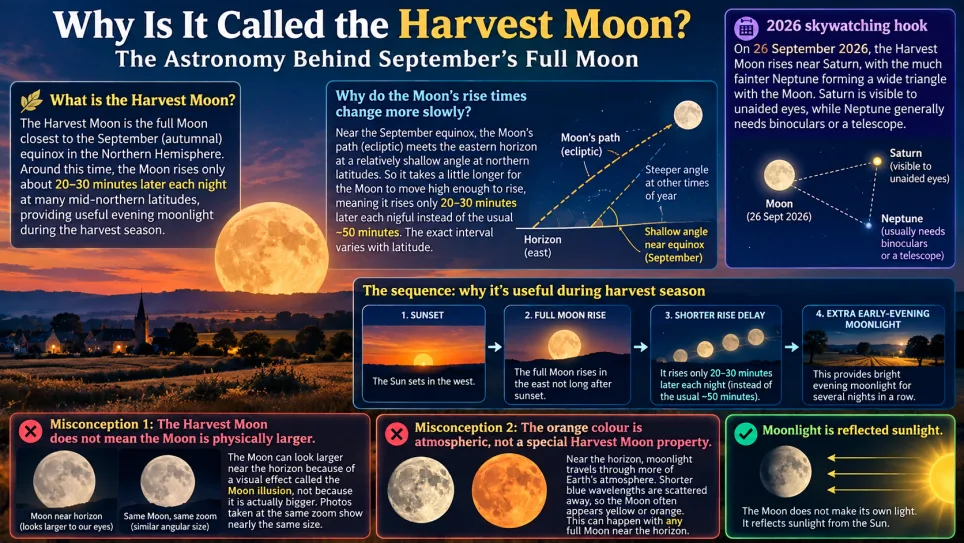
Learn why the full Moon nearest the September equinox is called the Harvest Moon, how the Moon’s shallow path changes moonrise times, and why it can appear unusually large and orange near the horizon.
Learn what hurricane rapid intensification means, why warm deep water and favourable atmospheric conditions matter, how Hurricane Polo intensified so quickly, and why forecasting these changes remains challenging.
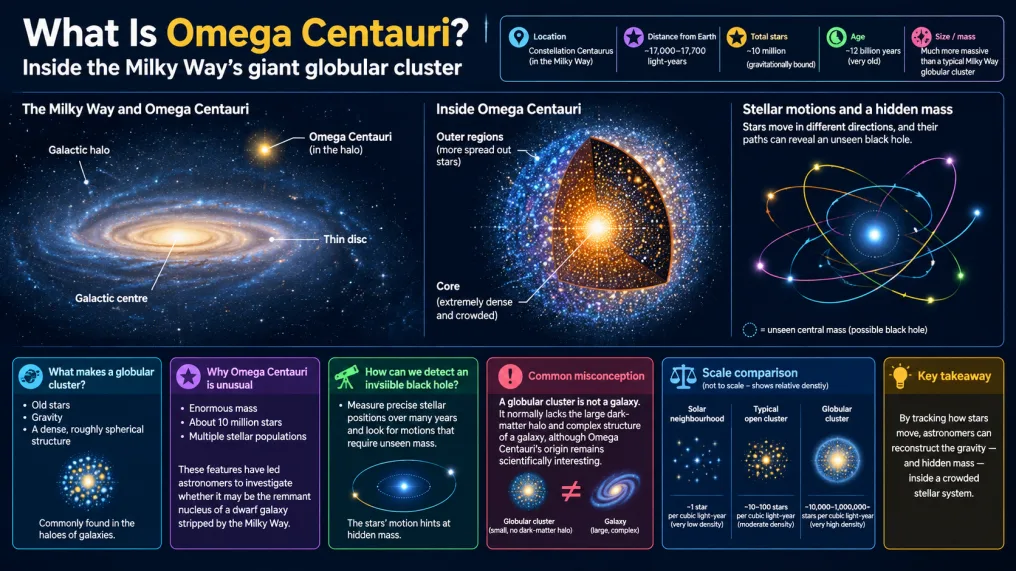
Learn what Omega Centauri is, how globular clusters differ from galaxies and open clusters, why its stellar populations are unusual, and how astronomers use stellar motions to search for hidden black holes.
ESA's JUICE spacecraft will fly past Earth again in September 2026. Learn how gravity assists change spacecraft speed and direction without creating energy from nothing.
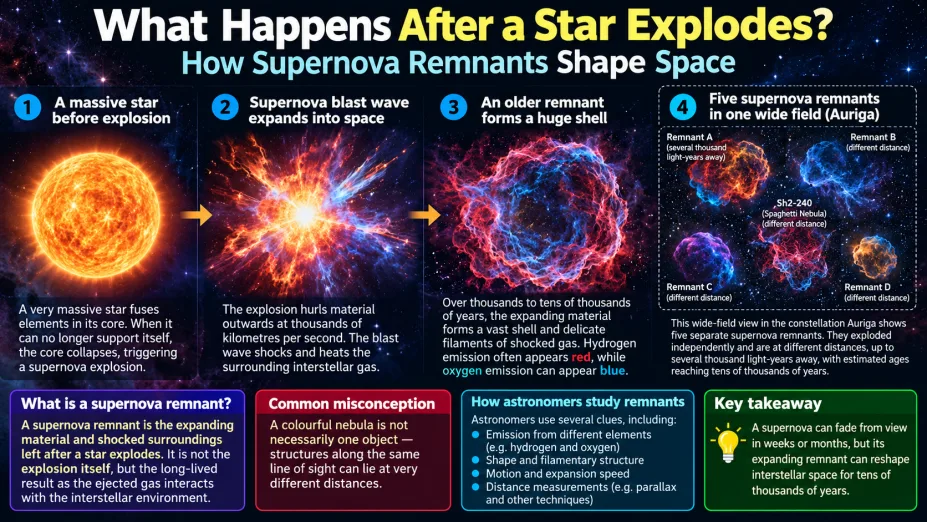
Learn what a supernova remnant is, how blast waves create shells and filaments, what glowing hydrogen and oxygen reveal, and why overlapping nebulae may be unrelated.