Why Does the Shrimp Nebula Have a Bow Shock? Sh2-188 Explained
Learn why the Shrimp Nebula Sh2-188 is strongly asymmetric, how stellar winds and motion through interstellar gas create a bow shock and what models can reveal.
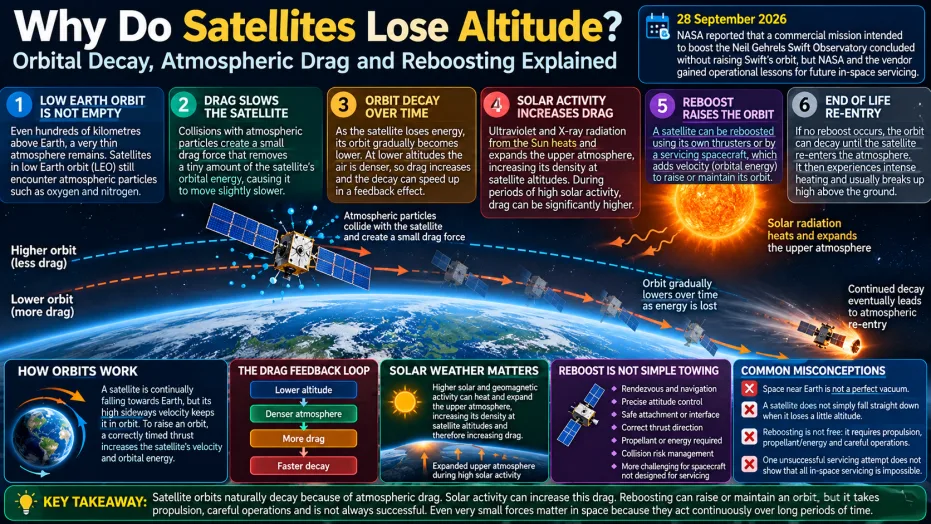
Learn why satellites in low Earth orbit can lose altitude, how solar activity changes atmospheric drag, how reboosting works and why orbital decay eventually leads to re-entry.
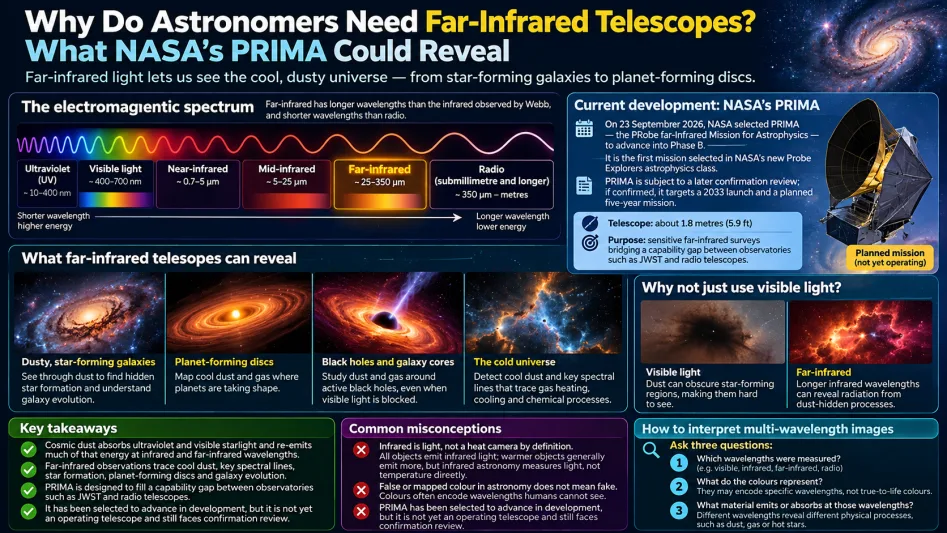
Discover why astronomers study the far-infrared universe, how cosmic dust changes what we see and what NASA’s proposed PRIMA mission is designed to investigate.
Learn the physics of gravity assists, reference frames and planetary flybys, with ESA Juice’s September 2026 Earth encounter as a current example.
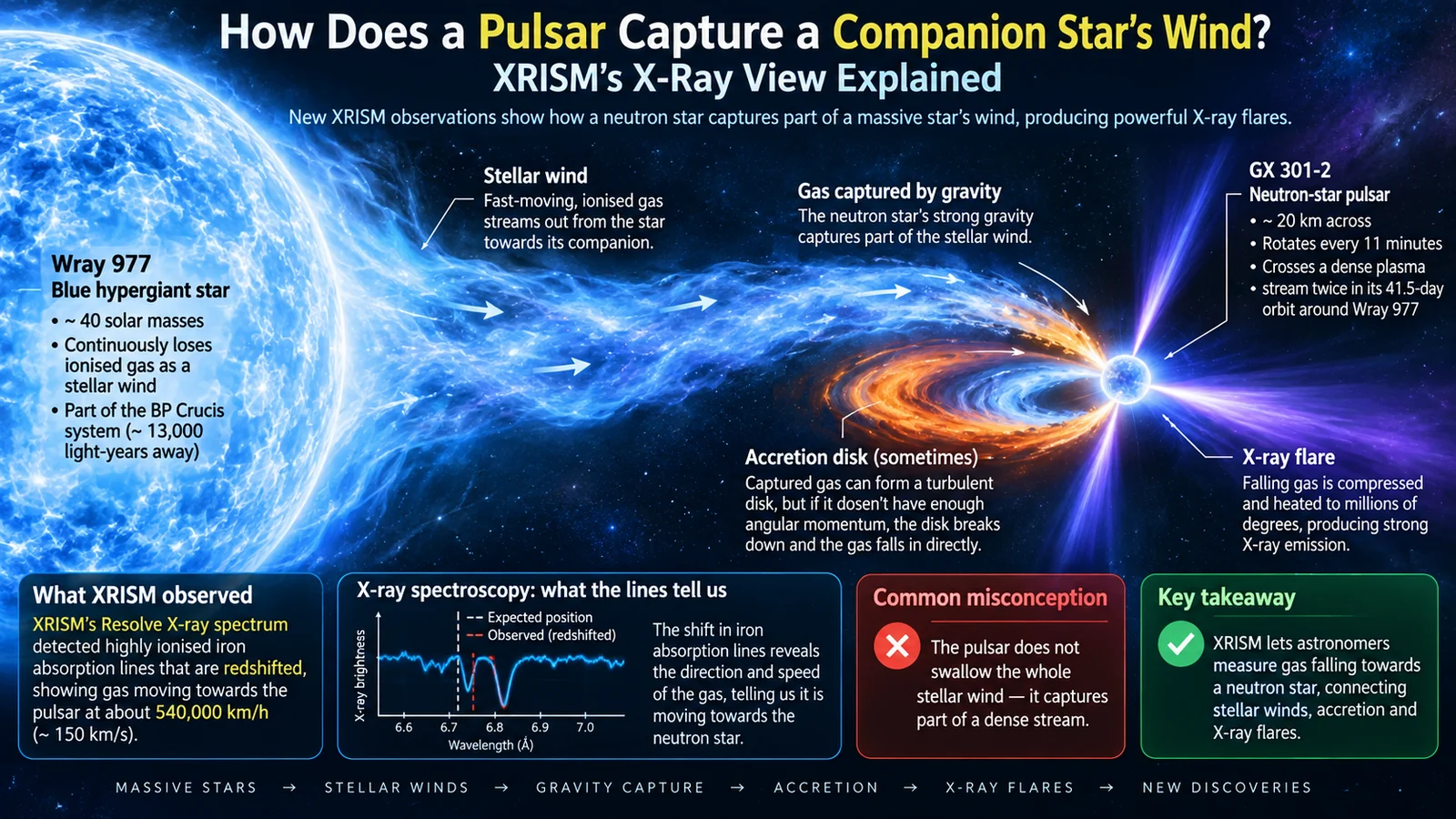
XRISM has directly traced stellar-wind plasma falling towards neutron-star pulsar GX 301-2. Learn how gravity captures the gas, why accretion changes during the orbit, and how X-ray spectroscopy measures the flow.
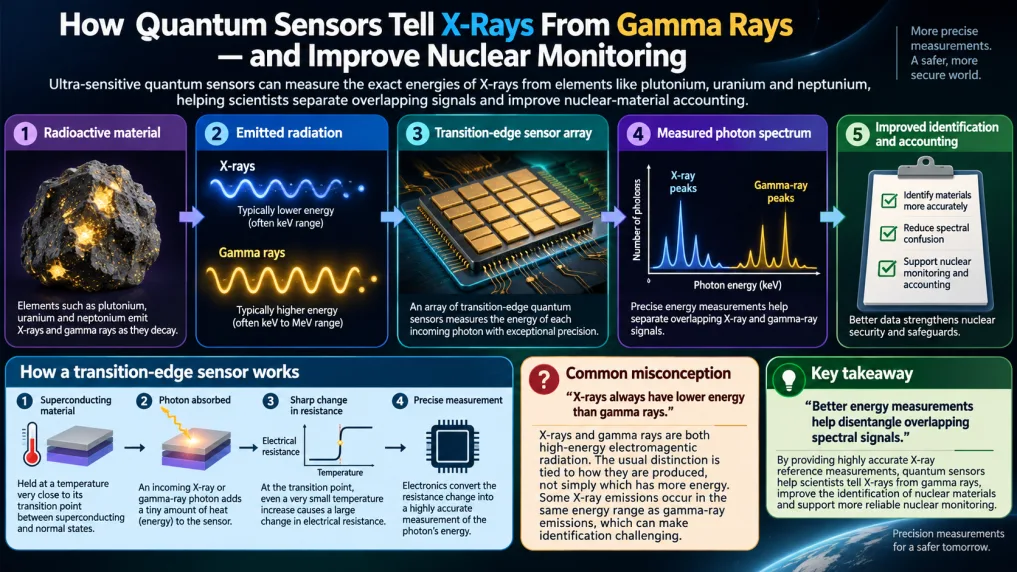
Learn how transition-edge quantum sensors measure X-rays from uranium, plutonium and neptunium, why X-ray and gamma-ray spectra can overlap, and how better measurements improve nuclear monitoring.
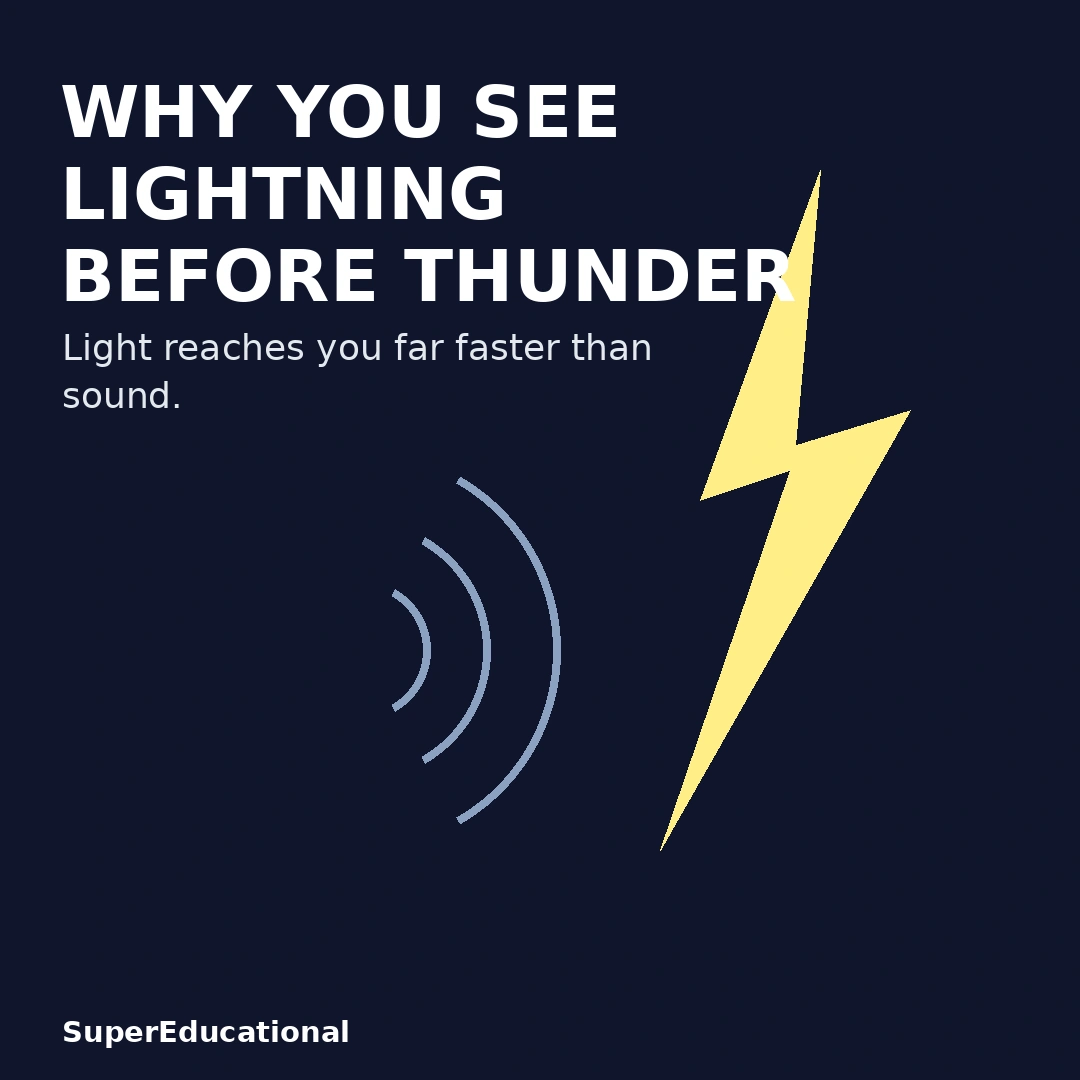
Lightning and thunder are produced by the same event, but light reaches us far faster than sound. Here's why—and how the delay can provide a rough estimate of distance.