Stages of Pregnancy: Evidence-Based Explanations and Essential Facts
Introduction
Pregnancy is commonly described in three stages called trimesters. Each stage brings important changes in the developing embryo or fetus and in the pregnant person's body. Understanding these stages helps explain why different symptoms, prenatal tests and health priorities occur at different times.
Pregnancy is usually dated from the first day of the last menstrual period, not from the day of fertilisation. Its estimated due date is around 40 weeks after that starting point. This guide explains fetal development, common physical changes, antenatal care and warning signs. It is educational information, not a substitute for individual medical advice.
Pregnancy timeline: the three trimesters
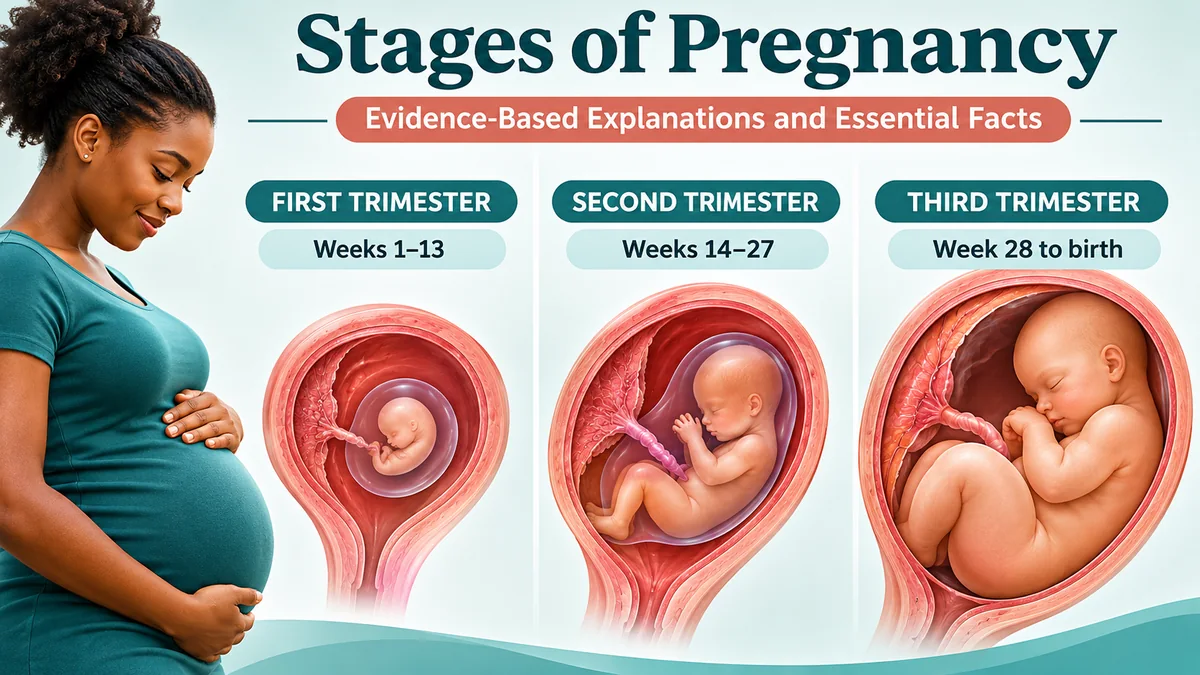
Using the American College of Obstetricians and Gynecologists (ACOG) convention, the first trimester runs from week 1 through 13 weeks and 6 days; the second from week 14 through 27 weeks and 6 days; and the third begins at week 28 and lasts until birth. Some reputable public-health resources use slightly different boundaries, so the week number is often clearer than a label alone.
| Stage | Gestational weeks | Main developmental focus |
|---|---|---|
| First trimester | 1–13 | Implantation and major organ formation |
| Second trimester | 14–27 | Growth, movement and organ development |
| Third trimester | 28 to birth | Weight gain, organ maturation and preparation for birth |
The estimated due date is an estimate rather than a guaranteed birthday. A dating ultrasound, particularly early in pregnancy, may help clinicians assess gestational age when menstrual dates are uncertain.
How pregnancy begins: fertilisation, implantation and dating
The first two weeks of a pregnancy counted by menstrual dating generally occur before conception. After ovulation, fertilisation may occur when sperm joins an egg. The resulting cells divide as they travel towards the uterus. A developing blastocyst usually implants into the uterine lining several days after fertilisation. Cells that later contribute to the placenta produce human chorionic gonadotropin (hCG), the hormone detected by many pregnancy tests.
Clinicians use two different clocks: gestational age counts from the last period; fertilisation age counts from conception and is usually about two weeks shorter in a typical cycle. The distinction matters when comparing descriptions of embryo and fetal development. Menstrual cycles vary, so the difference is not exact for every pregnancy.
First trimester: weeks 1–13
Development during the first trimester
The early embryonic period is when the foundations of major body structures form. The neural tube, which contributes to the brain and spinal cord, develops early. The heart and circulatory structures begin forming; limb buds appear and change into recognisable arms, hands, legs and feet. By the end of this trimester, the fetus has many identifiable body structures, although organs still have extensive growing and maturing ahead.
The term embryo generally applies during early development, with fetus used after about eight completed weeks following fertilisation (roughly ten weeks of gestational age). Development is continuous rather than a sudden transformation on one day.
Changes a pregnant person may notice
Common experiences include a missed menstrual period, breast tenderness, fatigue, nausea, vomiting, food aversions, increased urination and changes in smell. Symptoms vary widely: some people have few noticeable symptoms, while others experience substantial disruption. The presence or absence of nausea does not, by itself, establish whether a pregnancy is healthy.
Mild cramping can occur, but significant abdominal pain, fainting or bleeding warrants prompt clinical assessment because problems such as ectopic pregnancy need to be ruled out.
Health priorities
Arrange antenatal care early. A clinician may review medical history, medicines and existing conditions; discuss blood and urine tests; offer ultrasound and explain screening options. The CDC recommends 400 micrograms of folic acid daily before and during early pregnancy to help prevent neural tube defects. Some people need a different dose based on medical history, so supplementation should be discussed with a healthcare professional.
Do not stop prescribed medicines abruptly without discussing risks and alternatives. Avoid alcohol and tobacco, discuss other substance exposure, and ask about vaccinations, food safety and managing severe nausea. Screening tests estimate risk; diagnostic tests answer different questions. A clinician can explain the benefits, limitations and voluntary nature of each option.
Second trimester: weeks 14–27
Fetal growth, movement and anatomy
During the second trimester, the fetus grows rapidly, limb movements become more coordinated, and the skeleton, senses and organs develop further. Some pregnant people begin feeling movements around 16–24 weeks; first-time parents may notice them later. Early movement may feel like gentle fluttering rather than a strong kick.
A detailed ultrasound, often offered around 18–22 weeks depending on local clinical practice, examines fetal anatomy, growth and placental position. It can identify some structural concerns but cannot detect every condition. Follow-up scans or tests may be recommended when an image is unclear or a potential problem needs investigation.
Physical changes and symptoms
Nausea and fatigue sometimes improve, but this is not universal. The uterus enlarges and the abdomen becomes more noticeable. Back discomfort, stretching sensations, skin changes, nasal congestion, constipation or heartburn may occur. Rising blood volume and shifting posture contribute to some of these changes.
Because ordinary pregnancy symptoms can resemble symptoms of complications, persistent or severe symptoms should not simply be dismissed as normal. In particular, a headache with visual disturbance, significant swelling or upper abdominal pain requires prompt assessment for possible hypertensive disease.
Care and screening
Routine antenatal contacts continue with checks selected for the patient's circumstances. Blood pressure and symptoms are reviewed; clinicians may assess fetal growth and offer tests for gestational diabetes, anaemia or infections according to local guidelines and risk factors. Gestational diabetes screening commonly occurs around 24–28 weeks in many care systems.
This is also a useful time to ask about sleep, physical activity, nutrition, mental wellbeing and plans for delivering in a facility with trained birth attendants. People with pre-existing medical conditions or pregnancy complications may need additional monitoring beyond a standard schedule.
Third trimester: week 28 to birth
Growth and maturation
In the third trimester, the fetus typically gains substantial weight while the lungs, brain and other organs continue maturing. Many fetuses turn head-down before birth, although some remain breech or in another position. Clinicians may check presentation closer to the due date and discuss options when needed.
Movements should continue to be noticed. The pattern can change as the fetus grows, but it is not accurate to assume that movements should simply decrease towards the end of pregnancy. The NHS advises contacting a midwife or maternity unit immediately if movements slow, stop or change significantly ; do not wait until the next day.
Maternal changes and birth preparation
Breathlessness during exertion, frequent urination, interrupted sleep, pelvic pressure, reflux and leg discomfort may become more noticeable. Some people experience irregular uterine tightening known as Braxton Hicks contractions. These are not the same as progressive, regular labour contractions, although distinguishing them may require clinical guidance.
Antenatal appointments may become more frequent, with attention to blood pressure, fetal growth and wellbeing, birth planning and any complications. Discuss where to give birth, transport, emergency contacts, a support person, newborn care and how to recognise labour or ruptured membranes.
When does birth usually happen?
A typical estimated due date is 40 weeks of gestation. Birth may occur before or after that date. ACOG uses terms such as early term (37 weeks to 38 weeks and 6 days) and full term (39 weeks to 40 weeks and 6 days). Without a medical reason to deliver earlier, additional development during the later weeks can benefit the baby. Decisions about induction or caesarean delivery should be based on individual clinical circumstances.
Why antenatal care matters at every stage
Antenatal care is not limited to checking the baby's size. It provides opportunities to prevent, recognise and manage problems affecting the pregnant person and fetus. The World Health Organization recommends a model with at least eight antenatal contacts for a positive pregnancy experience. This is a minimum care framework rather than a ceiling: people with symptoms, complications or higher-risk pregnancies may need additional appointments.
Contacts can include respectful counselling, blood-pressure measurement, assessment for anaemia and infections, ultrasound, nutritional advice, appropriate supplements and immunisation discussions. The exact tests and timing vary by country, availability and medical history. In malaria-endemic areas, clinicians may also advise context-specific prevention measures in line with national recommendations.
It helps to bring a list of medications, questions, previous pregnancy concerns and any new symptoms to appointments. Patients should feel able to ask why a test is recommended and what different results might mean.
Healthy habits during pregnancy
Several practical habits support wellbeing across all trimesters. Eat a varied diet with protein, fibre, vegetables, fruits and suitable sources of iron and calcium. Drink sufficient fluids and follow professional advice about prenatal supplements. Physical activity is generally beneficial for uncomplicated pregnancy, although the appropriate level depends on previous fitness and any medical restrictions.
Review food hygiene and avoid foods known to carry an elevated risk of infection. Avoid alcohol, smoking and recreational drugs; seek support if stopping is difficult. Check over-the-counter medicines and herbal products with a healthcare professional rather than assuming that natural products are safe. Attend recommended vaccinations and infection-screening appointments, and prioritise sleep and mental health.
No single diet, app or supplement can guarantee a healthy pregnancy. Equally, a complication is not proof that someone did something wrong: many pregnancy outcomes are influenced by factors outside individual control.
Warning signs that need urgent medical attention
Symptoms such as heavy bleeding, severe or persistent abdominal pain, fainting, seizures, chest pain, difficulty breathing, severe headache that does not settle, visual changes, fever, fluid leaking from the vagina, or swelling with severe symptoms require urgent assessment. Later in pregnancy, reduced or absent fetal movement is another reason to contact maternity services immediately.
The CDC's urgent maternal warning-sign guidance emphasises that serious symptoms can occur during pregnancy and after birth. Do not rely on an article or home device to rule out danger. If symptoms are severe, seek emergency medical care; otherwise contact the maternity team promptly for advice. Mental-health crises, including thoughts of self-harm, also require immediate help.
Common questions about pregnancy stages
How many stages of pregnancy are there?
Pregnancy is usually divided into three trimesters, although clinicians also describe development by individual weeks and by embryo versus fetal stages.
Is pregnancy nine months or 40 weeks?
Both expressions are used, but 40 weeks from the last menstrual period is a more precise conventional method. Months differ in length, making month-by-month comparisons approximate.
When can the baby's movements first be felt?
Many people first notice movements between 16 and 24 weeks. If there is concern about movements later in pregnancy, seek maternity advice immediately.
What if I do not know the date of my last period?
A clinician may use an early ultrasound and medical history to estimate gestational age.
Does every pregnancy follow the same timetable?
No. The trimesters are useful teaching categories, but the timing and intensity of symptoms, growth patterns and needed care vary. Individualised clinical assessment is essential.
Conclusion
The stages of pregnancy describe a continuous process: early organ formation in the first trimester, substantial growth and movement during the second, and continued maturation and preparation for birth in the third. Understanding the week-by-week timeline can help families make sense of symptoms, screening choices and the importance of antenatal care.
For personal decisions, use this guide alongside advice from qualified maternity professionals, particularly when symptoms are unusual or urgent. Reliable information is valuable, but timely assessment is more important than trying to diagnose a problem from a pregnancy timeline.