Photo by Antonia Prescott
‘Eat food. Not too much. Mostly plants.’
Total keto or veganism? Daniel Lieberman considers how, why humans evolved to eat it all — and what we can learn from it.
Works by Harvard-affiliated authors
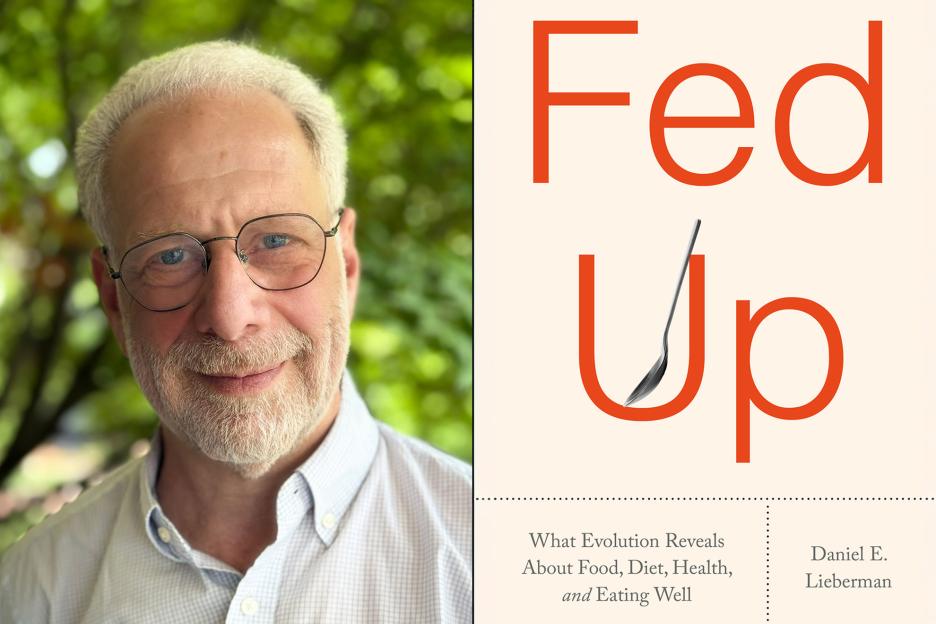
Excerpted from “ Fed Up: What Evolution Reveals about Food, Diet, Health, and Eating Well ” by Daniel Lieberman, the Edwin M. Lerner II Professor of Biological Sciences and Professor of Human Evolutionary Biology
While still a student at the University of Bristol in the mid-1990s, the future pop star James Blunt decided to eat nothing but minced beef, chicken, and mayonnaise. By his own admission, he thought the diet would assert his masculinity. It didn’t go well. According to Mr. Blunt, “It took me about six to eight weeks to get very unhealthy and see a doctor, who then said, ‘I think you’ve got the symptoms of scurvy.’” Thankfully, eating plants with vitamin C was a quick remedy, but Blunt’s troubles are just one of many potential problems caused by never eating plants. And in this respect, by experimenting on themselves, hardcore carnivore dieters are doing a favor to others who have no intention of following their example.
The first health problem carnivore dieters (keto dieters, too) usually encounter is a condition called a keto flu — so named because suddenly flooding the body with ketone bodies can cause flu-like symptoms. These include headache, nausea, constipation or diarrhea (take your pick), cramps, fatigue, irritability, and brain fog. But as your body slowly adapts, these symptoms usually resolve in a few weeks, especially if one drinks plenty of water and eats enough salt.
A more serious suite of problems from never eating plants arises from lacking certain nutrients. To be sure, meat has all the amino acids one needs, plus fat, a smidgeon of carbohydrate (in the form of glycogen), and some minerals and vitamins. But the most glaring thing missing from meat is fiber. As a reminder, fiber helps you feel full, regulates how fast and efficiently your gut absorbs nutrients, prevents constipation, and absorbs toxins. Why would anyone not want those benefits? Fiber’s other critical role is to nourish the microbiome. We evolved to have trillions of microbes coexist in our gut, especially the colon, which survive and thrive by fermenting the undigested fiber in our food. In turn, we evolved to use the various by-products of that fermentation including vitamins (B and K) and short-chain fatty acids (SCFAs). Believe me, you want these fiber-derived SCFAs. They provide you with energy. They stimulate the production of vital neurotransmitters like dopamine and serotonin that keep you happy. They induce the production of hormones (like GLP-1) that control your appetite. They help keep the lining of your gut from being “leaky,” thereby preventing inflammation. Although no one has studied the effect of a carnivore diet on the microbiome, studies show that a fiber-depleted ketogenic diet drastically alters the microbiome, substantially reducing the abundance of many beneficial microbes. Altogether, diets rich in fiber help prevent obesity, metabolic diseases, cancer, inflammatory conditions, and other illnesses.
It’s not just fiber. Also missing from meat are those wonderful, medicinal phytochemicals that plants produce. While carnivore diet alarmists worry that these diverse compounds are toxins, many are antioxidants that neutralize harmful reactive molecules; others reduce inflammation, protect cells from cancer, support the immune system, help regulate blood sugar, and more. To be sure, a fraction of phytochemicals can inhibit nutrient absorption, but cooking and other methods of food processing neutralize almost all these chemicals or reduce them to harmless doses.
Yet another concern with eating only meat is saturated fat. It is true that saturated fat may not be as harmful as previously believed, but it’s generally healthier to replace saturated fat with unsaturated fats. For this reason, serious carnivore dieters try to eat only grass-fed meat and game, which has a lower percentage of saturated fat and more mono- and polyunsaturated fats than industrial grain-fed meat. Game and grass-fed meat, however, are expensive.
A final and nontrivial health concern is that red meat can increase chronic, systemic inflammation. One contributor to this problem is a protein-sugar compound with the unpronounceable name of Neu5Gc, which is abundant in all red meat. Between three and two million years ago, a mutation arose that caused humans to lose the ability to make this compound, possibly to protect us from malaria and to enhance our endurance capacities (if you knock out this gene in mice they can run twice as far). However, because we do not make Neu5Gc, our immune systems think red meat is a foreign invader. That response triggers an inflammatory reaction associated with increased rates of cancer, atherosclerosis, and some autoimmune diseases. A similarly unwelcome protein in red meat is carnitine, which induces gut microbes to produce a nasty molecule called TMAO (trimethylamine-N-oxide). Regrettably, TMAO promotes inflammation linked to atherosclerosis and other diseases like cancer.
All things considered, the evidence is overwhelming. Meat is nutritious and played a pivotal role in our evolutionary history, but our ancestors were selected to eat meat, among other foods, to benefit their reproductive success, not to prolong their long-term health. Plenty of statistics testify to that legacy. For example, two prospective studies that followed more than 37,000 men and 83,000 women for 22 years found eating one serving (84 grams) of red meat a day increased the risk of dying by 13 percent, and eating processed meats like salami increased the risk to 20 percent. Eating two servings a day of meat increases the approximate mortality risk to 35 to 50 percent. Other studies report similar results.
For these and other reasons, many people conclude they are better off eating less meat or no meat. How does that go?
Today vegetarianism and veganism are widely associated with health, but such diets were impossible prior to the invention of agriculture, and meat-free diets have long raised nutritional concerns. One issue is protein. While meat provides a complete, dense dose of protein, including all the essential amino acids, vegetarians must eat animal products like eggs or combine different plant types to avoid protein deficiencies. Vegans must be even more careful. Fortunately, every farming culture has created effective combinations of cereals and legumes plus other plant foods to satisfy people’s protein needs. Classic examples are corn with beans, rice with soy, and lentils or chickpeas with cereals like wheat. Although many traditional cuisines combine these foods in the same meal, one gets the same benefit by eating them in the same day. Studies confirm what any vegetarian knows: eating enough of these foods in combination can provide sufficient protein even for world-class athletes. A two-cup bowl of rice and beans has as much protein as a four-ounce hamburger.
We can cross protein worries off the list of reasons not to be a vegetarian, but it is true that some nutrients are absent or rare in most plants and thus harder to replace in a meat-free diet. Vegetarians thus need to be strategic about the foods they eat, and vegans require nutritional supplements. Here’s a quick review:
Omega-3 fatty acids. Not consuming 1.0 to 1.5 grams per day of these essential fatty acids (which our bodies can’t synthesize) can trigger health problems, including depression and dementia, joint pain, dry skin, and hair loss. Children also require plentiful omega-3s for proper brain growth. One complexity vegetarians should know is that we use three different kinds of omega-3s: EPA, DHA, and ALA.
EPA is eicosapentaenoic acid, DHA is docosahexaenoic acid, and ALA is alpha-linolenic acid. Of these, EPA and DHA are plentiful in fish, and to a lesser extent in grass-fed animals, but not plants; ALA, however, is reasonably abundant in a few plants, namely walnuts, flax, and chia seeds, and less so soy. Unfortunately, humans are capable of converting only a small proportion of ALA into much-needed EPA and DHA. For this reason, many vegetarians take omega-3 supplements from algae (which, strictly speaking, are not plants); other near-vegetarians choose to be pescatarians by eating fish and shellfish, which are rich in all omega-3s.
Vitamin B12. This vitamin is critical for the nervous system, producing red blood cells, synthesizing DNA, and other vital functions. Although abundant in meat and dairy, it is absent in plants, which means that vegans must either eat foods fortified with B12 or take supplements.
Vitamin D. This vitamin helps the gut absorb calcium to maintain the immune system, the brain, the circulatory system, and elsewhere. Cells in the skin normally synthesize vitamin D in response to sunlight except at high and low latitudes during the winter months, when food becomes the major source. While red meat and unfortified milk contain very little vitamin D, fatty fish is the richest source, and eggs have some. How much vitamin D one needs is debated, but vegans, most vegetarians, and even omnivores in temperate habitats far from the equator are often advised to supplement in the winter.
Iron. To produce enough red blood cells, adults generally need 10 to 20 milligrams of iron a day, and pregnant or menstruating women require even more. While red meat has moderate amounts of iron, there is more iron per gram in legumes like lentils and soy and in a few vegetables like spinach. However, effective absorption of iron from most plants occurs only when consumed with some vitamin C. This may explain why many traditional cuisines add vinegar, lemon, or other sources of vitamin C such as tomatoes or peppers to these foods.
Calcium. Most people need at least a gram of calcium a day for bones, muscles, nerve cells, and numerous physiological functions. Red meat is not a major source of calcium, but it’s reasonably plentiful in milk, yogurt, and cheese. Vegetarians and vegans can get calcium from soy and leafy green vegetables like kale, as well as certain nuts.
Iodine. This mineral is essential for synthesizing thyroid hormone, which regulates your metabolism. Not enough can cause severe developmental problems in children and goiter in adults. Apart from being plentiful in seaweed and seafood, iodine can be found in potato skins (depending on the soil in which they were grown) and egg yolks. Fortunately, iodized salt is an effective way to eliminate iodine deficiency.
Selenium. Your body requires trace amounts of this mineral. While present in meat and dairy, it’s also reasonably abundant in most whole grains (wheat, rice, oats, barley). Nothing beats Brazil nuts as a source of this mineral. But beware: too much selenium is toxic.
Zinc. You need trace amounts of this mineral for the immune system and other cellular functions. It’s abundant and readily absorbed from meat, but also present in some legumes, seeds, and nuts.
The bottom line is that we evolved to include animal foods in our diet, which explains why it’s much easier to consume a nutritionally complete diet if you eat dairy and some meat, including fish. But with information, experience, and resources, 100 percent plant diets can be nutritionally complete. But is being a vegetarian and vegan healthier than being an omnivore?
Four major reviews of research studies have been published in the last few years on associations between vegetarian and vegan versus non-vegetarian diets and cardiovascular disease, cancer, and other health outcomes. All told, these highly respected analyses incorporate data from scores of studies involving millions of people. The big-picture conclusion they paint is fascinating and nuanced, with both good and bad news for vegetarians and vegans.
The bad news is that plant-based diets are associated with some increased health risks, more so in vegans than vegetarians. These health risks, moreover, make sense in light of the nutritional challenges of never eating meat and, in the case of vegans, also dairy. The most prevalent problems stem from vitamin B12 deficiencies. Without enough of this vitamin, which is abundant in meat and dairy but virtually absent in plants, you are more likely to suffer from anemia, hence fatigue. Compounding the risk of anemia are low levels of dietary iron and reduced iron absorption from plant foods. Vitamin B12 is also necessary to maintain nerve cells, which may explain the evidence for slightly increased levels of depression and other mood disorders in vegans and to a lesser extent vegetarians. And there is conflicting evidence that low B12 levels could increase the risk of strokes. A potential mechanism for this debated concern is that low B12 (along with B6 and folic acid) elevates levels of the amino acid homocysteine, which is associated with increased risks of not just stroke, but also other conditions like osteoporosis. Sure enough, vegetarians and vegans especially tend to have slightly (4 to 6 percent) lower bone-mineral densities, perhaps also from less vitamin D and calcium absorption.
Balancing out the bad news, however, is some good news for people who eat only plants. Study after study finds that, compared to omnivores, vegetarians and vegans tend to have lower blood pressure, a reduced risk of heart attacks, a decreased risk of Type 2 diabetes, and a lessened risk of some cancers. Since cardiovascular disease and cancer are the two leading causes of death, it’s no surprise that many—but not all — studies report that individuals who are vegetarian, vegan, or who otherwise eat a mostly plant-based diet have a moderately lower relative risk of all-cause mortality than those who eat lots of meat. It’s unwise, however, to put a concrete number on this reduction in risk because these broad-brush statistics mask considerable variation. In addition, despite the best efforts of researchers to control for the effects of factors other than diet, vegetarianism may seem healthier than it is simply because vegetarians typically live healthier lifestyles. Even so, studies that analyze the available evidence agree that plant-based diets are generally associated with modest reductions in disease and modest increases in lifespan. From a mechanistic perspective, that’s not unexpected, since vegetarians and vegans are less likely to be obese, and they tend to have lower levels of inflammation and lipoproteins that cause arterial plaques.
Historically, vegetarianism’s salubrious reputation is relatively new — at least in the West. As the vegetarian movement in Europe and America grew in the mid-19th century, most doctors opined that eating only plants was unhealthy and uncivilized. One fierce critic of vegetarianism wrote in 1914, “It may be stated that vegetarianism is the diet of the enslaved, stagnant, and conquered races, and a diet rich in meat is that of the progressive, the dominant, and the conquering strains.” Early health concerns about vegetarianism also had some merit before the development of nutritional science and the modern food system. Vegetarians today have information about vitamins and essential fatty acids, and they enjoy year-round access to a stunning diversity of nutritious foods from all over the world, along with algae supplements and other sources of needed vitamins and minerals. Yet vegetarians and vegans are still sometimes the subject of scorn. The late chef, author, and TV star Anthony Bourdain once wrote in The New Yorker that vegetarians are “enemies of everything that’s good and decent in the human spirit. To live life without veal or chicken stock, fish cheeks, sausages, cheese, or organ meats is treasonous.”
Well, it’s true Hitler was a vegetarian. But according to the evidence, it’s also true that being a vegetarian is as healthy if not healthier than being an omnivore. When asked what his doctors thought about his vegetarian diet, George Bernard Shaw is reputed to have replied, “I don’t know, I’ve outlived them all.”
Yet not eating meat is no panacea. Vegetarians also have heart attacks, get cancer, and develop metabolic syndrome and other diseases. In addition, because we evolved to include meat in our diet, our bodies run better with a few nutrients present mostly or only in animal foods. Vegetarians and vegans thus need to be knowledgeable about and then compensate for their diet’s deficiencies. And just because one’s diet is plant-based doesn’t mean it’s healthy. A study of over 126,000 people in the United Kingdom found that every 10 percent increase in plant-sourced foods that were not highly processed was associated with a 13 percent lower risk of dying from heart disease, but every 10 percent increase in ultra-processed plant foods was associated with a 12 percent higher risk of dying from heart disease.
Or as Michael Pollan famously concluded, “Eat food. Not too much. Mostly plants.”
Copyright © 2026 by Daniel Lieberman. Published by arrangement with Alfred A Knopf, an imprint of The Knopf Doubleday Group, a division of Penguin Random House LLC.