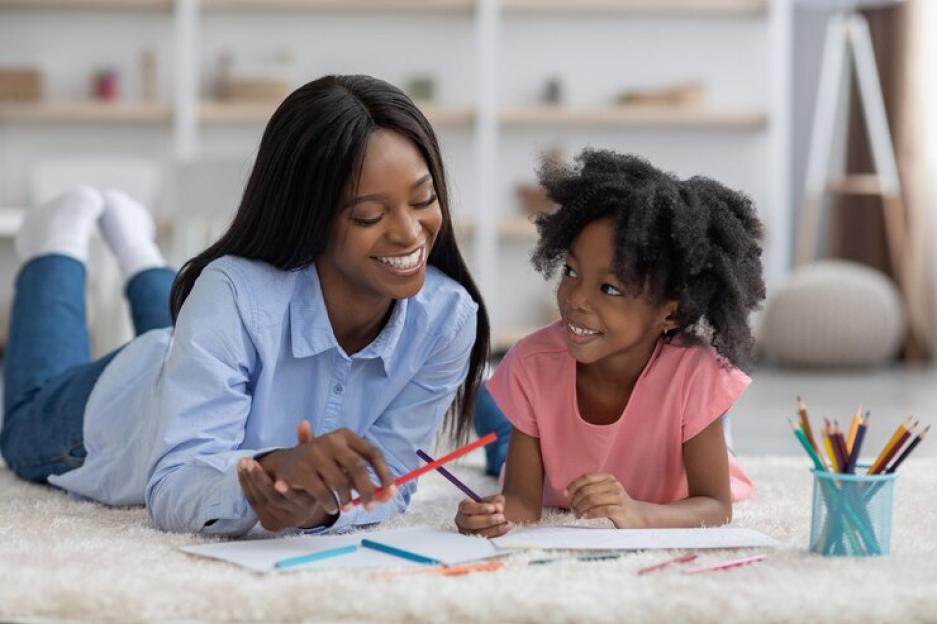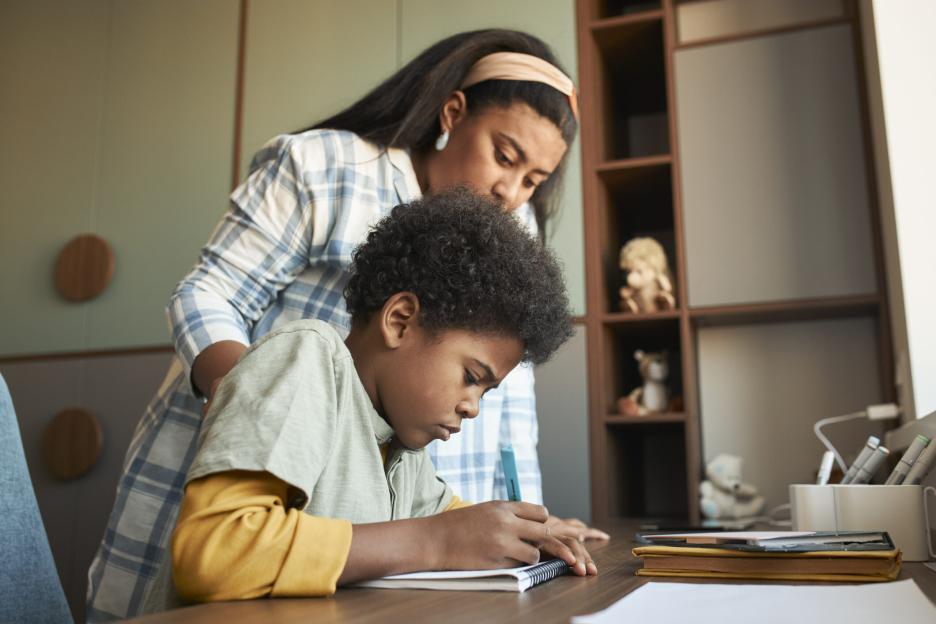
Children have dreams long before they know how to describe them as “goals”.
A child may want to read more books, become better at football, learn to draw, improve in mathematics, save money for something special, visit another country or imagine becoming a doctor, engineer, pilot, artist or entrepreneur one day.
Those ambitions can be exciting.
But there is an important difference between wanting something and knowing what to do next.
That is where a vision board can become useful.
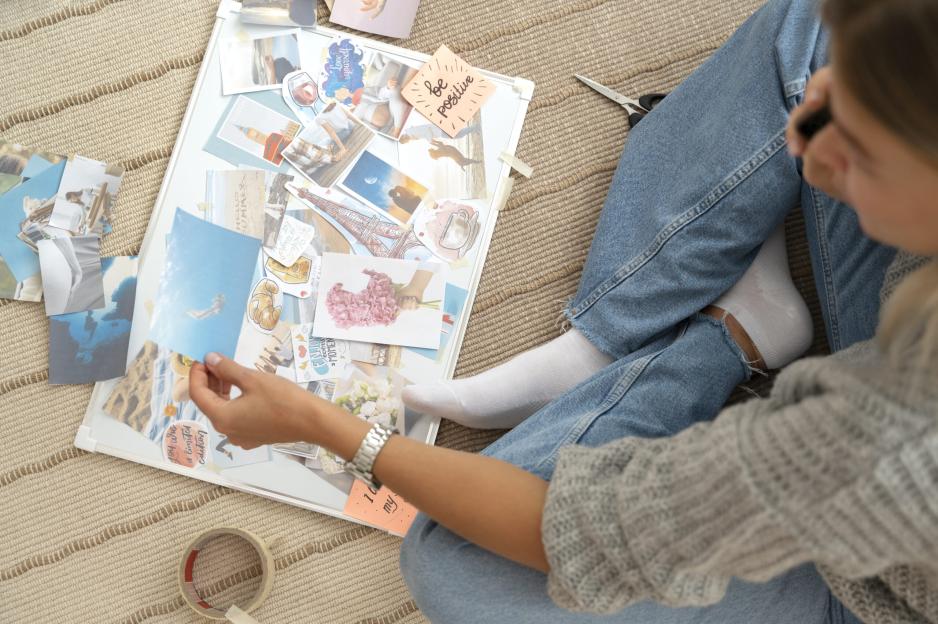
A vision board for kids is a collection of pictures, words, drawings, phrases and goals that represents what a child would like to learn, experience, improve or achieve over a particular period.
It might cover the next school term, the next six months or an entire year.
The board itself does not make those things happen.
Its real value is that it can help a child turn vague ideas into something visible and discussable.
The most useful question is therefore not simply:
“What do you want?”
It is:
“What do you want, why does it matter to you, and what can you do about it?”
That turns a vision board from a collection of attractive pictures into a simple tool for reflection, planning and action.
What Is a Vision Board for Kids?
A children's vision board is a visual representation of goals, interests, values and aspirations.
It can be physical, using cardboard, photographs, magazine cut-outs and drawings, or digital, using a tablet or computer.
A child might include goals relating to:
- school;
- reading;
- friendships;
- sport;
- creativity;
- hobbies;
- healthful habits;
- travel;
- saving money;
- learning new skills;
- helping others;
- family activities; or
- future careers.
For younger children, goals can be very immediate:
“Learn to tie my shoelaces.”
“Read five new books.”
“Learn to ride my bicycle.”
For an older child, the board might include:
“Improve my mathematics grade.”
“Save part of my pocket money each month.”
“Learn basic coding.”
“Make the school football team.”
“Become more confident speaking in class.”
The content should develop with the child.
A seven-year-old does not need a detailed career strategy.
A teenager may be ready to think more seriously about subjects, qualifications, skills and future opportunities.
Does a Vision Board Really Help Children Achieve Goals?
This requires some nuance.
There is a difference between visualising success and planning for success.
Simply imagining an ideal future is not a guarantee that somebody will work towards it. Research on goal pursuit has even found that positive fantasies alone can sometimes be associated with less effort when people mentally enjoy the successful outcome without considering what it will require.
A stronger approach combines four ideas:
1. What do I want?
2. Why would achieving it matter?
3. What could get in the way?
4. What will I do next?
This is similar to research-backed approaches involving mental contrasting and implementation intentions.
Implementation intentions are simple plans such as:
If X happens, then I will do Y.
For example:
Goal: Read more books.
Obstacle: I usually start playing games after dinner.
Plan: If I finish dinner and my homework, then I will read for 20 minutes before gaming.
A 2026 systematic review and meta-analysis covering 42 studies and almost 13,000 children found a small-to-medium overall benefit of implementation intentions for children's goal achievement.
So the best way to use a vision board is not as a magical “manifestation” device.
Use it as a visual starting point for goal setting, planning and regular action.
Benefits of Making a Vision Board With Your Child
1. It Gives Children Permission to Think About the Future
Children are naturally curious about what they may become and what they might experience.
A vision-board activity creates space for questions such as:
What would you love to learn?
What would make you proud of yourself?
What would you like to become better at?
What new experience would you like to have?
Parents sometimes move quickly into practical concerns.
A child says:
“I want to be an astronaut.”
An adult may immediately think about whether that career is realistic.
That is not always necessary.
For a child, the statement may really mean:
“I love space.”
That interest could lead to astronomy, physics, engineering, robotics, mathematics, aviation or something completely different later.
A vision board can therefore reveal interests before a child has the vocabulary to explain them fully.
2. It Helps Turn Vague Wishes Into Clearer Goals
Compare these statements:
“I want to be better at school.”
and:
“I want to improve my spelling this term.”
The second is much easier to act on.
It can become:
Practise ten new words every week.
Or compare:
“I want to be good at football.”
with:
“I want to improve my passing and practise three times each week.”
The clearer the goal becomes, the easier it is for a child to understand what progress might look like.
3. It Can Encourage Creativity
Creating a vision board involves:
- drawing;
- writing;
- arranging;
- cutting;
- colouring;
- selecting images;
- choosing words; and
- deciding how ideas fit together.
There is no single correct design.
One child may prefer photographs.
Another may fill the board with hand-drawn illustrations.
Another may use mostly words, stickers and colours.
Allowing children to design the board themselves gives them ownership of the activity.
4. It Can Start Useful Parent-Child Conversations
The board is often less important than the conversation that happens while creating it.
Suppose your child adds:
“Make more friends.”
That provides an opportunity to ask:
What would a good friendship look like to you?
Or they add:
“Become better at maths.”
You could ask:
Which part of maths feels difficult at the moment?
The vision-board session may uncover interests, worries or ambitions that do not usually arise during everyday conversation.
5. It Can Teach Children to Break Bigger Goals Into Smaller Steps
Children can easily understand the desired outcome while struggling to see the process.
For example:
BIG GOAL: Learn to swim confidently.
Possible smaller steps:
Step 1: Attend lessons consistently.
Step 2: Practise floating.
Step 3: Learn breathing techniques.
Step 4: Practise one swimming stroke.
Step 5: Swim a short distance independently.
This teaches an important life lesson:
Big achievements are often the result of many smaller actions.
6. It Can Help Children Think About Obstacles
A useful vision board should not pretend everything will always go perfectly.
Children can learn to ask:
What might make this difficult?
Suppose the goal is:
Read 20 books this year.
Possible obstacle:
I forget to read.
Possible solution:
Keep my current book beside my bed.
Or:
If it is 7:30 p.m., I will read for 15 minutes.
Research on goal pursuit suggests that connecting desired outcomes with realistic obstacles and concrete plans can be more useful than positive thinking alone.
7. It Provides a Visible Reminder
A board displayed where a child regularly sees it can act as a reminder of goals they personally chose.
But this should not become pressure.
If the board starts making the child feel guilty rather than encouraged, change the way it is being used.
The purpose is to support development, not create another performance scoreboard.
What Should Be on a Child's Vision Board?
There is no fixed formula.
A useful board might contain several areas of life rather than focusing entirely on school performance.
School and Learning
Examples:
- improve handwriting;
- read more books;
- complete homework earlier;
- learn multiplication tables;
- participate more in class;
- improve in science;
- learn another language.
Skills
Examples:
- coding;
- cooking;
- photography;
- drawing;
- public speaking;
- sewing;
- playing an instrument;
- swimming.
Sports and Physical Activities
Examples:
- learn basketball;
- improve football skills;
- join athletics;
- learn to ride a bicycle;
- complete a fun run;
- practise a martial art.
Avoid turning appearance or weight into a child's vision-board target.
It is healthier to focus on skills, activity, enjoyment and healthy routines.
Creativity
Examples:
- write a short story;
- learn painting;
- create a comic;
- make crafts;
- perform in a play;
- learn music.
Money Skills
A child's financial goals should be age appropriate.
Examples:
- save ₦5,000 towards a book or toy;
- learn the difference between needs and wants;
- save part of pocket money;
- create a simple savings jar;
- learn how budgeting works.
The objective is financial education, not pressuring children to think like adults.
Relationships and Character
Not every goal needs to produce a certificate.
A child might choose:
- listen better;
- be kinder to siblings;
- make a new friend;
- help at home;
- say thank you more often;
- become more confident;
- ask for help when confused.
Experiences and Recreation
Examples:
- visit a museum;
- go camping;
- visit a new city;
- learn about another culture;
- attend a sporting event;
- try a new hobby.
Helping Others
Ask:
What would you like to do that makes somebody else's life better?
Possibilities include:
- donate old books;
- help a younger sibling learn;
- take part in a community clean-up;
- care for an animal;
- help an elderly relative;
- volunteer with family where appropriate.
Future Careers
Children can certainly include careers, but treat these as possibilities to explore rather than identities they must fulfil.
A child who puts:
DOCTOR
on a board at age eight should be free to replace it with:
ARCHITECT
at ten and:
ANIMATOR
at thirteen.
Changing aspirations is part of growing up.
20 Vision Board Questions for Kids
Instead of asking only:
“What do you want to be when you grow up?”
try a wider range of questions.
About happiness and interests
- What activities make you happiest?
- What do you enjoy doing even when nobody tells you to do it?
- What would you love to learn more about?
- Which hobby would you like to try?
About learning
- What would you like to become better at in school?
- Is there a subject you would like to understand more easily?
- What book would you like to read?
- What new skill would you like to learn?
About experiences
- Is there somewhere you would like to visit?
- What new experience would you like to have?
- Is there a sport or activity you would like to try?
About personal growth
- What would make you feel proud of yourself?
- What would you like to become more confident doing?
- What habit would you like to improve?
- What words describe the person you would like to become?
About other people
- Who inspires you, and what do you admire about them?
- How would you like to help your family?
- How could you help another person?
About the future
- What type of work sounds interesting to you?
- If you could learn one thing this year that your future self would thank you for, what would it be?
Parents do not need to ask all 20 questions.
Choose the ones that naturally fit your child's age and personality.
Materials You Need to Make a Vision Board for Kids
You do not need expensive supplies.
A physical board can be made with:
- Poster board, cardboard, chart paper or foam board
- Child-safe scissors
- Glue sticks
- Old magazines, catalogues or printed pictures
- Colourful paper
- Sticky notes
- Pencils and erasers
- Coloured pens or markers
- Stickers
- Photographs, where appropriate
If your child enjoys drawing, encourage them to create their own pictures instead of searching for every image.
This makes the board more personal.
Safety note
Young children should use age-appropriate safety scissors.
Craft knives, razor blades or other sharp cutting tools should only be handled by a responsible adult and kept out of children's reach.
How to Make a Vision Board for Kids: 8 Simple Steps
Step 1: Choose a Relaxed Time
Do not turn the activity into homework.
Choose a period when neither you nor your child is rushing.
You might need 45 minutes.
You might spend two hours.
You could even complete the board across several days.
The quality of the conversation matters more than finishing quickly.
Step 2: Ask Questions Before Looking for Pictures
This is important.
If children begin by flipping through magazines, they may simply choose whatever looks exciting.
Start with conversation instead.
Ask:
What would you like to learn?
What would you like to improve?
What sounds fun?
What would make you proud?
Write their answers down.
Step 3: Brainstorm Without Judging Every Idea
Allow the child to suggest possibilities freely.
The first list might include:
Become an astronaut.
Score ten goals.
Visit Japan.
Get better at maths.
Own a puppy.
Learn animation.
Save ₦10,000.
Read 15 books.
At this stage, you do not need to turn everything into a formal target.
Brainstorm first.
Organise later.
Step 4: Choose a Few Meaningful Goals
A board containing 40 goals may become visually impressive but practically overwhelming.
Help your child choose a manageable number.
Ask:
Which of these matters most to you right now?
Which would you like to work on this term?
Which are dreams for later?
You can even create separate sections:
NOW
THIS YEAR
SOMEDAY
This teaches children that not every ambition needs to happen immediately.
Step 5: Turn Wishes Into Actionable Goals
This is where the board becomes much more useful.
Instead of:
GET BETTER AT READING
try:
READ 15 MINUTES FOUR DAYS A WEEK
Instead of:
SAVE MONEY
try:
SAVE ₦500 EACH WEEK
Instead of:
BE GOOD AT FOOTBALL
try:
PRACTISE BALL CONTROL THREE TIMES A WEEK
The aim is not to make every childhood dream rigid.
It is to help children understand the connection between results and repeated actions.
Step 6: Add an “Obstacle and Plan” to Important Goals
For each major goal, ask:
What might get in the way?
Then:
What could you do when that happens?
Example:
Goal: Finish homework earlier.
Obstacle: I start watching videos when I get home.
Plan: If I arrive home from school, then I will finish my homework before I use my tablet.
This kind of if–then planning is known as an implementation intention. Research suggests these simple plans can support children's goal achievement.
Step 7: Design the Board
Now bring out the creative materials.
Let your child:
- choose pictures;
- draw;
- write;
- colour;
- arrange headings;
- add stickers;
- create sections; and
- decide what goes where.
Try arranging everything before applying glue.
The child should have meaningful creative control.
It is their vision board.
Step 8: Display It and Review It
Place the finished board somewhere appropriate, such as:
- beside a study area;
- inside the child's bedroom;
- on a family planning wall; or
- somewhere else the child regularly sees it.
Then review it occasionally.
You might have a five-minute conversation every two or four weeks.
Ask:
What have you started?
What is going well?
What feels difficult?
Do you still want this goal?
Should we change anything?
That last question is important.
A vision board is not a contract.
Children grow.
Interests change.
Priorities change.
A goal that mattered in January may no longer matter in June.
The board should be allowed to change too.
Turn the Vision Board Into an Action Board
One useful improvement is to divide the board into two parts.
MY VISION
This contains the desired outcome.
For example:
I WANT TO BECOME A CONFIDENT READER.
MY NEXT STEPS
Underneath it:
Read for 15 minutes after dinner.
Visit the library twice this month.
Ask when I do not understand a new word.
That creates a powerful connection:
DREAM → GOAL → ACTION
You can take the idea one step further:
DREAM → GOAL → OBSTACLE → PLAN → ACTION → REVIEW
This teaches something far more valuable than simply creating an attractive collage.
Example of a Child's Vision Board
Here is what a simple board for a 10-year-old might contain.
SCHOOL
Goal: Improve spelling.
Action: Learn ten words every week.
READING
Goal: Read 12 books this year.
Action: Read for 20 minutes before bed.
SPORT
Goal: Improve football passing.
Action: Practise with Dad on Saturdays.
MONEY
Goal: Save ₦10,000.
Action: Put ₦500 from pocket money into savings when possible.
CREATIVITY
Goal: Learn digital drawing.
Action: Complete one beginner lesson each weekend.
KINDNESS
Goal: Help more at home.
Action: Clear the table after dinner three times a week.
Notice that the board contains both aspirations and behaviours.
That is what makes it useful.
Vision Boards for Different Ages
The same activity should not look identical for every child.
Ages 5–7
Keep the board highly visual.
Focus on:
- things they enjoy;
- skills they want to learn;
- simple routines;
- people they love;
- places they want to visit;
- drawings and pictures.
Use very short goals.
Ages 8–11
Children can begin connecting goals with specific actions.
Introduce questions such as:
What will you practise?
When will you do it?
What might make it difficult?
Ages 12–15
Boards can become more detailed.
Possible areas include:
- academic goals;
- personal projects;
- sports;
- friendships;
- hobbies;
- financial habits;
- volunteering;
- skills;
- subject choices;
- future possibilities.
Ages 16+
Teenagers may find a more mature goal map or digital board more appealing than a traditional craft activity.
It might include:
- examination goals;
- university or training options;
- career exploration;
- portfolios;
- entrepreneurship;
- finances;
- healthful routines;
- travel;
- independent living skills.
But teenagers still need room to change their minds.
Common Vision Board Mistakes Parents Should Avoid
Mistake 1: Creating the Parent's Vision Instead
If Mum wants medicine, Dad wants engineering and the child wants animation, filling the board with doctors and engineers defeats the purpose.
Guide your child.
Do not take over their future.
Mistake 2: Focusing Only on Achievement
A child's life is larger than grades.
Include:
joy, friendships, creativity, kindness, play, curiosity and experiences.
Mistake 3: Putting Too Many Goals on the Board
A smaller number of meaningful goals is usually easier to understand and revisit.
Mistake 4: Including Only Expensive Possessions
There is nothing wrong with wanting something.
But a board made entirely from mansions, luxury cars and expensive products can miss more meaningful developmental goals.
Ask about:
skills, relationships, experiences, learning and contribution too.
Mistake 5: Treating Visualisation as Magic
Pictures do not complete homework.
Affirmations do not practise football.
Dreams do not automatically become achievements.
Keep the dream.
Then identify the next action.
Mistake 6: Never Looking at the Board Again
A vision board made in January and forgotten by February becomes little more than a craft project.
Review it occasionally.
Mistake 7: Refusing to Let Goals Change
Children are developing their identities.
Changing interests is normal.
Allow them to remove, replace and rethink goals.
Physical or Digital Vision Board: Which Is Better?
Either can work.
Physical vision board
Good for children who enjoy:
- crafts;
- drawing;
- cutting;
- colouring;
- working with their hands.
Digital vision board
Useful for older children and teenagers who prefer:
- tablets;
- digital design;
- photographs;
- online tools;
- easily updating goals.
The format matters less than the thinking behind it.
Final Thought: The Board Is a Beginning, Not the Goal
A vision board can be an enjoyable way for children to explore what matters to them.
It can encourage imagination.
It can help families talk about the future.
It can make goals visible.
It can help children organise ideas.
But the board is only the beginning.
The deeper lesson is teaching a child to move from:
“I wish…”
to:
“I want…”
then:
“I plan…”
and eventually:
“I did something about it.”
So when you make a vision board with your child, do not focus only on what they want their future to look like.
Ask one more question:
“What is one small thing you can do to move towards this?”
That is where a picture of the future begins to become a plan for today.