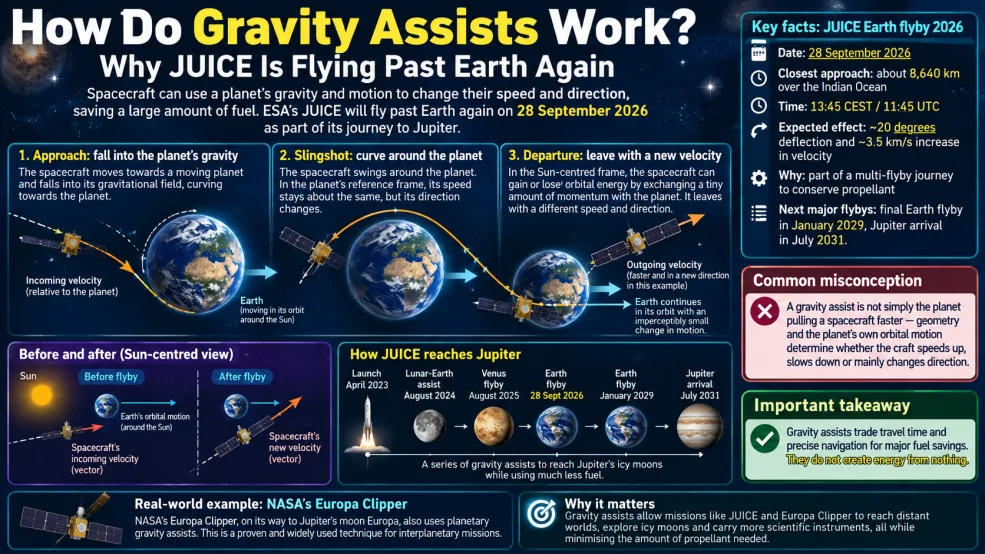
How Do Gravity Assists Work? Why JUICE Is Flying Past Earth Again
ESA's JUICE spacecraft will fly past Earth again in September 2026. Learn how gravity assists change spacecraft speed and direction without creating energy from nothing.
Get the latest science news and learn about scientific breakthroughs and discoveries from around the world. See how science is making today's news.
ESA's JUICE spacecraft will fly past Earth again in September 2026. Learn how gravity assists change spacecraft speed and direction without creating energy from nothing.
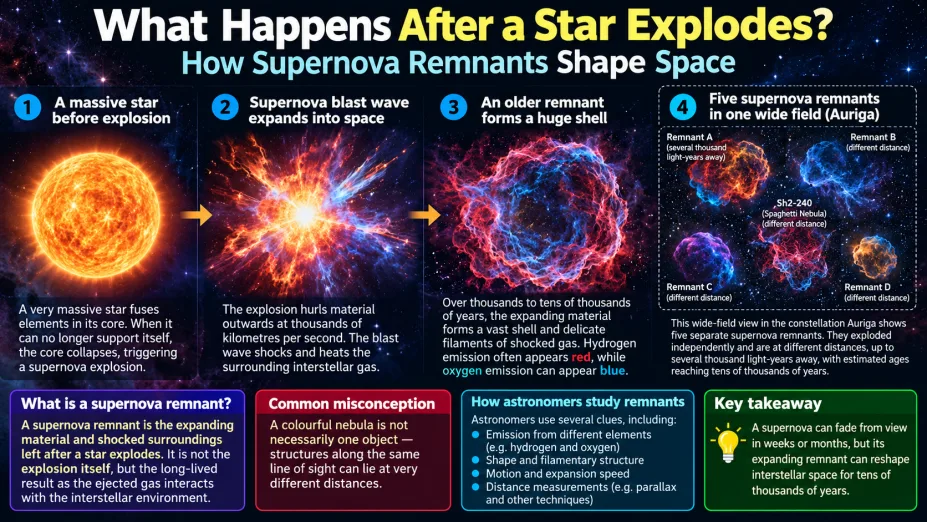
Learn what a supernova remnant is, how blast waves create shells and filaments, what glowing hydrogen and oxygen reveal, and why overlapping nebulae may be unrelated.
Elias 2-24 b is less than one million years old and still embedded in its birth disc. Learn how astronomers confirmed it and why the discovery challenges planet-formation models.
Arctic sea ice reached a likely 2026 minimum of 4.60 million km². Learn why the minimum occurs in September, what sea-ice extent means, how albedo works and how to read the long-term trend.
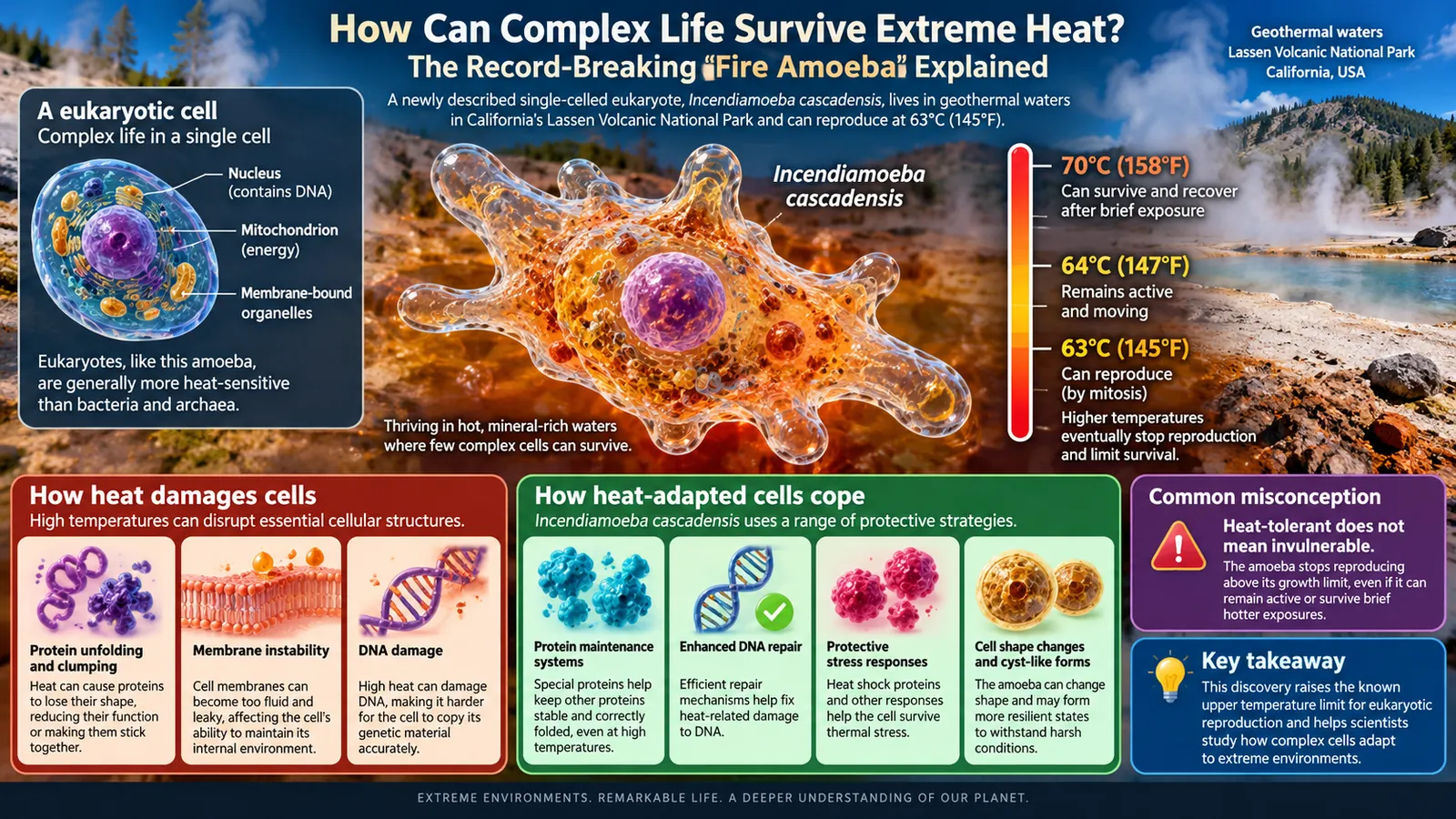
A newly described ‘fire amoeba’ can reproduce at 63°C and recover after brief exposure to 70°C. Learn what this record reveals about heat damage, cellular protection and the limits of complex life.
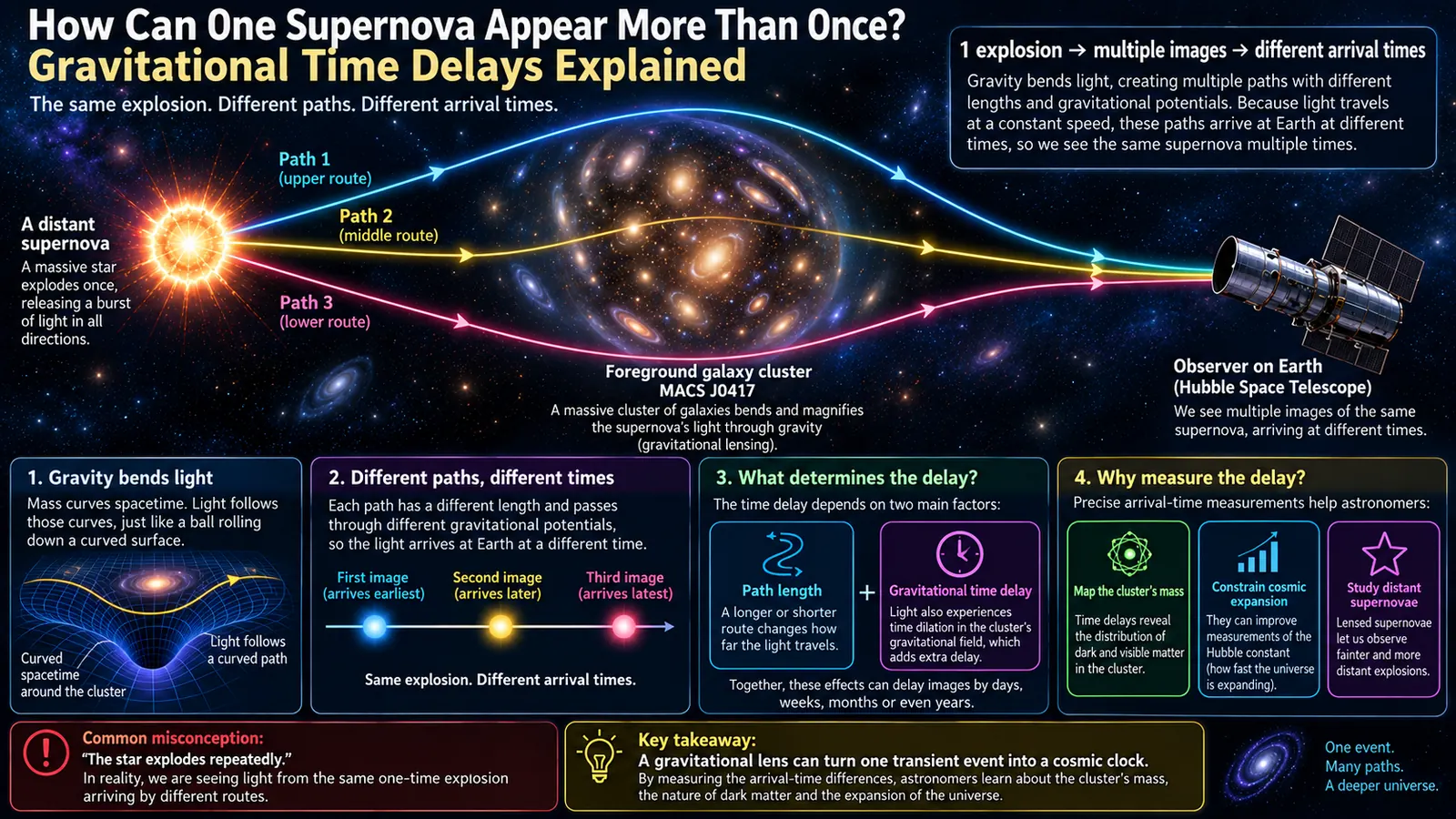
A gravitational lens can make one supernova appear at different times. Learn how multiple light paths create time delays and why Athena may help measure cluster mass and cosmic expansion.
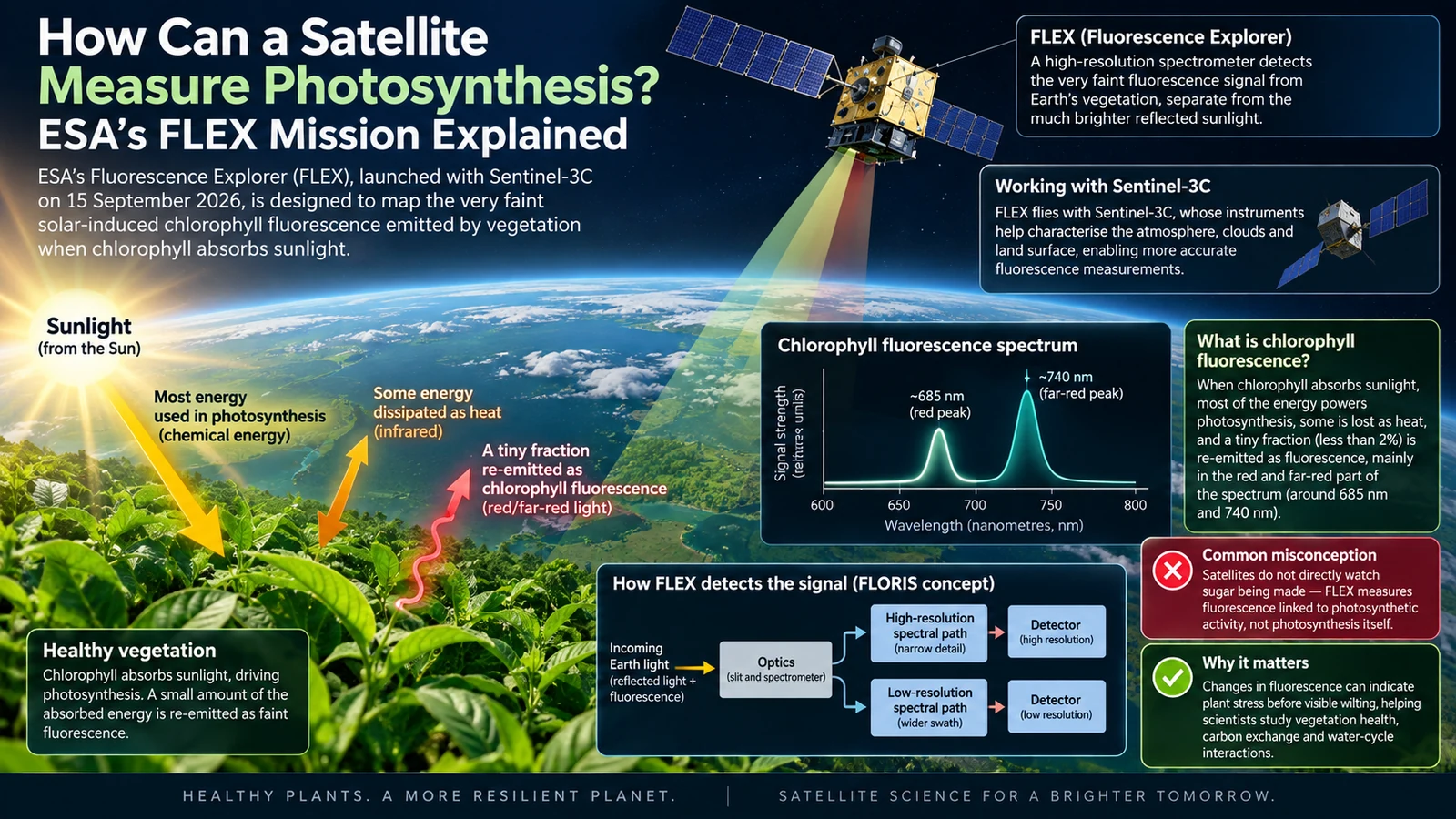
ESA’s FLEX mission maps faint chlorophyll fluorescence from vegetation. Learn how that glow relates to photosynthetic activity, plant stress and Earth’s carbon and water cycles.
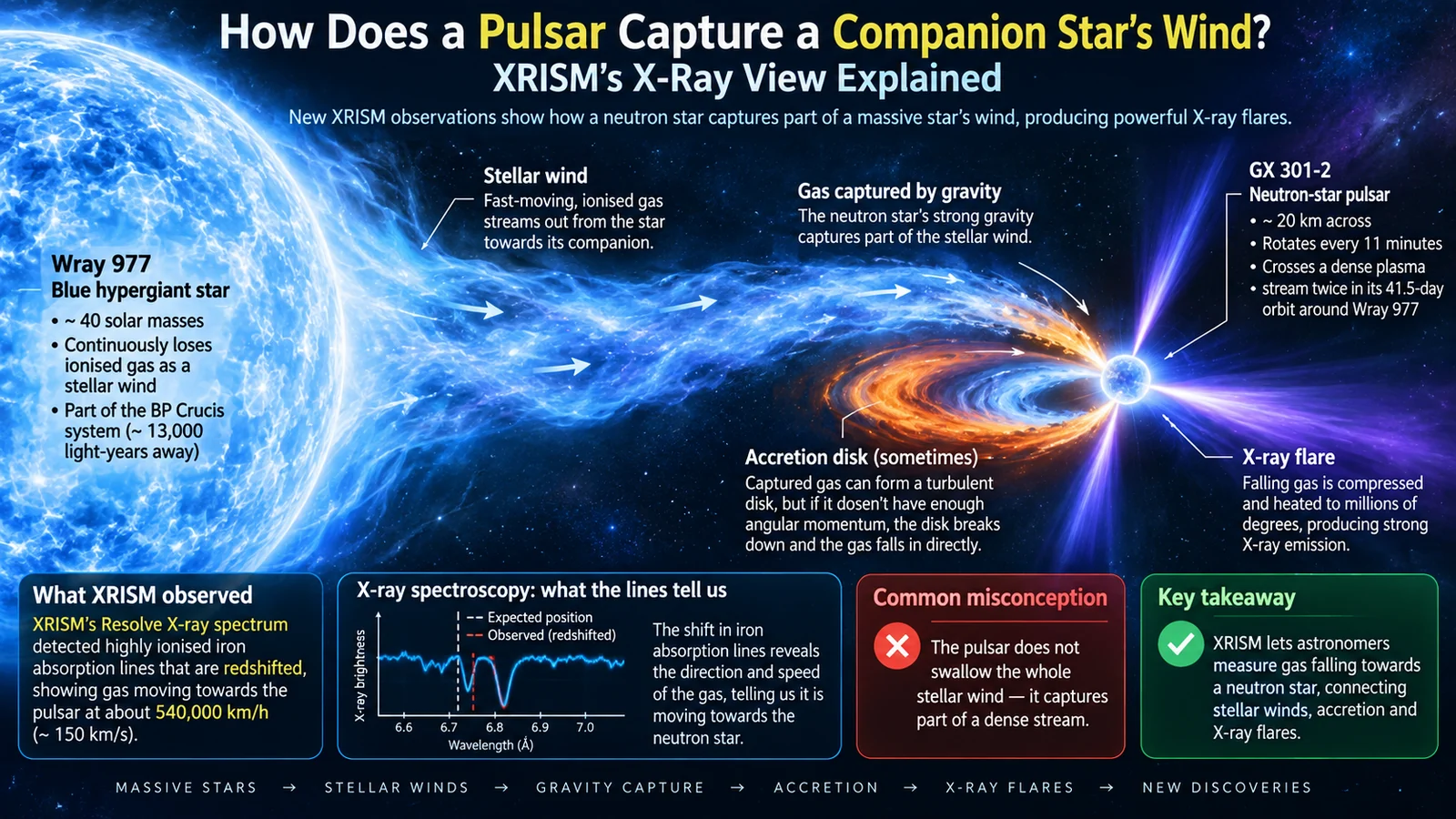
XRISM has directly traced stellar-wind plasma falling towards neutron-star pulsar GX 301-2. Learn how gravity captures the gas, why accretion changes during the orbit, and how X-ray spectroscopy measures the flow.
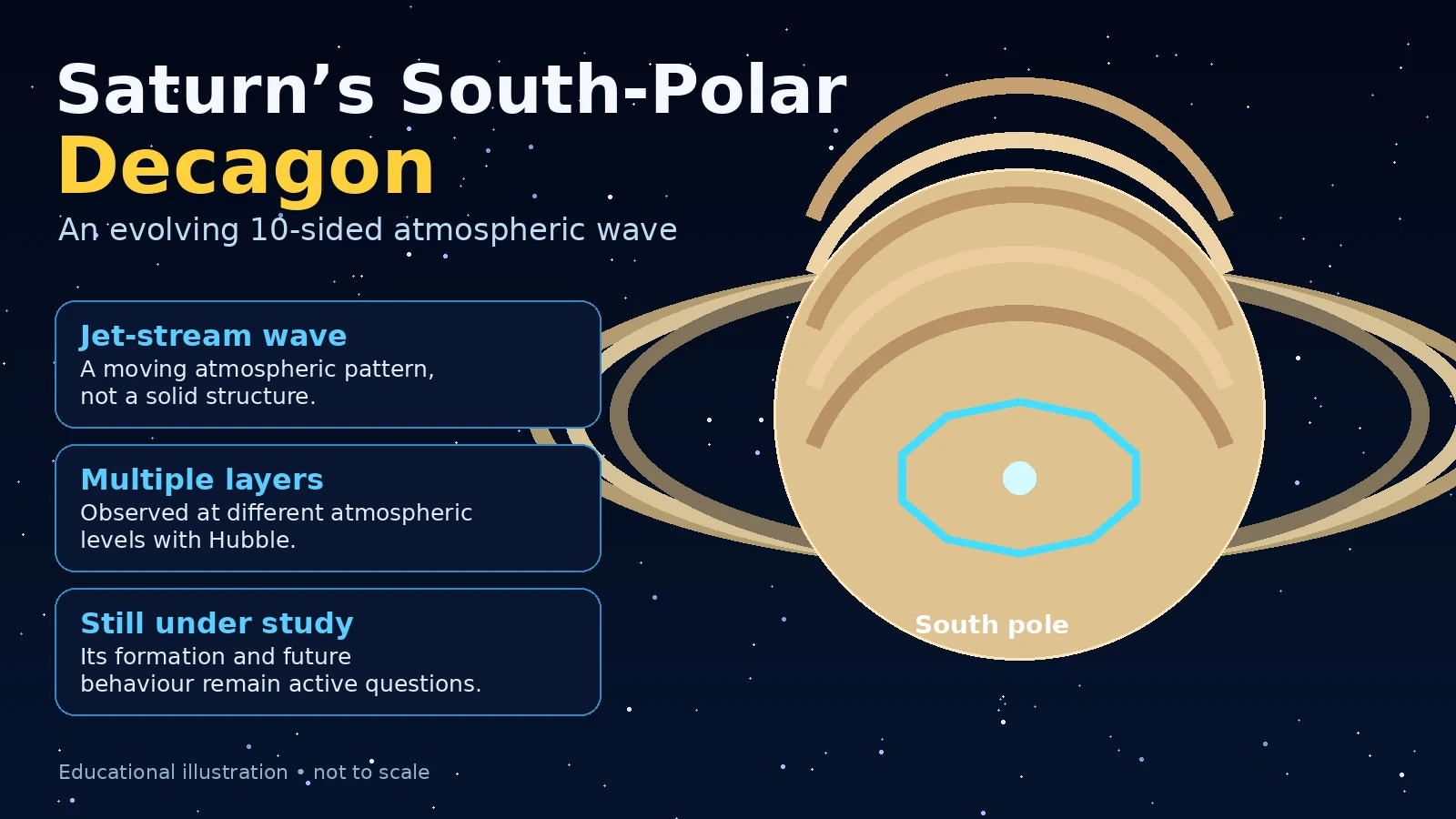
Hubble has revealed an evolving 10-sided atmospheric wave around Saturn’s south pole. Learn what scientists know, how jet-stream waves can form polygonal patterns, and why the decagon differs from Saturn’s famous northern hexagon.
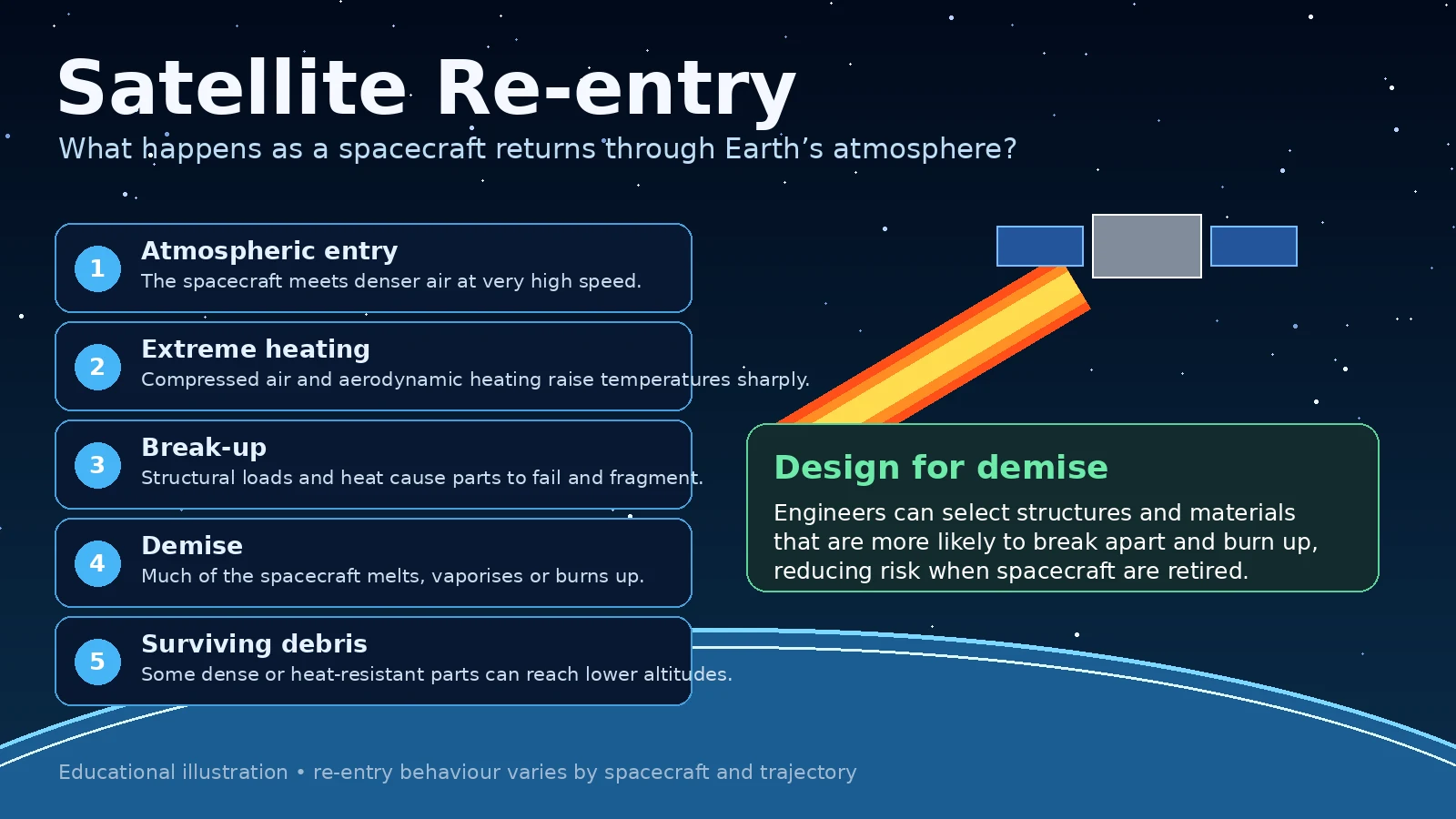
What really happens when a satellite returns through Earth’s atmosphere? Explore heating, fragmentation, targeted re-entry and how ESA’s Cluster observations can improve safer spacecraft design.
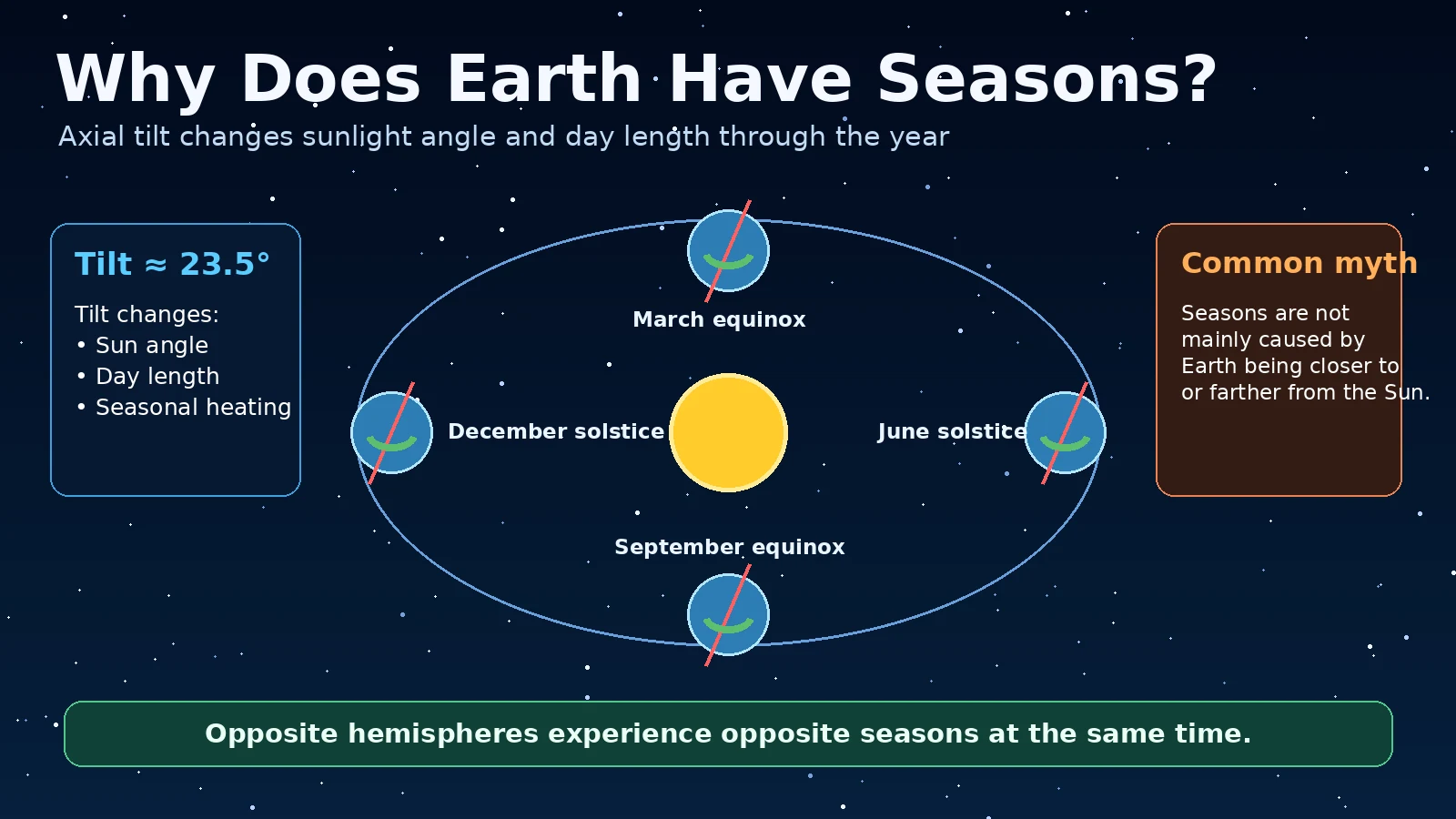
Earth’s seasons are caused mainly by its tilted axis, not its changing distance from the Sun. Learn how solar angle and day length change through solstices and equinoxes.
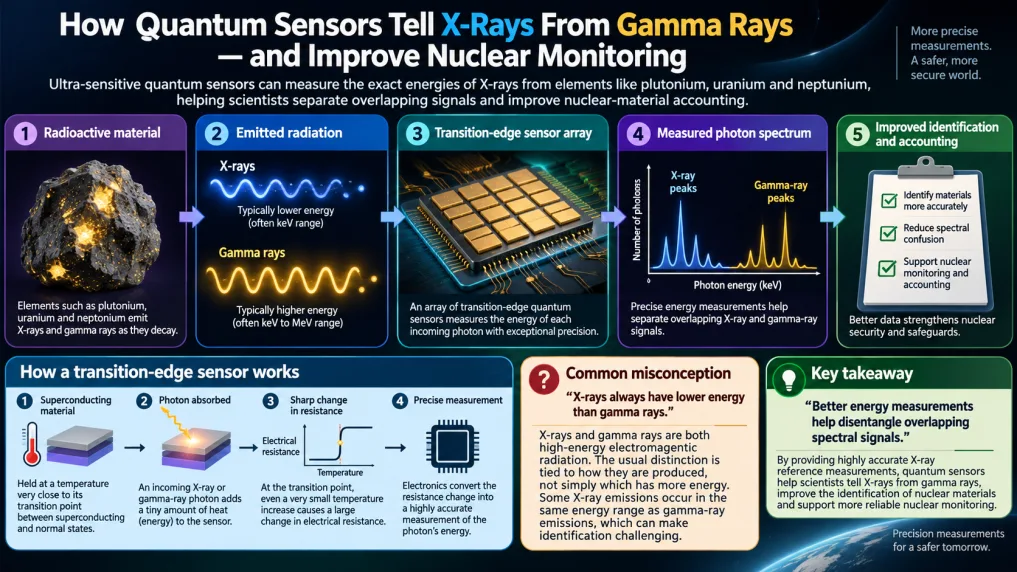
Learn how transition-edge quantum sensors measure X-rays from uranium, plutonium and neptunium, why X-ray and gamma-ray spectra can overlap, and how better measurements improve nuclear monitoring.