
Regular Investing Changes What Each Payment Buys
Investing the same amount regularly means each contribution buys different numbers of units as prices change. That can create discipline, but it does not eliminate investment risk.
Trying to invest only when you believe the market has reached the “perfect” price requires you to repeatedly decide when to buy.
Dollar-cost averaging takes a different approach. It involves investing the same amount of money at regular intervals, regardless of whether prices are rising or falling.
Suppose you invest the same amount every month into an investment whose price changes over time.
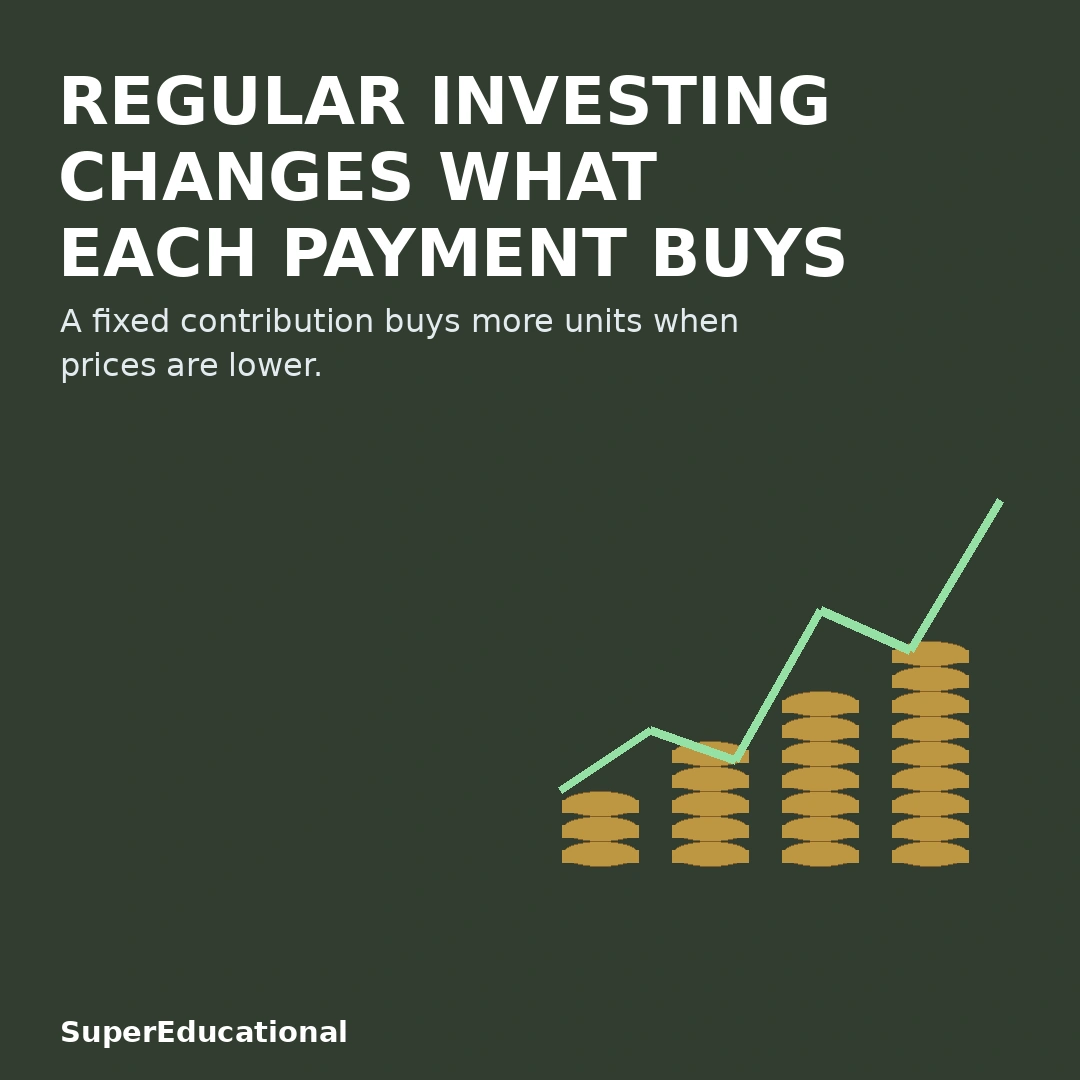
When the price is lower, your contribution buys more units. When the price is higher, the same contribution buys fewer units.
For example, if you invest $100:
- At $10 per unit, you buy 10 units.
- At $20 per unit, you buy 5 units.
- At $5 per unit, you buy 20 units.
This approach can make investing more systematic because you follow a schedule instead of making a new market-timing decision every time you invest.
However, dollar-cost averaging does not guarantee a profit or protect you from losses. The value of the investment can still fall. Fees, diversification, your risk tolerance and your investment time horizon also remain important.
There is another important distinction.
Regularly investing money as you earn it—for example, contributing part of each monthly salary—is different from already having a lump sum available and deliberately keeping part of it uninvested so that purchases can be spread over time.
Both involve investing at different times, but they are not necessarily the same financial decision.
Why It Matters
Understanding dollar-cost averaging helps distinguish a disciplined contribution strategy from the mistaken idea that investing regularly removes market risk.
Engagement Question
Do you find following a fixed investing schedule easier than deciding when to invest each time?



Continue reading
Emergency Savings Buy You Financial Breathing Room
An emergency fund is not designed to maximise returns. Its purpose is to give you accessible money when unexpected bills or income disruptions occur.
What Is Diversification? How It Helps Reduce Investment Risk
Diversification can reduce your dependence on a single investment, company, or asset type—but it cannot eliminate market risk or guarantee against losses.