
Ray Carney’s been selling used furniture in Harlem forever. It’s a useful front.
Photo by Chris Close Ray Carney’s been selling used furniture in Harlem forever. It’s a useful front. Two-time Pulitzer winner Colson Whitehead discusses ‘C...
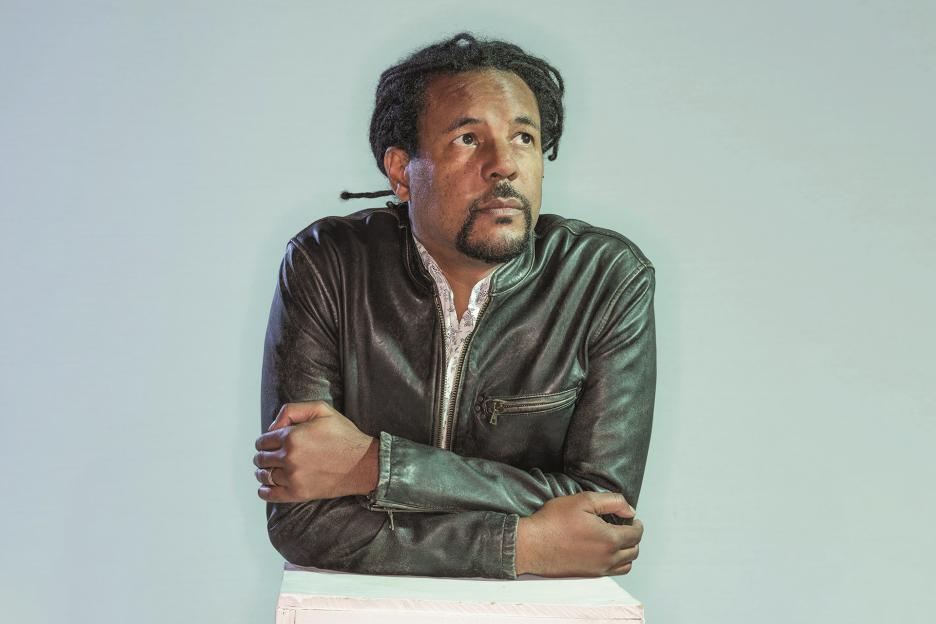
Photo by Chris Close
Ray Carney’s been selling used furniture in Harlem forever. It’s a useful front.
Two-time Pulitzer winner Colson Whitehead discusses ‘Cool Machine,’ his new novel and final installment of trilogy
Samantha Laine Perfas
Harvard Staff Writer
Colson Whitehead as the first novelist to win two Pulitzer Prizes for Fiction for consecutive works, “The Underground Railroad” (2017) and “The Nickel Boys” (2020). Now, Whitehead ’91 is back in the limelight with “Cool Machine,” the final installment of his Harlem trilogy.
The novel, set in the 1980s, continues to follow the shenanigans of furniture salesman Ray Carney as he juggles family life with the unexpected needs of various criminal enterprises. In an interview with the Gazette, which has been edited for clarity and length, Whitehead discussed “Cool Machine,” and where the trilogy sits among his other works.
The trilogy begins in the ’50s and ends in the ’80s. What was your process for building such a vibrant picture of Harlem across a period of tremendous change?
In the first book, “ Harlem Shuffle ,” we meet Ray Carney and his wife, friends, cousin, and criminal associates. Each book has three different sections, so it felt like not just three books, but nine novellas. It’s daunting when you step back. I was really trying to make a new world, looking to history to make it real.
The most fun I had as part of this process was location scouting, zigging and zagging around Harlem trying to find cool buildings and blocks that would be good sites for Carney’s interactions. Where did he grow up? Where did he live? Where’s a good place to dump a body?
I had to figure out how much I wanted to play with reality and how much I wanted to stick to the real architecture and voice of the people of that time.
How did you capture the voices of your characters?
I’ve always found first-person accounts and memoirs to be very useful.
Bumpy Johnson was a famous Harlem numbers guy, drug dealer, and criminal. His wife helped him in his activities, and she wrote a memoir .
William Burroughs, whom we know as the author of “ Naked Lunch ” and various Beat Era classics, also wrote a book called “ Junkie .” It’s about being a hustler on the Upper West Side in the ’40s and ’50s.
When I read these accounts, I’m always snatching up slang, trying to figure out how things worked, how people referred to themselves and their world to make it real for us.
How was writing this trilogy compared to writing a standalone novel?
Figuring out the characters early meant that I knew how people walked and talked from the first 100 pages. So 900 pages later, I know who Ray is, I know who Pepper is. That was very fun.
You want to keep it fresh, which can be hard when there are nine different stories. I had to ask: Am I repeating myself? Is the 10th heist we see still exciting? How do I make it exciting? How do I go big in the ’80s? I had a list of names that I was assembling for eight years, all these character bits, character names, descriptions, moments of interaction, and really accumulating so much content.
It was different in that way because I had a real volume of material that accumulated over time.
What was the inspiration for the main character, Ray Carney? He seemed both completely average and extraordinary. He was also obsessed with furniture.
There are few books about the life of a fence, a person who deals with stolen goods. A lot of them will have a storefront that they show to the world — where they sell furniture or electronics — and in the back is where they do their illegal business. So immediately, a fence to me has a divided nature, a front of putting out to the world as well as this deep interior that no one else sees.
That became Ray’s template. He wants to be an upstanding member of the community, a family man, but there’s a part of him in the back that’s always saying, “Let’s do some crimes.” Over the three books we’re watching him wrestle with his darker impulses, and just that one decision to have the split personality ends up paying off pretty well, I think.
Throughout the series, you return to various characters. Someone who played a relatively minor role in your first book may be the focus of a vignette in another. How did you decide which of those characters that you wanted to revisit?
Some of it was planning and some of it was serendipity. I’m a big outliner, and so when I finished the first book and started the second, I knew I should probably figure out the major movements in the third book before I continued. I wanted to know what was going to happen on the last page when we leave Carney: Is he alive? Is he dead? A lot of planning happened along the way.
Then, of course, you have to be open to where the story takes you. Pepper (a career criminal with ties to Carney’s father) was a small character in the first book.
When I started the second book I realized I wanted him to have his own adventure. He’s a powerful personality who shows a different side of the criminal lifestyle. He’s a loner, so he’s a good foil for Carney’s adventures. We get to leave Carney for 100 pages and explore Pepper.
“A fence to me has a divided nature, a front of putting out to the world as well as this deep interior that no one else sees.”
One theme that you visit a lot throughout the series is this idea that we’re all a little bit crooked, whether we want to acknowledge it or not. How does that shape the motivations and actions of characters throughout the series?
It makes sense to me. Maybe that’s my twisted point of view of society and how people work. We’re one self when we’re alone, one with our family, our loved ones, romantic partners, our friends at work — all of us have these different selves that we’re negotiating in different moments.
That aspect of being human is great to dramatize and explore. I think there’s always that tension between who we are in our thoughts and how we’re playing out in the world, and that’s true for characters as well.
Reflecting on your body of work to date, including your two Pulitzer-winning novels, how does the Harlem trilogy fit in your evolution as a writer?
Hopefully I’m getting better as I go along.
There are things in the Harlem trilogy that I can see I started doing five books ago, or 10 books ago, in terms of character and setting a scene. I’m hopefully finding new material that will challenge me and force me to step up, and I can sit back and look at “Crook Manifesto” or “Cool Machine” and say, “Oh, you know, old Colson would have done it this way, or the me of 20 years ago would not have approached it in the same way.”
I’ve hopefully grown as a person, both as a writer and as a person in the world, and that kind of that wisdom will feed the work.
What recommendation would you give to someone who has read some of your other books but none of the trilogy and is thinking of picking it up?
“Underground Railroad” and “Nickel Boys” made a big splash, and I was really grateful for the reception. I think the Harlem trilogy is a very different thing. There are people who probably didn’t like “Underground” who will like this. I’m always trying to switch it up to keep it fresh for me. That means sometimes disappointing readers and having people who come along for this book and leave for the next one.
If you’ve never gotten on the bus, this is a perfect opportunity with the Harlem trilogy. I hope you find it funny. I hope that you can see your hometown reflected in the complexity of New York City, whether you’re from Boise or Paris or New York.
With the three books, there are nine different stories. Some of them deal with great, grandiose themes, and some of them are more discreet and compact. I think there’s a lot to chew on if you decide to take this adventure on.
What’s next for you?
This was such a big project that after I handed it into my editor and finished editing, I told myself I’m going to take a year off and just flush the pipes and get rid of Carney’s voice. But about four months in I was so bored I had to start another book. It’s great to find a new canvas, some new characters to knock around, and a new voice to play with.



Continue reading
Strange encounters with family
Strange encounters with family A detail from the family photo archive of Robin Kelsey.Photos by Stephanie Mitchell/Harvard Staff Photographer Stephanie Mi...

Reliving 2020 through fiction
Leah De Forest.Photo by Adrianne Mathiowetz Reliving 2020 through fiction Instructor’s debut novel joins growing subgenre of books confronting pandemic’s su...
Mystery statue unearthed at Sardis archaeological dig
Mystery statue unearthed at Sardis archaeological dig Photos © Archaeological Exploration of Sardis/President and Fellows of Harvard College Sy Boles Ha...

Home is at the heart of Parton’s music, author says
Martha Ackmann. Photo by Kevin Grady Home is at the heart of Parton’s music, author says Martha Ackmann tells Radcliffe audience the origin story of a songw...