Will Supreme Court ruling on campaign finance yield big changes for parties?
Nicholas Stephanopoulos says probably not, but it may make it easier for wealthy donors to bypass individual giving limits
Liz Mineo
Harvard Staff Writer
Fifty years ago, the U.S. Supreme Court struck down campaign spending limits in the landmark decision Buckley v. Valeo, finding the curbs violated First Amendment free-speech protections. Since then, several rulings, including the 2010 Citizens United case, which ended restrictions on election donations by corporations, nonprofits, and labor unions, have further loosened campaign finance regulations.
In this interview, which has been edited and condensed for length and clarity, Nicholas Stephanopoulos , Kirkland & Ellis Professor of Law at Harvard Law School, spoke about the recent ruling by the Supreme Court that lifted restrictions on how much money political parties can spend in coordination with candidates, its downside and potential upside, and its possible impact on the midterm elections.
Can you explain what the recent campaign finance ruling means? How is it going to affect political parties?
The recent decision is a not a huge blockbuster like some other campaign finance cases we’ve seen in recent years. That’s because the decision only involves limits on political parties’ coordinated expenditures with candidates, and that pool of money, both today and potentially in the future, is not enormous.
Before this ruling, parties could spend whatever they want, even before they could coordinate a lot of expenditures with candidates. Now they can just coordinate somewhat more. So, the stakes here were sort of moderate.
The two things the decision means above all are these: On the negative side, it’ll be easier now for a corrupt donor [to skirt individual donation limits] to funnel more money to a candidate using a party as the conduit or the vehicle for that contribution. On the positive side, parties are permanent, important political institutions, and now somewhat more money might flow to parties instead of super PACs and dark money groups and other more problematic organizations.
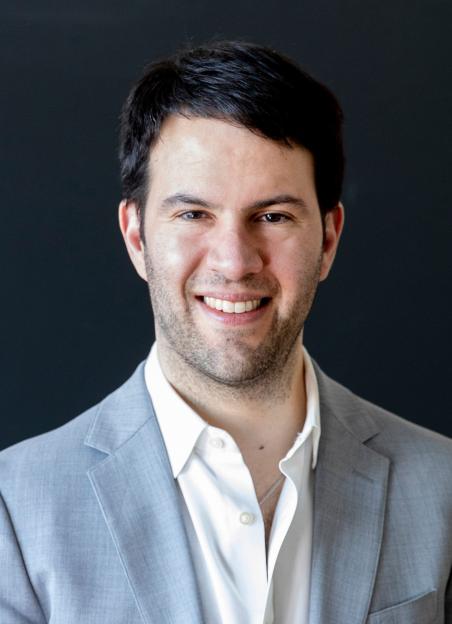
Nicholas Stephanopoulos.
Harvard Law School
Justice Elena Kagan, who dissented from this ruling, said this decision would increase the likelihood of “political corruption.” Do you agree?
First of all, notice that Kagan isn’t challenging the fundamentals of campaign finance law. She’s not claiming that money isn’t speech. She’s not claiming that all campaign finance regulations should be upheld. She’s fully arguing within the current court’s doctrinal framework. She thinks that the law at issue is necessary to prevent corruption.
Kagan points out that, with a little bit of bookkeeping, it should be fairly straightforward now for a donor to give effectively half a million dollars to a candidate channeled through a party, as opposed to the $7,000 the donor is allowed to give directly to the candidate.
With much bigger sums that can now be given through a party to a candidate, there’s the possibility of more quid pro quo corruption. A candidate isn’t likely to do very much in return for $7,000 but a candidate may do quite a bit more in return for $500,000. So I think we’ll see somewhat more corruption in politics as a result of today’s decision.
What’s the idea behind “money is speech,” which has been at the core of most campaign finance decisions since the 1970s?
The premise that money is speech, or at least it enables political speech, means that it can be covered by the First Amendment. That premise underlies all campaign finance doctrine since the 1970s.
It’s a controversial doctrine. Individual justices over the years have pointed out that money is not speech, and merely enabling speech is not the same thing as being speech itself. All campaign finance decisions since the 1970s have assumed that regulations of political funding involved the First Amendment because there’s a close enough connection to political speech, and even the progressive justices in the 1990s and 2000s still accepted that the First Amendment was involved here.
The implication of fully endorsing the position that money isn’t speech is that all of these cases would quickly fall by the wayside. If money isn’t speech and there’s no First Amendment issue presented here, then Congress can regulate campaign finance however Congress wants to, without any possible First Amendment problem. But that view has never been the view of the majority of the court.
Can you compare the impact of this recent ruling to that of the 2010 Citizens United case?
Citizens United involved independent spending by corporations, by unions, and the court said that there’s no valid justification for limiting any independent campaign spending, whether it’s by candidates, rich individuals, parties, corporations, or unions.
The current case involves the somewhat less-explosive issue of coordinated expenditures. Citizens United was a sweeping decision, striking down a very important federal law and opening the door to huge new sums to be spent in politics. This decision isn’t like that. It doesn’t involve independent spending. It only involves one actor, political parties, not the whole range of actors. The stakes are a lot lower than the Citizens United case.
With this ruling, the Supreme Court overruled a 2001 decision , which upheld the same limits on coordinate expenditures with candidates. How do you explain that?
The 2001 case was decided by the court when it was at its most pro-regulatory in the campaign finance context. What changed since 2001 is the composition of the court.
The critical change was when Sandra Day O’Connor retired in 2006, and Sam Alito replaced her. Alito has always been a skeptic of campaign finance regulations, whereas O’Connor, especially toward the end of her time on the court, was willing to uphold a lot of campaign finance regulations.
Almost everything that’s followed since then, Citizens United in 2010, McCutcheon in 2014, and other decisions striking down campaign finance laws, happened not because the world of politics changed or because there was some big insight on the court. It happened because the court became more conservative and what had been a five-four pro-regulation majority became a five-four anti-regulation majority.
It’s no surprise that the current court, which is now six-three against campaign finance regulation, doesn’t like a decision from this earlier period.
Will this ruling impact the midterm elections?
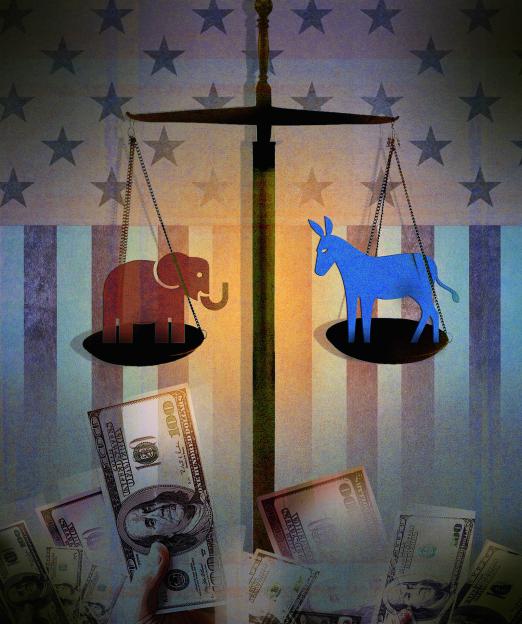
In the near term, this will somewhat benefit the Republican Party committees that have more funds at their disposal because they have just happened to raise a lot more money recently than the Democratic Party entities.
However, even before this decision, all of those Republican entities could still spend their money however they wanted to, so it’s not that big of a change for them. I think Democrats will direct more of their donors to give some more money to party organizations. There might be a short-term benefit for Republicans, but I don’t think this will cause a great imbalance in the system going forward.
Overall, I’m not incredibly alarmed by this ruling. We’re still going to have in place various other laws and precautions that will stop some corruption.
It’s bad for our system to allow super PACs and dark-money groups to become the leading actors in campaign finance. I’d rather have the money in parties’ hands than in super PACs or dark-money groups’ hands. I don’t think the doors are really open for that much additional corruption here. I think there’s a non-trivial silver lining in strengthening political parties, which are valuable institutions.